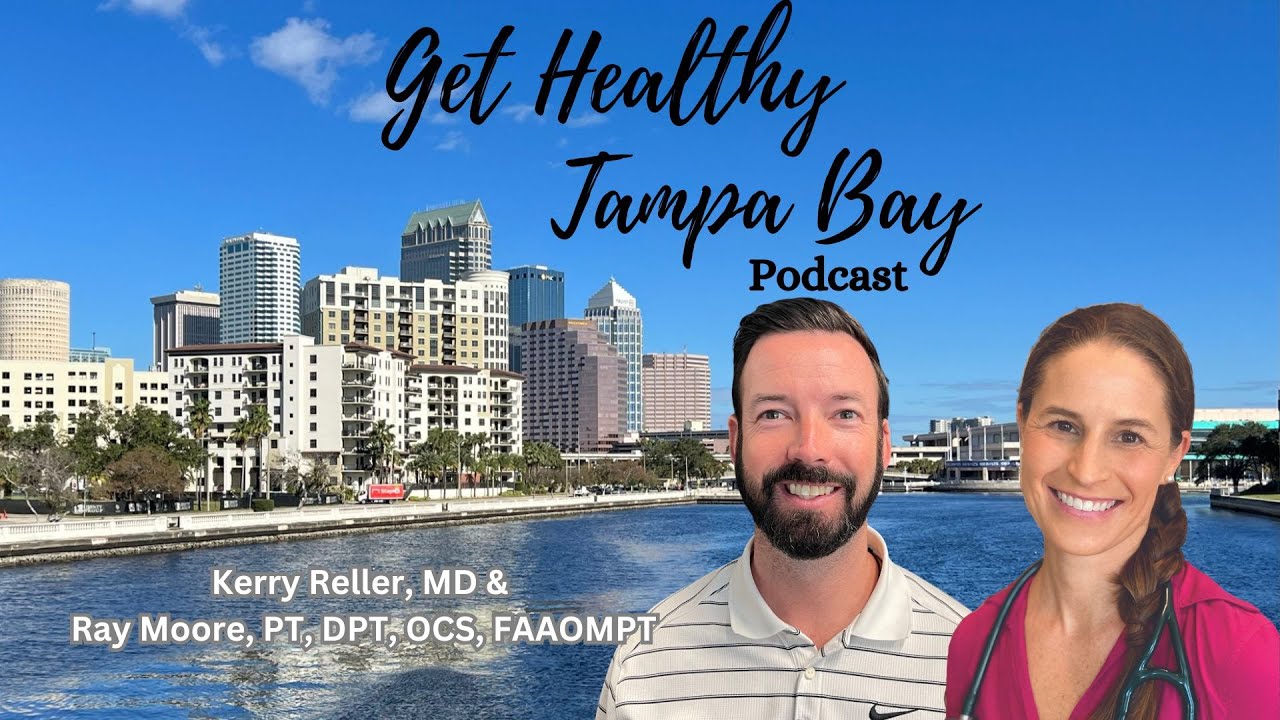
Understanding Dry Needling, Insights from Dr. Ray Moore
Muscle knots that will not let go can make everyday movement painful. In this episode of the Get Healthy Tampa Bay Podcast, Dr. Kerry Reller talks with Dr. Ray Moore, a physical therapist at OPPT's Bayside clinic in East Clearwater who has practiced myofascial trigger point dry needling for 14 years, about what dry needling is, who it helps and how it compares to acupuncture and trigger point injections.
What Is Dry Needling?
Dry needling uses a very thin needle, the same kind used in acupuncture, inserted into a tight band in a muscle called a trigger point, or "knot." It is called "dry" because no medication is injected. Dr. Moore explains that it is an add-on treatment, not the main event. Individualized exercise remains the most important part of physical therapy, and dry needling helps muscles relax so patients can do that work. Florida added dry needling to the physical therapy practice act in 2020.
How It Works
Trigger points are contracted muscle fibers with reduced blood flow and a more acidic environment. When the needle reaches an active trigger point, the muscle often twitches, a reflex that feels strange but is usually not very painful. Dry needling is thought to relax the tight band, improve local blood flow and reduce chemicals associated with pain. It may also calm an overly sensitive nervous system, which is why some people with fibromyalgia find relief.
Conditions It Can Help
Mild muscle strains, both new and old
Neck and back pain, including after car accidents
Shoulder blade pain and thoracic outlet syndrome
Headaches that come from the neck, called cervicogenic headaches
Fibromyalgia
Many people improve within one to three sessions, while chronic conditions may need ongoing treatment. If an underlying problem like a herniated disc keeps irritating the muscle, trigger points may return until that cause is treated.
Dry Needling vs. Acupuncture vs. Trigger Point Injections
Acupuncture: Based on traditional Chinese medicine. Needles are placed along meridians to restore the flow of energy, often far from the painful area.
Dry needling: Based on muscle anatomy. Needles go into the muscle near the source of pain, or into a muscle that refers pain elsewhere, such as the upper trapezius causing headaches.
Trigger point injections: Similar target, but a physician or nurse practitioner injects medication with a larger needle.
What to Expect
Most people describe a mild to moderate ache during the 5 to 10 minute treatment and soreness for a day or two afterward, similar to after a workout. Heat and stretching help. Serious side effects are rare in trained hands. Needling over the chest wall carries a small theoretical risk of a collapsed lung, which is why training and technique matter.
Key Takeaways
Start with an evaluation: A physical therapist will decide whether your pain is coming from muscle and whether dry needling fits.
It works best with exercise: Needling and manual therapy help tissues move, and exercise keeps you better.
Training is required: In Florida, physical therapists need two years of practice plus certification and a practical exam.
Insurance varies: In Florida it is often not covered except by workers' compensation and VA or TRICARE, though some clinics keep the cost low.
You can self-refer: In Florida, you can see a physical therapist directly for up to 30 days before needing a physician referral.
Conclusion
For the right muscle problem, dry needling can be a helpful tool alongside exercise and hands-on therapy. If you live in the Tampa Bay area and need a primary care physician to evaluate pain or refer you to physical therapy, Clearwater Family Medicine and Allergy can help. Call (727) 446-1097 or visit cfma.health.
About Our Guest:
Dr. Ray Moore is a physical therapist with over 15 years of experience, specializing in myofascial trigger point dry needling. He has practiced in both Baltimore and Florida, where he continues to help patients recover from muscle pain and dysfunction. Dr. Moore is passionate about individualized patient care and integrates various therapeutic techniques to optimize recovery outcomes.
Listen to the full episode on the Get Healthy Tampa Bay Podcast: Understanding Dry Needling, Insights from Dr. Ray Moore
Listen and Learn More
Watch the full episode above or listen to the Get Healthy Tampa Bay Podcast on your favorite podcast app. To schedule a visit with Dr. Kerry Reller at Clearwater Family Medicine and Allergy in Clearwater or Palm Harbor, call (727) 446-1097.
Chronic disease care at CFMA: We help adults manage conditions like diabetes, high blood pressure, high cholesterol and fatty liver with a lifestyle-focused approach in Clearwater and Palm Harbor. Learn about our chronic disease management.


