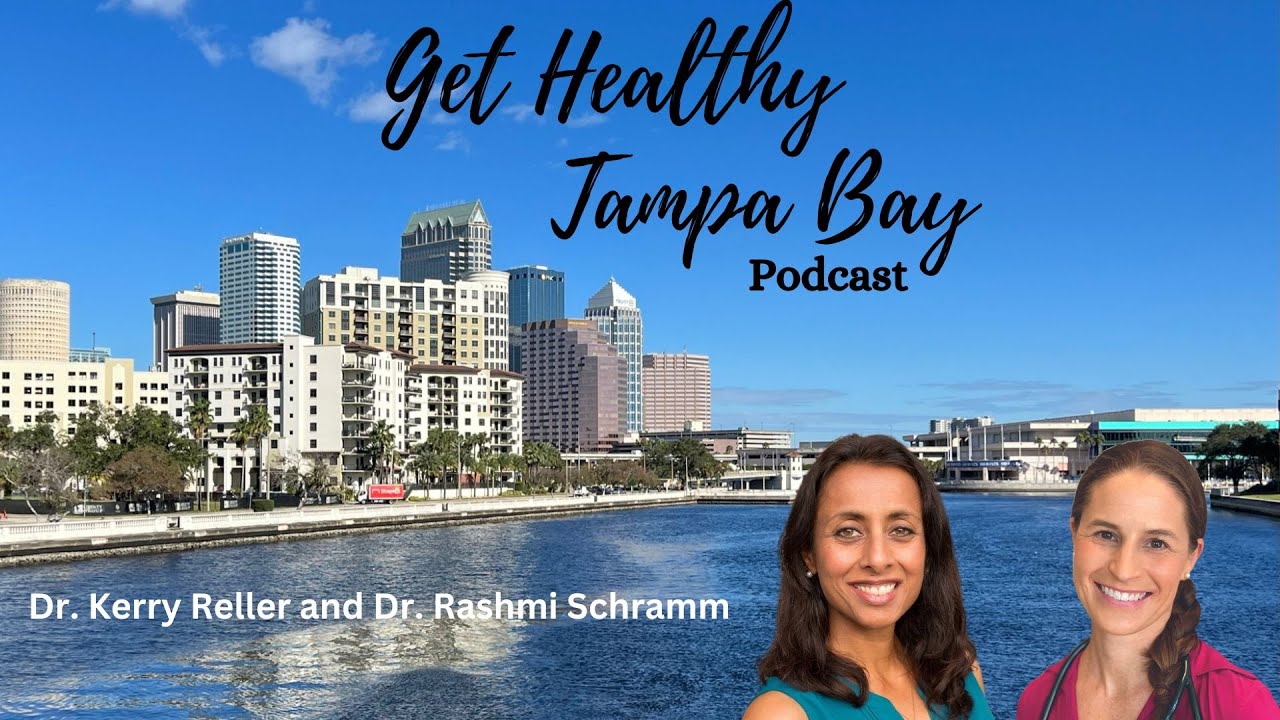
Why You Should Meditate with Dr. Rashmi Schramm
Meditation has been practiced for thousands of years, and modern science is now catching up on why it helps. In this episode of the Get Healthy Tampa Bay Podcast, Dr. Kerry Reller talks with Dr. Rashmi Schramm, a board-certified family physician, certified coach and meditation and Ayurveda teacher who helps busy women let go of guilt and find inner peace, about the benefits of meditation and how to get started.
Mindfulness vs. Meditation
Mindfulness is paying attention to the present moment with curiosity and without judgment. Young children are naturally mindful. Stress gradually covers it up as we grow older.
Meditation is the formal practice of mindfulness, the journey from activity into stillness. It is the fastest way to build your "mindfulness muscle."
Meditation is found in traditions around the world and can be practiced without any religious context.
What Happens in Your Body
Chronic daily stress keeps us in fight-or-flight mode, which is linked to high blood pressure, diabetes, obesity and other chronic illnesses. Meditation shifts the body into "rest and restore" mode:
Heart rate and blood pressure drop
Cortisol levels fall
Blood flow returns to digestion and the immune system
The thinking part of the brain gets more blood flow, supporting focus, creativity and calm decision-making
Brain imaging studies show that regular meditation is linked to changes in areas involved in memory and emotional regulation. A 2022 randomized trial in JAMA Psychiatry found that an eight-week mindfulness program worked about as well as the medication escitalopram for anxiety disorders.
Types of Meditation
Breath meditation: Simply noticing the breath going in and out
Mantra meditation: Silently repeating a word or phrase, such as "so hum," to give the busy mind something to focus on
Yoga nidra: A fully guided meditation done lying down, sometimes called non-sleep deep rest. Many people use it to fall back asleep at night.
Walking meditation: Walking outside without devices and paying attention to sounds, sights and your steps
How to Get Started
Start tiny: Two or three minutes a day is enough.
Choose consistency over length: A few minutes daily beats a long session once a week.
Try apps: Calm, Headspace and the Headspace Guide to Meditation series on Netflix are great starting points.
Find a group or teacher: Having support is one of the strongest predictors of sticking with it.
Drop the judgment: Getting distracted, feeling restless or falling asleep are all normal. Gently returning your attention is the practice.
Key Takeaways
Meditation calms the stress response
It does not have to be long or perfect
Pick the style that fits you
Practicing meditation is a form of self-compassion
Conclusion
Meditation is a simple, free tool that can support both mental and physical health. If stress, anxiety or poor sleep are affecting your health, talk with your doctor about a plan that may include mindfulness alongside other treatments. Dr. Reller offers primary care and health coaching at Clearwater Family Medicine and Allergy in Clearwater and Palm Harbor. Call (727) 446-1097 or visit cfma.health.
Connect with Dr. Rashmi Schramm
Follow on Instagram: www.instagram.com/dr.RashmiSchramm
Follow on Facebook: www.Facebook.com/rashmi.schramm
Tiktok: @dr.rashmischramm
Website: www.rashmischramm.com
Please let us know if you have any further questions!
Please make an appointment today727-446-1097.
Listen to the full episode on the Get Healthy Tampa Bay Podcast: Why You Should Meditate with Dr. Rashmi Schramm
Listen and Learn More
Watch the full episode above or listen to the Get Healthy Tampa Bay Podcast on your favorite podcast app. To schedule a visit with Dr. Kerry Reller at Clearwater Family Medicine and Allergy in Clearwater or Palm Harbor, call (727) 446-1097.


