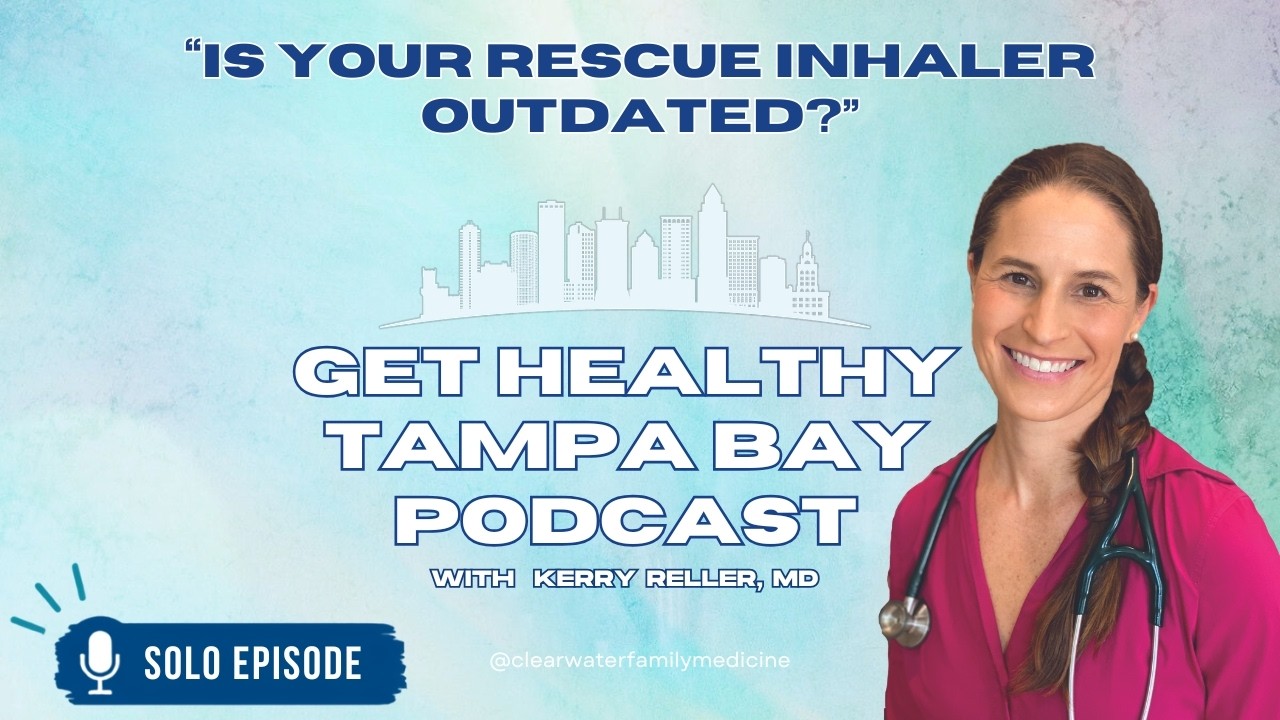
Why Albuterol Alone Isn't Enough Anymore - Solocast with Dr. Reller
For decades, the asthma routine has been simple: when you start wheezing, coughing or feeling tight in your chest, you grab your albuterol inhaler. In this solo episode of the Get Healthy Tampa Bay Podcast, Dr. Kerry Reller, a family physician and allergist at Clearwater Family Medicine and Allergy, explains why the 2026 asthma guidelines say albuterol alone is no longer enough, and what that means for the inhaler in your purse, backpack or glove compartment.
What Changed in 2026
The Global Initiative for Asthma (GINA) updates its treatment strategy regularly. The 2026 GINA report is clear: adults, teens and children ages 6 to 11 should not be treated with a short-acting bronchodilator (SABA) such as albuterol alone. Instead, everyone with asthma should receive treatment that includes an inhaled corticosteroid (ICS), a medicine that calms airway inflammation.
The Squeeze and the Fire
Asthma has two parts. The squeeze is bronchospasm, when the muscles around the airways tighten. Albuterol is excellent at relaxing that squeeze, which is why it feels so reassuring. Underneath is the fire: airway inflammation, swelling, mucus and twitchy airways. That is what inhaled corticosteroids treat. Dr. Reller's favorite analogy is that using albuterol alone is like silencing the smoke alarm without putting out the fire. You feel better, but the underlying problem may still be there.
Key Takeaways
Overusing albuterol is a warning sign: Using three or more 200-dose albuterol canisters in a year is linked to a higher risk of severe asthma attacks, and very high use is linked to a much higher risk of asthma death. Regular albuterol-only use can even make the airways more reactive.
"Mild" asthma is not zero risk: People with infrequent symptoms can still have severe or even fatal attacks, often triggered by a virus, allergens or irritants.
Meet AIR therapy: AIR stands for anti-inflammatory reliever. When symptoms make you reach for relief, your rescue inhaler also delivers an inhaled steroid. It links anti-inflammatory treatment to the inhaler people never forget.
There are two main types: ICS-formoterol inhalers (GINA's preferred "Track 1," which can also be used as maintenance and reliever therapy, called MART or SMART) and ICS-SABA inhalers such as Airsupra (the "Track 2" alternative).
Not every combination inhaler is a rescue inhaler: Formoterol is special because it works quickly and lasts a long time. Other steroid and long-acting bronchodilator combinations should not be used for rescue.
Check your technique: Even the best medication will not work if most of it lands on your tongue. Bring your inhalers to your visit so your provider can watch you use them.
What Is Airsupra?
Airsupra combines two medicines in one inhaler: albuterol to relieve the squeeze and budesonide, an inhaled steroid, to treat the fire. Dr. Reller calls it "albuterol on steroids." The usual dose is two puffs as needed, up to 12 puffs in 24 hours. It is not a daily maintenance inhaler, and some patients still need a separate controller. In the United States, Airsupra is FDA-approved only for adults 18 and older.
What the Research Shows
The MANDALA trial (2022): In people with moderate to severe asthma already on maintenance therapy, using albuterol plus budesonide for rescue lowered the risk of severe attacks by 26% compared with albuterol alone.
The BATURA trial (2025): In people with mild asthma, severe attacks occurred in 5.1% of those using albuterol plus budesonide versus 9.1% with albuterol alone, about 47% lower risk. They also needed fewer oral steroid bursts. The trial was stopped early because the benefit was so clear.
What About Kids?
The same principle applies to children. GINA says kids ages 6 to 11 should not be treated with albuterol alone. However, pediatric doses, devices and FDA approvals differ from adults, so parents should not use an adult inhaler for a child. Instead, ask whether your child's asthma plan includes the right anti-inflammatory treatment.
Make Sure It Is Really Asthma
Asthma can be both over-diagnosed and under-diagnosed. Other problems, including vocal cord issues, rhinitis and reflux, can cause similar symptoms. Breathing tests such as spirometry help confirm the diagnosis, and managing triggers, smoking or vaping, allergies, reflux and weight are all part of good asthma care.
Conclusion
Remember three things. Asthma is an inflammatory disease, even if you do not have symptoms every day. Albuterol-only treatment is no longer the recommended strategy. And albuterol is not obsolete, it just should not work alone. Please do not throw away your albuterol after reading this. Instead, know the name of your inhaler, track how often you use it (more than twice a week usually means your asthma needs more attention), and ask your provider at your next visit whether your rescue strategy treats inflammation too. Make sure you have an up-to-date written asthma action plan. This article is for education and is not a substitute for individualized medical advice.
Clearwater Family Medicine and Allergy has cared for allergy and asthma patients in the Tampa Bay area since 1979, when Dr. Reller's father, allergist and immunologist Dr. J. Wayne Phillips, founded the practice.
Listen to the full episode on the Get Healthy Tampa Bay Podcast: Why Albuterol Alone Isn't Enough Anymore - Solocast with Dr. Reller
Listen and Learn More
Watch the full episode above or listen to the Get Healthy Tampa Bay Podcast on your favorite podcast app. To schedule a visit with Dr. Kerry Reller at Clearwater Family Medicine and Allergy in Clearwater or Palm Harbor, call (727) 446-1097.


