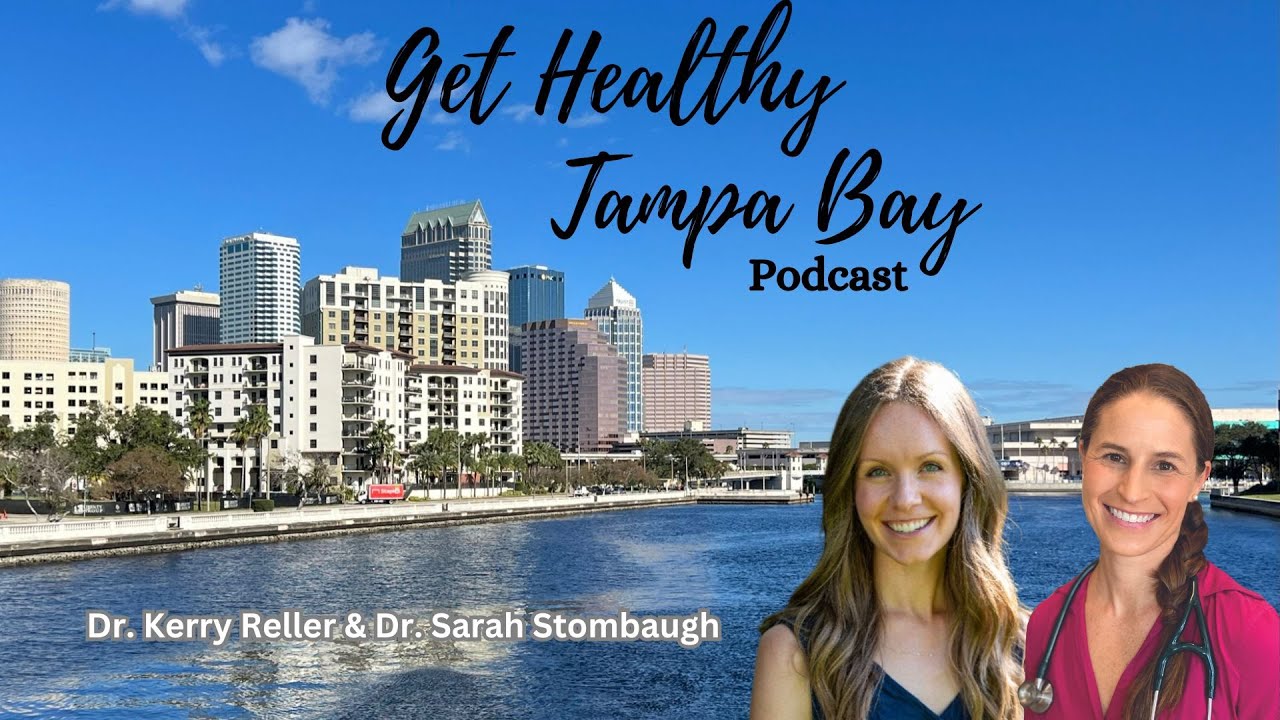
Weight Loss While Breastfeeding: Expert Insights with Dr. Sarah Stombaugh
Many new moms hear that breastfeeding will make the baby weight "fall right off." For some women it does, but others hold on to weight or even gain during this time. In this episode of the Get Healthy Tampa Bay Podcast, Dr. Kerry Reller talks with Dr. Sarah Stombaugh, a family medicine and obesity medicine physician in Charlottesville, Virginia and host of the Conquer Your Weight podcast, about how to lose weight safely while protecting your milk supply.
Set Realistic Expectations
How much weight to gain in pregnancy depends on your starting weight, so ask your OB/GYN what is right for you. Most women gain about 25 to 35 pounds, with lower targets for women with obesity and higher targets with twins. Delivery usually takes off only about 10 to 15 pounds. A good rule of thumb is that it took nine months to gain the weight, so expect it to take at least nine months to lose it.
The First 12 Weeks: Protect Your Supply
The "fourth trimester" is when your body learns how much milk to make. During this time, focus on building your supply rather than losing weight, while trying not to gain. Prolactin, the hormone that drives milk production, can make you ravenously hungry, which makes convenience foods tempting. Ask family and friends to help with nourishing, home-cooked meals you can freeze.
How Many Extra Calories Do You Need?
Breast milk has about 20 calories per ounce, and a fully breastfed baby drinks about 24 to 30 ounces a day. Most women need roughly 330 to 400 extra calories a day while exclusively breastfeeding, and less as babies start formula or solid foods. Breastfeeding is not permission to eat anything you want.
Stay Hydrated
Drink to thirst: Breastfeeding increases thirst. Keep water by your bed and wherever you nurse or pump. Many women need around 13 cups of fluids a day.
Thirst can feel like hunger: Drink first when you feel hungry.
Replace electrolytes: Especially with exercise. Dr. Stombaugh sometimes suggests a pinch of salt or a potassium salt substitute, but check with your doctor first if you have kidney disease or take blood pressure medications, since extra potassium can be dangerous.
Ease Back Into Exercise
Start gently: Walking around the house in the first weeks can help with swelling.
Watch your posture: Hunching over while feeding can cause lasting neck and back pain.
See a pelvic floor physical therapist: Both doctors recommend it for every woman after childbirth before returning to running or heavy lifting.
Plan healthy snacks: Exercise increases appetite.
What to Eat
Healthy fats: Olive oil, avocados, nuts, seeds and fish
Protein: Helps you feel full
Fiber-rich whole foods: Fruits, vegetables, oatmeal, brown rice and quinoa, which also prevent postpartum constipation
Variety: Flavors from your diet can reach your baby through breast milk and may shape their future food preferences.
Avoid ketogenic diets: Very low carb diets and ketosis can lead to a rare but dangerous condition called lactation ketoacidosis. Lower carb is fine, but no carb is not.
Protecting Milk Supply
Large calorie cuts can reduce supply in some women, and a dip over a few days is usually reversible. But the most important factor for supply is removing milk often. Supply often drops with sleep training, returning to work or short pumping breaks. Most women need to empty their breasts every three to four hours, and no lactation cookie can make up for missed feeds. Stress also makes letdown harder. A lactation consultant or breastfeeding medicine physician can help. A gradual loss of about one pound per week is generally considered safe once your supply is established.
Key Takeaways
Give yourself at least nine months
Focus on supply first, then weight loss after 12 weeks
Stay hydrated and replace electrolytes
Choose whole foods and skip keto
Empty your breasts often to protect supply
Conclusion
Losing weight after having a baby takes patience, support and a plan that fits your life. Dr. Reller is board certified in family medicine and obesity medicine and offers medical weight management for adults at Clearwater Family Medicine and Allergy in Clearwater and Palm Harbor. Call (727) 446-1097 or visit cfma.health.
About Our Guest:
Dr. Sarah Stombaugh is a family medicine and obesity medicine physician in Charlottesville, Virginia. Dr. Stombaugh grew up in central Illinois. She attended undergraduate and medical school at Creighton University in Omaha, Nebraska. She and her husband couples matched at the University of Chicago for their residencies in family medicine and anesthesiology, respectively. During residency training, Dr. Stombaugh pursued an Obesity Medicine Track and completed the requirements to sit for the American Board of Obesity Medicine.
After residency, Dr. Stombaugh practiced outpatient family medicine with NorthShore University Health System for three years. In 2021, Dr. Stombaugh moved with her family to Charlottesville, Virginia for her husband’s job at the University of Virginia, where he practices in cardiothoracic and critical care anesthesiology. Dr. Sarah Stombaugh took the opportunity to open a private practice weight loss clinic. She has a clinic in downtown Charlottesville, Virginia, but primarily sees patients by telemedicine, which allows her to see patients both in Illinois and Virginia. Outside of clinic, you will find her enjoying time with her three young children Jack (5), Max (3), and Eddy (11 months).
Connect with Dr. Stombaugh
Podcast: https://www.sarahstombaughmd.com/conquer-your-weight-podcast
Website: https://www.sarahstombaughmd.com/
TikTok: @ConquerYourWeight
Listen to the full episode on the Get Healthy Tampa Bay Podcast: Weight loss While Breastfeeding with Dr. Sarah Stombaugh
Listen and Learn More
Watch the full episode above or listen to the Get Healthy Tampa Bay Podcast on your favorite podcast app. To schedule a visit with Dr. Kerry Reller at Clearwater Family Medicine and Allergy in Clearwater or Palm Harbor, call (727) 446-1097.
Medical weight management at CFMA: Dr. Kerry Reller, board certified in obesity medicine, leads a physician-guided program with coaching, labs and medication when appropriate, in Clearwater and Palm Harbor. Learn about our Weight Management Membership.


