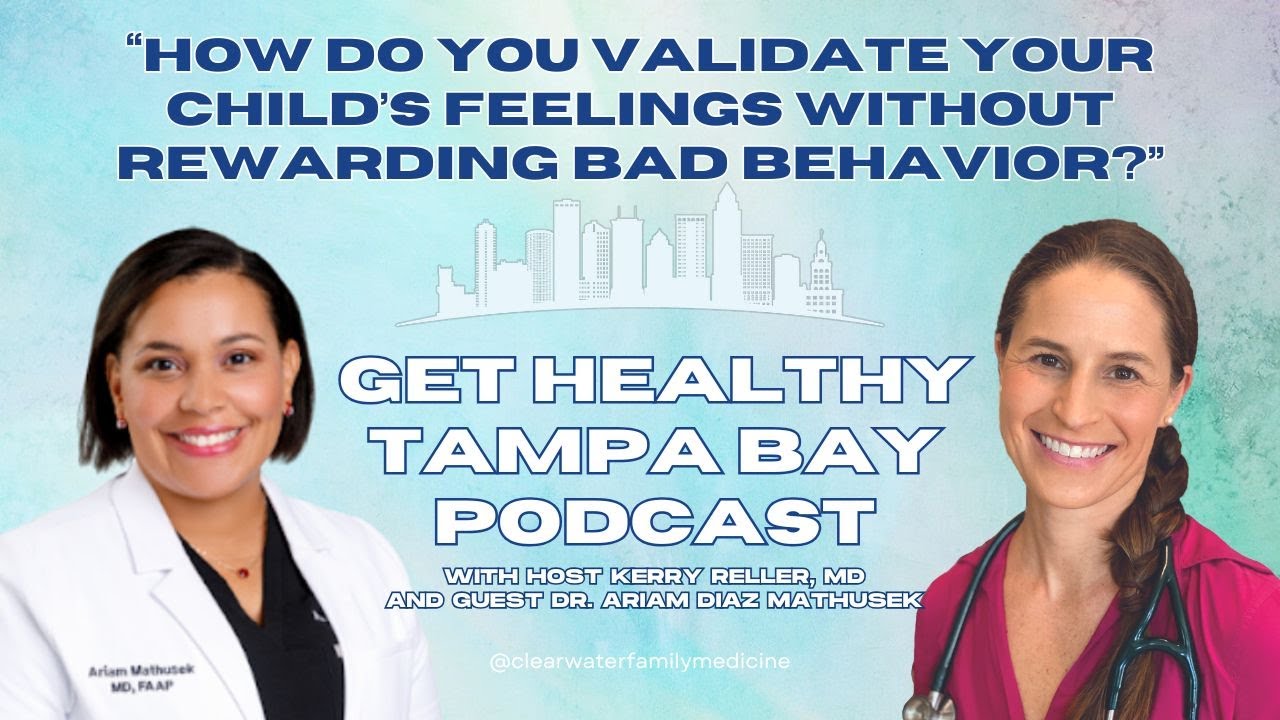
Validating Kids Emotions with Dr. Ariam Diaz Mathusek, Pediatrician & Obesity Medicine
Big emotions are part of growing up, but how parents respond can shape a child's confidence, resilience and trust. In this episode of the Get Healthy Tampa Bay Podcast, Dr. Kerry Reller talks with Dr. Ariam Diaz Mathusek, a pediatrician, obesity medicine specialist, mom of three and founder of Brightside Care in Mebane, North Carolina, about how to validate your child's feelings without accepting bad behavior.
What Validation Really Means
Validation means understanding where your child's feelings are coming from. It does not mean accepting every behavior that comes with those feelings. As Dr. Mathusek explains, you can say, "I understand this is hard," and still hold firm that hitting, yelling or breaking rules is not okay. Every child is different, too. Your first child will not teach you everything, and each child's personality calls for a slightly different approach.
Why It Matters So Much for Teens
When teens feel heard, they feel connected, and connection builds trust. A teen who trusts their parents is more likely to come to them instead of only to friends. Validation also teaches teens to manage their own feelings and solve their own problems. Dr. Mathusek explains that when teens feel dismissed, the brain's emotional alarm system takes over while the still-developing prefrontal cortex, which handles reasoning and self-control, has a harder time engaging. Feeling ignored or ashamed is linked to higher rates of anxiety and depression.
Key Takeaways
Give space first: When emotions run high, step back. It might take 20 minutes or a full day before everyone is ready to talk.
Drop "I told you so": It feels judgmental and teaches kids to doubt their own judgment.
Label the emotion, then give them the floor: Try "I can tell you're angry," "I can see this really matters to you," or "Help me understand."
Admit what you don't know: Being a teen today, with social media and different pressures, is not the same as when parents grew up.
Keep boundaries clear and consistent: Validation does not cancel consequences. If five minutes past curfew brings no consequence, it soon becomes 30 minutes.
Calm yourself first: Take a deep breath or a few minutes alone before responding. It also models healthy coping for your child.
When Your Teen Says "You Don't Understand Me"
Instead of arguing, Dr. Mathusek suggests turning it back to them: "You're right, I don't know what it's like to be a teenager right now. Help me understand." That simple shift shows your teen you will listen rather than yell or rush to fix things, and it opens the door to finding a solution together.
Why Empathy and Discipline Feel Hard to Balance
Many parents grew up in homes focused on obedience and following rules, where feelings were not always discussed. Others had very different upbringings with few rules at all. Either way, parents often struggle to know how much empathy to offer and how firm to be. Dr. Mathusek reminds parents that our idea of success may not match who our child is meant to be, and kids need grace as they figure that out. Parents grow in stages too, learning new tools as each child reaches a new age.
When Your Child Shuts Down
If your child refuses to talk, do not push. Sometimes kids have so many feelings at once that they cannot name them yet. Let them know, "I can see you're struggling, and whenever you're ready, I'm here." Once their brain is out of fight-or-flight mode, they are much more likely to open up. And when they do, try not to interrupt.
The One Thing That Makes the Biggest Difference
Dr. Mathusek's top tip is simple: spend time with your child, even if it means watching the same movie for the hundredth time. Time together helps you understand each child's personality. She especially encourages parents to connect with the child who is struggling most, so that child knows they are seen and not labeled as "the difficult one."
Conclusion
Validating your child's emotions builds trust, resilience and a home where kids know they are loved no matter what, while clear boundaries teach responsibility. As Dr. Mathusek puts it, your most important treasure lives in your house. If you are ever worried about your child's or teen's safety or mental health, talk with their pediatrician, or call or text 988 to reach the Suicide and Crisis Lifeline.
About Our Guest
Dr. Ariam Diaz is a general pediatrician that has been in practice for over a decade. She has been involved in leadership opportunities at work but also in her community. Her passion about children well being has led her to discover how to help parents create a solid foundation in kids and teens by developing “good habits” that will help them thrive.
Connect with Dr. Ariam Diaz Mathusek, Pediatrician & Obesity Medicine
Listen to the full episode on the Get Healthy Tampa Bay Podcast: Validating Kids Emotions with Dr. Ariam Diaz Mathusek, Pediatrician & Obesity Medicine
Listen and Learn More
Watch the full episode above or listen to the Get Healthy Tampa Bay Podcast on your favorite podcast app. To schedule a visit with Dr. Kerry Reller at Clearwater Family Medicine and Allergy in Clearwater or Palm Harbor, call (727) 446-1097.


