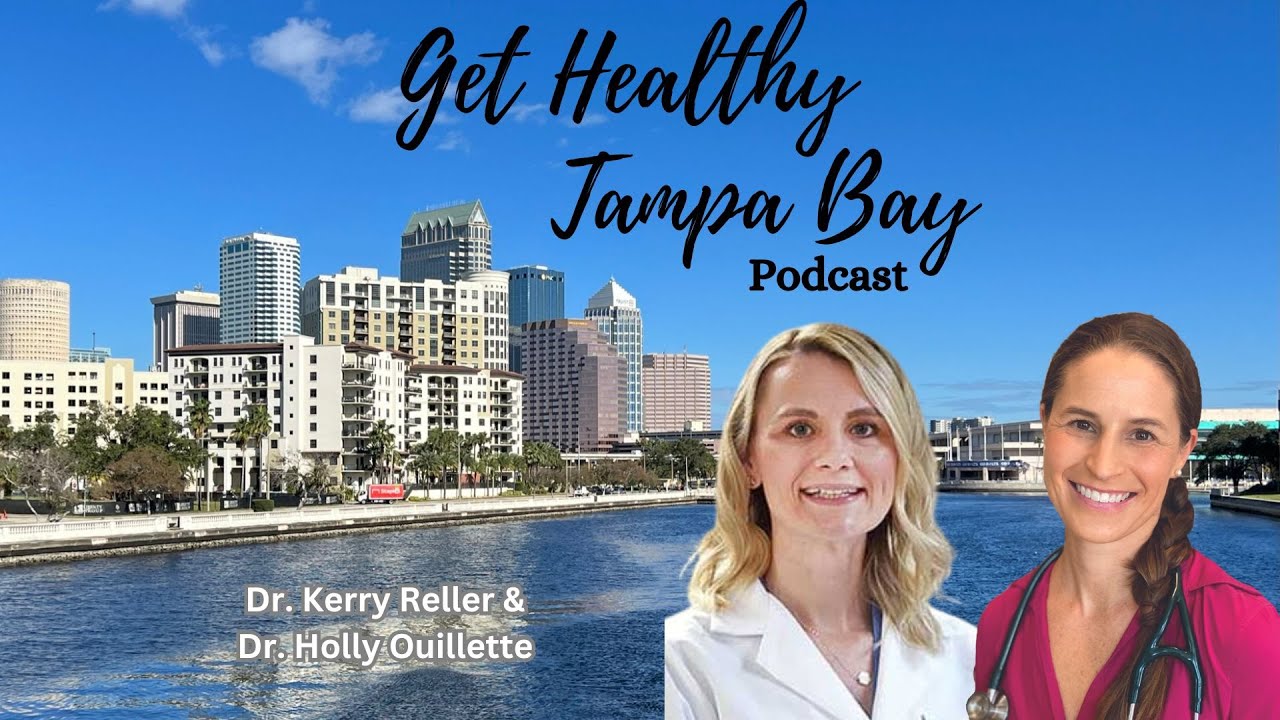
Understanding Your Menstrual Health or the "5th Vital Sign" with Dr. Holly Ouilette
Your period can tell you a lot about your overall health. That is why many doctors call the menstrual cycle the "fifth vital sign," alongside blood pressure, heart rate, temperature and breathing rate. In this episode of the Get Healthy Tampa Bay Podcast, Dr. Kerry Reller talks with Dr. Holly Ouilette, a gynecologist with Elite Women's Care in Wesley Chapel with fellowship training in women's pelvic health, about what a normal cycle looks like and when to get help.
How the Menstrual Cycle Works
Follicular phase: On day one of your period, the brain releases FSH, signaling the ovaries to grow follicles, the small cysts that hold eggs. The ovaries make estrogen, and the uterine lining thickens.
Ovulation: A surge of LH, the hormone ovulation kits detect, releases the egg about 36 hours later.
Luteal phase: The ovary makes progesterone to prepare the lining. If no pregnancy occurs, estrogen and progesterone drop and the lining sheds as your period.
Because so many organs work together, a problem anywhere in the body can show up as a change in your period.
What Is a Normal Period?
Frequency: Every 21 to 35 days
Regularity: A predictable pattern without big swings from month to month
Duration: No more than about eight days of bleeding
Volume: Not so heavy that it interferes with work, school or daily life. Soaking through a pad and tampon together is too heavy.
Cycles can be more erratic in the teen years and as women approach menopause.
What Irregular Periods Can Mean
Periods too far apart or missing: Possible thyroid problems, high prolactin, polycystic ovary syndrome (PCOS) or early loss of ovarian function. Always take a pregnancy test if a period is late.
Periods too frequent or heavy: Possible fibroids, polyps, adenomyosis or, less commonly, cancer, especially after age 35
Severe pain: Some cramping is normal, but pain that keeps you in bed may signal endometriosis.
Treatment Options
For cramps: Ibuprofen or naproxen work best when started about a day before your period. Exercise and heating pads also help.
For heavy bleeding without hormones: Tranexamic acid, taken only during your period
Hormonal options: Birth control pills, patches and rings for regular periods. Progesterone IUDs, the arm implant and the shot often make periods lighter or stop them. The hormonal IUD acts mostly within the uterus.
Skipping periods: It is safe to skip periods on birth control. Extended-cycle pills give a period about every three months.
Weight loss can lighten heavy periods for women with excess weight.
A low-cost generic pill is available at some retail pharmacies for patients without good insurance coverage.
When to See a Doctor
One off-cycle period a year is usually not a concern and may be due to stress. Track your periods with an app or calendar, noting the first day of bleeding and any spotting. If irregular periods continue for three months, especially after age 40, or for six months if you are younger, schedule a visit. Book a separate appointment from your annual exam so there is time to talk it through.
Key Takeaways
Your period is a window into your health
Track your cycle
Severe pain or heavy bleeding is not something to just live with
Many treatment options exist
Conclusion
If your periods are irregular, very heavy or painful, help is available. Dr. Reller offers women's health care, including evaluation of menstrual problems and birth control options, at Clearwater Family Medicine and Allergy in Clearwater and Palm Harbor. Call (727) 446-1097 or visit cfma.health.
About Our Guest
Dr. Holly Ouillette is a gynecologist with Elite Women's Care. She is a skilled practitioner dedicated to advancing women's health. Dr. Ouillette is certified by the American Board of Obstetrics and Gynecology (ABOG) and specializes in minimally invasive surgery including da Vinci Robotic Surgery. During her residency training at The University of Texas Health Science Center in Houston she was awarded the title of Outstanding Resident Surgeon by The Society of Laparoendoscopic Surgeons. After residency she went on to gain additional training in minimally invasive surgery at The Women's Hospital of Texas Pelvic Restorative Center. Prior to her aforementioned training in Houston, TX she received her bachelor's degree at The University of Michigan followed by her medical doctorate at Wayne State University.
For more detailed insights and to listen to the full conversation, check out the Get Healthy Tampa Bay podcast episode featuring Dr. Holly Ouilette.
Listen to the full episode on the Get Healthy Tampa Bay Podcast: Understanding Your Menstrual Health or the "5th Vital Sign" with Dr. Holly Ouilette
Listen and Learn More
Watch the full episode above or listen to the Get Healthy Tampa Bay Podcast on your favorite podcast app. To schedule a visit with Dr. Kerry Reller at Clearwater Family Medicine and Allergy in Clearwater or Palm Harbor, call (727) 446-1097.
Women's health and hormone care at CFMA: We offer perimenopause and menopause care, including FDA-approved hormone therapy when appropriate, in Clearwater and Palm Harbor. Learn about our hormone care.


