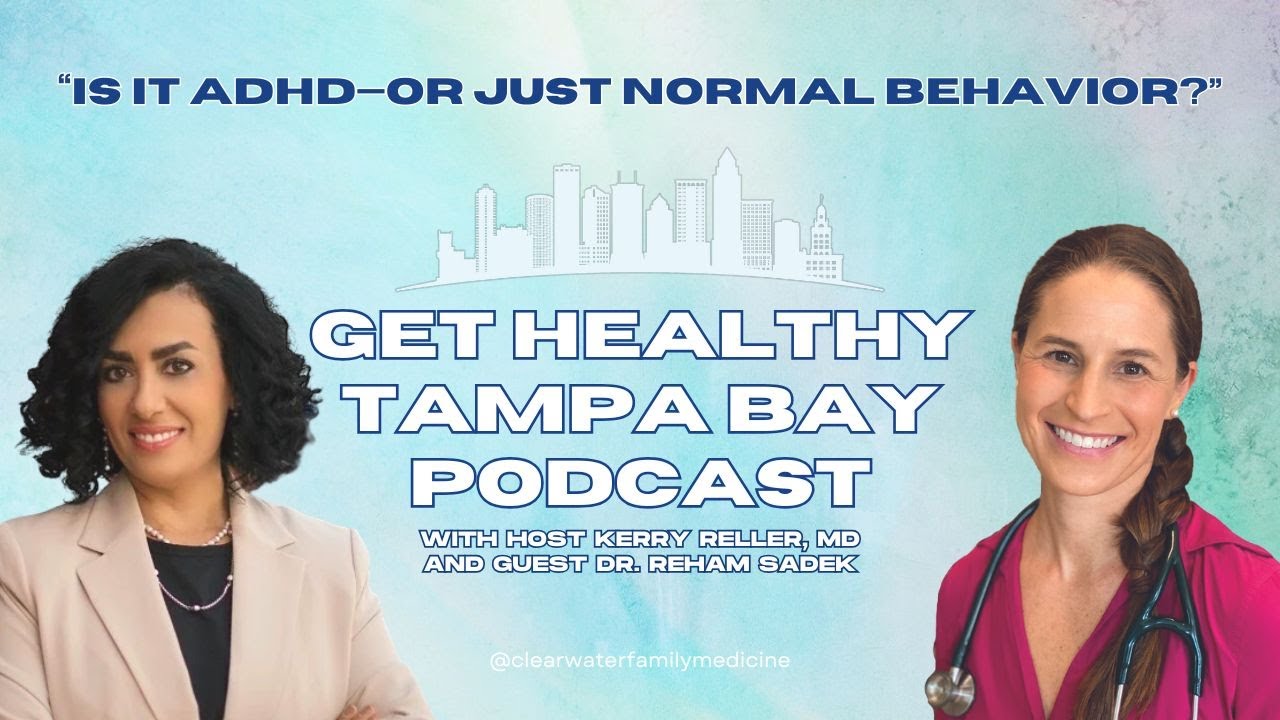
Understanding ADHD in Kids: Diagnosis, Treatment and Parenting Support with Dr. Reham Sadek
ADHD is one of the most common conditions in childhood, and it is also one of the most misunderstood. In this episode of the Get Healthy Tampa Bay Podcast, Dr. Kerry Reller talks with Dr. Reham Sadek, a board-certified child, adolescent and adult psychiatrist in Tampa and author of Parenting Kids with ADHD: From Frustration to Fulfillment, about how ADHD is diagnosed, why early treatment matters and how parents can support their children at home.
What Is ADHD?
ADHD stands for attention-deficit/hyperactivity disorder. Dr. Sadek describes it as a brain-based condition with effects on behavior, mood and sleep. It is not the result of bad parenting or a "bad kid." What used to be called ADD is now considered a subtype of ADHD. There are three presentations: mainly inattentive, mainly hyperactive-impulsive and combined. Dr. Sadek notes that hyperactivity is not always visible. In older kids and adults, it may show up as fidgeting or racing, scattered thoughts.
Signs to Watch For
Hyperactivity: Constant movement, fidgeting, tapping or an urge to be doing something.
Inattention: Trouble sustaining focus on tasks that take mental effort, like math homework, along with forgetfulness, losing things and forgetting to turn in completed work.
Impulsivity: Acting before thinking.
Mood changes: Irritability and quick anger are common, which can sometimes be mistaken for depression or bipolar disorder.
A common myth is that a child cannot have ADHD if they can focus for hours on video games. Dr. Sadek explains that easy, entertaining activities do not require the same effort as schoolwork. To make a diagnosis, symptoms must appear in at least two settings, such as home and school.
Girls Often Get Missed
Boys more often show hyperactive and disruptive behavior, so they tend to be diagnosed earlier. Girls more often have the inattentive type, quietly daydreaming at the back of the classroom, so their struggles can go unnoticed for years.
Key Takeaways
Genetics play a big role: ADHD often runs in families, even when a parent was never diagnosed. Prematurity and smoking during pregnancy also increase risk.
Kids do not simply outgrow it: Hyperactivity may fade with age, but ADHD often continues in other forms.
Untreated ADHD has consequences: It is linked with academic struggles, social rejection, low self-esteem, depression, anxiety and a higher risk of substance use.
Medication is the main treatment: Therapy helps with related conditions, but it does not treat the core symptoms of ADHD.
Families feel it too: Parents of kids with ADHD may also feel isolated from social events.
Treatment Options
Dr. Sadek considers medication the cornerstone of ADHD treatment and encourages parents not to delay when symptoms are interfering with a child's life. Some ADHD medications are FDA-approved for children as young as three, though for preschoolers the American Academy of Pediatrics recommends starting with parent training in behavior management. Other helpful supports include:
Parent-child interaction therapy: Especially helpful when ADHD occurs with oppositional defiant disorder (ODD).
Cognitive behavioral therapy: For anxiety or depression that often occur alongside ADHD.
ADHD coaching: For teens and young adults, coaches teach practical skills for organization, finances, appointments and time management.
Digital therapeutics: Newer apps and video games designed to help improve attention.
Setting Kids Up for Success at Home
Dr. Sadek's book is designed as a reference parents can open to any chapter, with strategies organized by age and by conditions that often occur with ADHD, like autism, anxiety and OCD. One of her favorite topics is adjusting the home environment: keeping study and eating areas free of distractions, organizing and labeling spaces and making expectations clear. When parents have a plan for challenging moments, they feel calmer and have more time to build a positive relationship with their child, instead of spending every day correcting behavior. Dr. Sadek also spends a lot of time reassuring parents that ADHD is not their fault.
Conclusion
If your child has been diagnosed with ADHD, do not be afraid to treat it, and do not wait for them to grow out of it. Early treatment can open the door to better grades, stronger friendships and healthier self-esteem. If you live in the Tampa Bay area and have questions about ADHD or your family's health, Clearwater Family Medicine and Allergy can help. Call (727) 446-1097 or visit cfma.health.
About Our Guest
Dr. Reham Sadek is a board-certified child, adolescent, and adult psychiatrist based in Tampa, FL. She completed her fellowship in Child and Adolescent Psychiatry at the University of South Florida and is also pursuing board certification in obesity medicine. Dr. Sadek is the founder of Focus Psychiatry Clinic, a virtual mental health practice offering care across Florida and Texas. She is the author of Parenting Kids with ADHD: From Frustration to Fulfillment, a practical and empowering guide for families navigating life with ADHD.
Learn more or schedule a visit at: www.focuspsychiatryclinic.com
Connect with Dr. Sadek.
Listen to the full episode on the Get Healthy Tampa Bay Podcast: Understanding ADHD in Kids–Diagnosis, Treatment, and Parenting Support with Dr. Sadek.
Listen and Learn More
Watch the full episode above or listen to the Get Healthy Tampa Bay Podcast on your favorite podcast app. To schedule a visit with Dr. Kerry Reller at Clearwater Family Medicine and Allergy in Clearwater or Palm Harbor, call (727) 446-1097.


