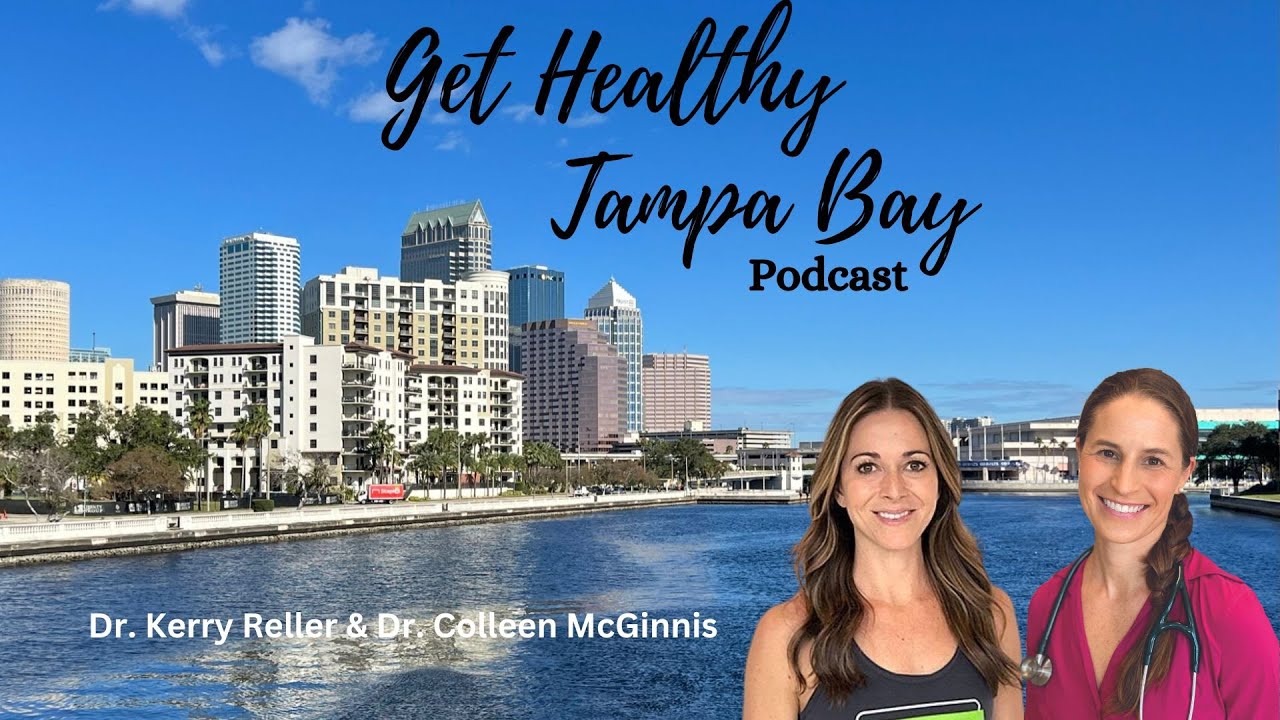
Training and Nutrition Tips for Women with Dr. Colleen McGinnis
If the workouts and diet that used to work no longer do, changing hormones may be part of the reason. In this episode of the Get Healthy Tampa Bay Podcast, Dr. Kerry Reller reconnects with her childhood soccer teammate Dr. Colleen McGinnis, a doctor of physical therapy, women's health certified physical therapist, StrongFirst certified strength coach and founder of Well Body Lab in Boulder, Colorado. They discuss the most common training and nutrition mistakes women make in perimenopause and after menopause.
Why Women Need to Train Differently After 35
As estrogen declines, women lose muscle (sarcopenia) and bone (osteopenia), insulin sensitivity drops and visceral belly fat tends to increase. Many women respond by eating less and doing more cardio, which often leaves them more tired without better results. Colleen recommends a stronger training stimulus instead:
Heavy strength training two to three times a week
Impact or plyometric training
True high intensity intervals about two days a week
Prioritizing recovery
Lift Heavy, With Good Form
"Heavy" is personal. When you are new to lifting, focus on form before adding weight. Once you are ready, heavy means finishing a set feeling you could do only one or two more good reps.
Strength: About six reps or fewer per set
Muscle size: About 8 to 12 reps
Endurance: 12 or more reps, which you can build through running, cycling and daily life instead
Choose compound lifts: Squats, deadlifts, bench press and hip thrusts work several joints at once.
Follow a plan with progressive overload: Repeat similar exercises for 4 to 12 weeks while slowly increasing weight, reps or sets. Random workouts give random results.
Impact Training for Stronger Bones
Muscles pulling on bone during strength training help build bone density, and impact exercise adds more benefit. Multidirectional moves like lateral bounds, side skips and jump squats with turns challenge bone more than running in a straight line, and they also help balance. About half of women over 50 will break a bone due to osteoporosis, and hip fractures carry a high risk of death within a year, so preventing falls matters. If you already have osteoporosis, ask your doctor or a physical therapist which impact exercises are safe for you.
True HIIT vs. Hour-Long Classes
High intensity interval training pushes your heart rate above about 85% of maximum for short bursts, followed by full recovery. Most 60-minute group classes are actually variable intensity training. They are motivating, but they usually are not intense enough for true HIIT benefits or heavy enough to build strength. Colleen suggests:
Keep intervals to 30 seconds or less after menopause, with longer rest, such as 30 seconds hard and 90 seconds easy.
Stop when you can no longer hit the same intensity
Limit true HIIT to about two days a week with at least 24 hours between sessions.
Benefits include better insulin sensitivity, body composition, heart health, mood and memory.
Fuel Your Workouts With Protein
Do not train completely fasted: If it has been more than two hours since you ate, have a small snack with carbs and protein beforehand.
Get protein after strength training: Colleen recommends about 30 grams in your 30s and 40 grams in your 40s soon after lifting. Whey isolate digests quickly. Plant-based blends of pea and hemp with about 3 grams of leucine also work.
Front-load protein at breakfast: Eggs plus egg whites, Greek yogurt and cottage cheese are good options. Peanut butter is mostly fat.
Ease into protein powders: Sweeteners like sugar alcohols can cause stomach upset.
Intermittent fasting: Work out during your eating window, still meet your protein needs, and avoid fasting much longer than 16 hours.
A common evidence-based target for active adults is about 1.2 to 1.6 grams of protein per kilogram of body weight per day, spread across meals. Ask your doctor about your needs if you have kidney disease.
Recovery Is Where Results Happen
Sleep seven to nine hours a night
Manage stress
Take at least one true recovery day a week: A dog walk or gentle yoga, not an "easy" run.
Mobility before workouts, static stretching after: Hold stretches longer at a gentle intensity. Pushing too hard makes muscles tense up.
Key Takeaways
Start strength training and lift heavy safely
Add impact training for bone health
Keep true HIIT short and limited
Eat enough protein
Prioritize sleep and recovery
Conclusion
Your body changes in midlife, and your training should change with it. Dr. Reller offers menopause care, bone health screening and medical weight management at Clearwater Family Medicine and Allergy in Clearwater and Palm Harbor. Call (727) 446-1097 or visit cfma.health.
Connect with Dr. Colleen McGinnis
Website: https://www.wellbodylab.com
Youtube: https://www.youtube.com/@wellbodytv5150
Instagram: https://www.instagram.com/wellbodylab/
LinkedIn: https://www.linkedin.com/in/colleen-mcginnis-4b0aa047/
Tiktok: https://www.tiktok.com/@wellbodylab
Listen to the full episode on the Get Healthy Tampa Bay Podcast: 10 Common Training and Nutrition Mistakes with Dr. Colleen McGinnis
Listen and Learn More
Watch the full episode above or listen to the Get Healthy Tampa Bay Podcast on your favorite podcast app. To schedule a visit with Dr. Kerry Reller at Clearwater Family Medicine and Allergy in Clearwater or Palm Harbor, call (727) 446-1097.
Women's health and hormone care at CFMA: We offer perimenopause and menopause care, including FDA-approved hormone therapy when appropriate, in Clearwater and Palm Harbor. Learn about our hormone care.


