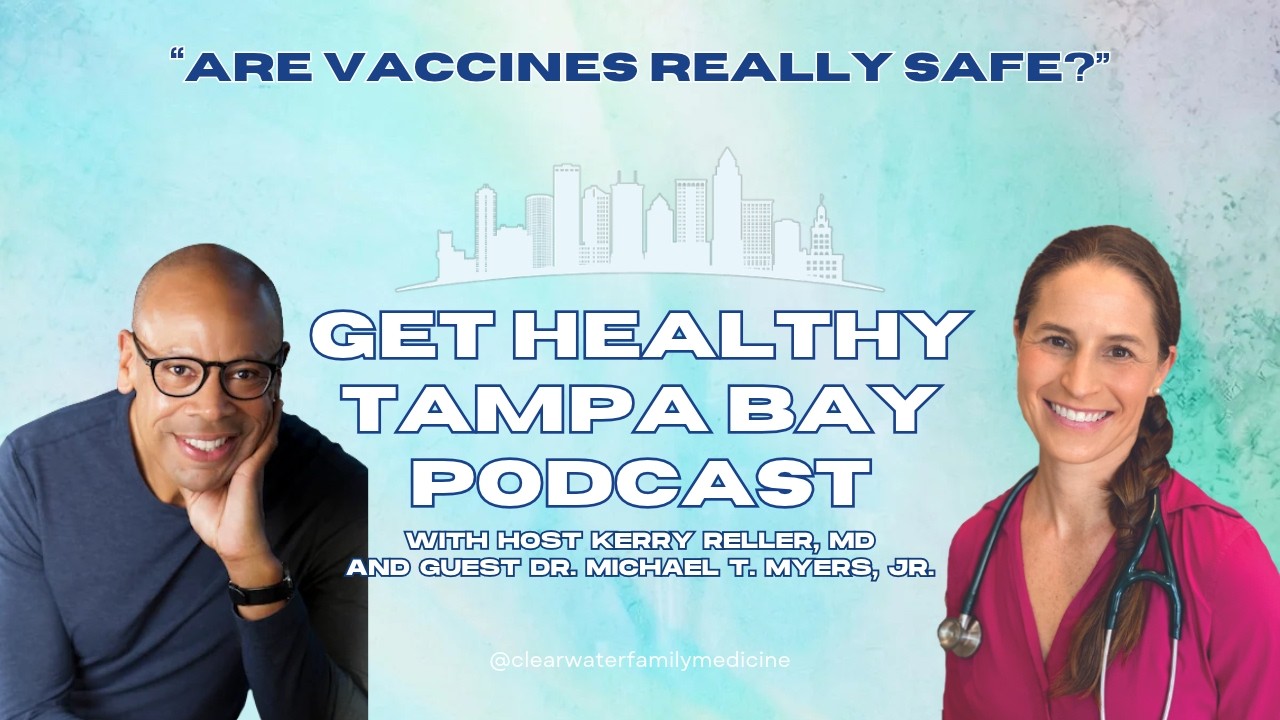
The Vaccine Bible: Measles, mRNA, Shingles and Vaccine Safety with Dr. Michael Myers
Vaccines are one of the most talked-about topics in medicine right now, and also one of the most confusing. Between changing headlines, social media and a record year for measles, it can be hard to know what to believe. Dr. Michael Myers is a physician with more than 35 years of experience in primary care, healthcare leadership and public health. He is the former chief of primary care pediatrics and practice transformation at Summit Health and the author of COVIDology: A Field Guide and The Vaccine Bible. In this episode of the Get Healthy Tampa Bay Podcast, Dr. Kerry Reller talks with Dr. Myers about how vaccines work, how they are tested and monitored for safety, what is behind today's measles outbreaks, and which vaccines adults often forget.
Why a Primary Care Doctor Wrote The Vaccine Bible
- The pandemic changed his focus: As a chief medical officer in 2020, Dr. Myers had to become an infectious disease expert almost overnight. That experience turned into a lasting interest in vaccines and preventive medicine.
- A reference for families: He wrote The Vaccine Bible so people can read a few pages on any vaccine, from anthrax to Zika, and understand the disease it prevents, how the vaccine works and the common questions around it.
- "Collective amnesia": Dr. Myers points out how quickly we forget how serious these illnesses were before vaccines made them rare.
Vaccines Are Not Just for Kids
- Adults need vaccines too: Depending on your age and health, that can include the flu shot, a COVID-19 vaccine, pneumococcal (pneumonia) vaccines, RSV and shingles vaccines.
- RSV vaccine: The CDC currently recommends one dose for all adults 75 and older and for adults 50 to 74 who are at higher risk because of conditions like heart or lung disease, diabetes or a weakened immune system.
- Immunity weakens with age: Dr. Reller tests patients for immune problems in her allergy practice. Checking how well someone responds to vaccines, like the pneumonia vaccine, can help prevent repeat sinus infections and pneumonia.
- Herd immunity protects others: People going through chemotherapy or living with an immune deficiency may not be able to get certain vaccines. When the rest of us are vaccinated, we help protect them at school, at work and in the community.
Why Measles Is Back
- A record year: The U.S. has had more measles cases in 2026 than in any year since the early 1990s, with large outbreaks in South Carolina, Utah, Arizona and Pennsylvania. Florida has also reported cases this year.
- Who is getting sick: About 9 in 10 cases are in people who are unvaccinated or whose vaccination status is unknown.
- Extremely contagious: Measles spreads through the air and can linger in a room for up to two hours after an infected person leaves. About 90% of unprotected people who are exposed will get sick.
- Two doses work very well: The MMR vaccine is about 97% effective after two doses and about 93% after one, and protection is usually lifelong.
- Adults get sicker: Childhood illnesses like measles and chickenpox tend to cause more complications in adults. If you are not sure whether you are protected, ask your doctor about checking your records or a blood test (titer).
How Vaccines Work, Including mRNA
- The basic idea is centuries old: In 1796, Edward Jenner noticed that milkmaids who caught cowpox did not get smallpox, and used cowpox to protect people. That was the first vaccine.
- Training the immune system: A vaccine shows your body a harmless piece or version of a germ so your immune system learns to recognize it and respond quickly later.
- mRNA is a newer way to deliver the same lesson: mRNA vaccines give your cells instructions to make one specific protein from the germ, which your immune system then learns to recognize. The mRNA breaks down quickly and does not change your DNA.
- Beyond COVID-19: In August 2026 the FDA approved the first mRNA flu vaccine (mFLUSIVA) for adults 50 and older. mRNA vaccines for RSV are also available.
How Vaccine Safety Is Tested and Monitored
- Clinical trials first: Vaccines go through three phases of clinical trials before the FDA reviews the results, the manufacturing process and the facilities.
- Recommendations come next: After approval, the CDC and medical groups like the American Academy of Family Physicians and the American Academy of Pediatrics weigh in on who should get a vaccine and when.
- Monitoring never stops: Safety is tracked after approval through systems like VAERS (the Vaccine Adverse Event Reporting System). Anyone can file a report. A report does not prove a vaccine caused a problem, but it flags things that need a closer look.
- The system does catch problems: During COVID-19, a rare blood clotting issue led to limits on the Johnson & Johnson vaccine, and a rare heart inflammation risk in young men led to updated guidance for mRNA vaccines.
What COVID-19 Vaccines Were Designed to Do
- Why they came out so fast: Years of earlier mRNA research, worldwide focus and major government funding allowed COVID-19 vaccines to be developed in about 11 months.
- The main goal was preventing severe illness: Clinical trials showed the biggest benefit was lowering the risk of hospitalization and death, especially for older adults and people with chronic conditions. They were not designed to guarantee you would never catch COVID-19.
- Communication matters: Dr. Myers believes much of today's distrust comes from benefits that were overpromised or not fully explained at the time.
Common Questions: Side Effects, the Flu Shot and Autism
- Normal side effects: Soreness, redness, tiredness or feeling run down for a day or so are common and usually a sign your immune system is responding. Symptoms that last or worry you should be shared with whoever gave you the vaccine.
- "The flu shot gave me the flu": Flu shots used in the U.S. cannot give you the flu. Each year's vaccine is based on the strains expected to circulate, so some years it is a better match than others. Even in lower-match years, vaccinated people are less likely to be hospitalized.
- Combination vaccines: Combination shots are studied to make sure they are as safe and effective as separate shots, and they mean fewer pokes for kids. One exception: for the first dose of MMR and chickenpox in children under 4, separate shots are preferred because the combined MMRV shot carries a slightly higher risk of fever-related seizures.
- Vaccines and autism: The 1998 study that started this idea was retracted, and its author lost his medical license after it came out that he had been paid by lawyers suing vaccine makers. Many large studies since then, including millions of children, have found no link between vaccines and autism.
- Missed vaccines: It is not too late. Catch-up schedules exist for children and adults, so talk with your doctor about what fits you.
Shingles Vaccine and Dementia
- A promising link: Several large studies have found that people who got the Shingrix vaccine were less likely to be diagnosed with dementia over the next several years, with estimates ranging from about 20% to more than 30% lower risk.
- Not proven yet: These studies show an association, not cause and effect. Researchers are still working to confirm whether the vaccine itself lowers dementia risk.
- Still worth getting: Shingrix is recommended for adults 50 and older (and some younger adults with weakened immune systems) to prevent shingles and its long-lasting nerve pain.
Mosquito-Borne Illnesses in Florida
- Dengue and Zika: Florida, Texas and Puerto Rico have seen locally spread mosquito-borne illnesses, including dengue in the Tampa Bay area.
- No routine vaccine yet: There is no widely available vaccine for most people against dengue or Zika in the U.S., so preventing mosquito bites with repellent, long sleeves and removing standing water is your best protection.
Key Takeaways
- Vaccines go through years of testing and ongoing safety monitoring after approval.
- Measles is back at record levels, and two doses of MMR protect about 97% of people for life.
- Adults need vaccines too, including flu, COVID-19, pneumonia, RSV and shingles depending on age and health.
- There is no link between vaccines and autism.
- Vaccine recommendations have changed several times recently, so review yours with your doctor each year.
Conclusion
Dr. Myers's message is simple: vaccines are one of the best tools we have to stay healthy, live longer and protect the people around us. Recommendations depend on your age, health, pregnancy status and travel plans, and national guidance has shifted several times over the past two years. The best next step is a conversation with a doctor you trust who knows your history. At Clearwater Family Medicine and Allergy, we can review your vaccine records, check immunity when needed and help you decide what makes sense for you.
Call (727) 446-1097 or visit cfma.health.
Connect with Dr. Michael Myers
- Website: drmikemyers.com
- Book: The Vaccine Bible: A Comprehensive, Common Sense Guide to What Keeps Us Safe from the Flu, Measles, Hepatitis, and More, available wherever books are sold.
Watch the full episode, Episode #201: The Science Behind Vaccines with Dr. Michael T. Myers, Jr., on YouTube, or listen on the Get Healthy Tampa Bay Podcast.


