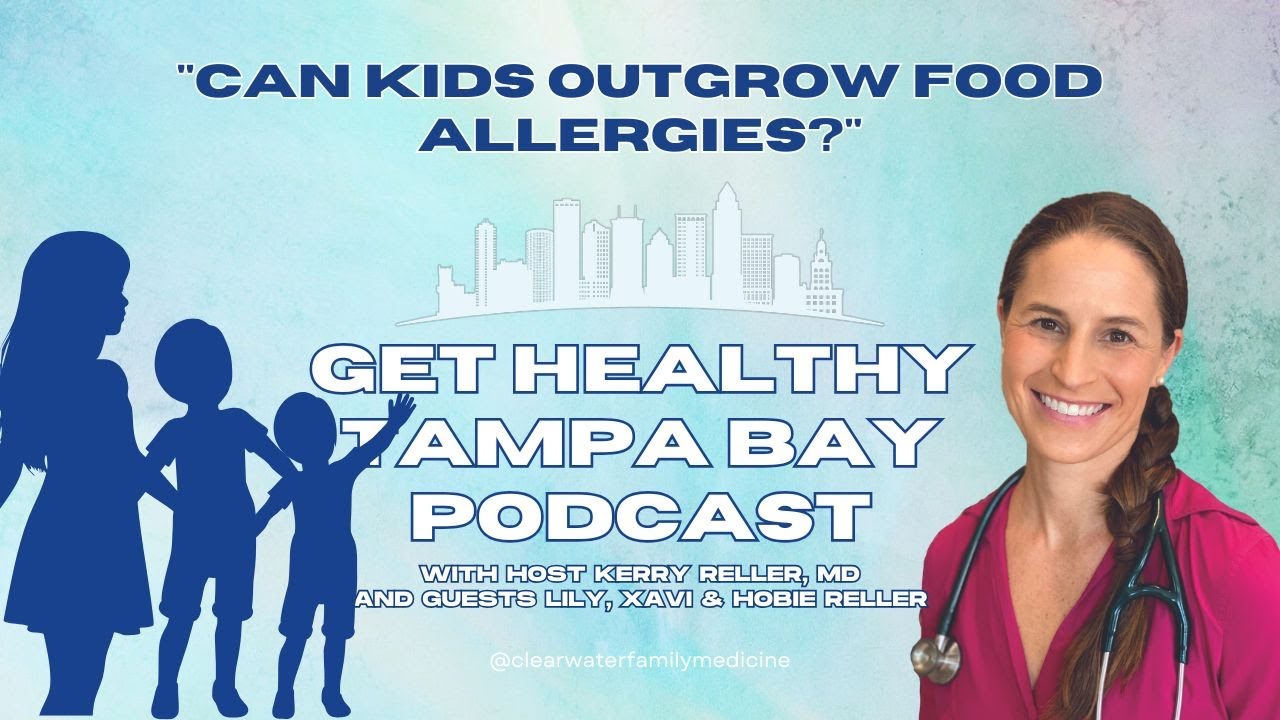
Talking Food Allergies with Dr. Reller, Lily, Xavi and Hobie: Fun Facts and Safety Tips
About 1 in 13 kids in the United States has a food allergy, and nearly half have had a severe reaction. In this special episode of the Get Healthy Tampa Bay Podcast, Dr. Kerry Reller, a family medicine physician with a focus on allergy, is joined by three very special co-hosts, her kids Lily, Xavi and Hobie, for a fun and practical look at food allergies, how they develop and how to stay safe.
Food Allergy or Food Intolerance?
A food allergy happens when the immune system mistakenly treats a food protein as dangerous and overreacts. Reactions can range from mild to life-threatening. A food intolerance, like lactose intolerance, is a digestive problem that can be uncomfortable but is not dangerous. Bloating after cheese is likely an intolerance. Trouble breathing after eating a peanut is a medical emergency.
The Top 9 Food Allergens
Peanuts (which are actually legumes, like beans)
Tree nuts, such as pecans, pistachios, hazelnuts and Brazil nuts
Milk
Eggs
Wheat
Soy
Fish
Shellfish, such as shrimp, crab and lobster
Sesame, added to the list in 2023
How Food Allergies Start
One of the biggest risk factors for food allergy in children is eczema. When a baby's skin barrier is damaged, food proteins can enter through the skin and trigger the immune system, even if the child has never eaten the food. Dr. Reller sums it up this way: "Through the skin, allergies begin, and through the diet, they stay quiet." Introducing common allergens like peanut, egg and milk early by mouth can actually help prevent allergies. When Lily was born, guidelines had just changed to recommend early peanut introduction, while just a few years earlier, her cousin's family was told to delay it.
Key Takeaways
Eczema is the top risk factor: Treating a baby's eczema and protecting the skin barrier matters.
Introduce allergens early: Unless your child has had a reaction, there is no need to introduce foods one at a time, and delaying them can increase risk.
Many kids outgrow allergies: Milk, egg, soy and wheat allergies are often outgrown. Peanut and tree nut allergies are less likely to go away.
Allergy tests are not perfect: Skin and blood tests can be positive even when a child can safely eat the food.
Oral food challenges are the gold standard: Eating gradually larger amounts of a food under medical supervision tells us the most.
"May contain" labels are not regulated: For severe allergies, it is safest to avoid products with these warnings.
The Milk and Egg Ladder
For many kids with milk or egg allergies, baked forms are easier to tolerate because baking changes the shape of the protein. A milk or egg ladder starts with well-baked foods like muffins, then gradually moves up to less-cooked forms like pancakes, cheese, yogurt or scrambled eggs. This approach should always be guided by an allergist, but for many families it can be a safe and empowering path toward tolerance.
Recognizing and Treating a Reaction
Signs of an allergic reaction include hives, swelling, itching, vomiting, stomach cramps, coughing, wheezing, throat tightness, dizziness and fainting. If two or more body systems are involved, or there is even one severe symptom, it is time for epinephrine. Epinephrine options include auto-injectors such as EpiPen, Auvi-Q (which gives voice instructions) and Adrenaclick, plus Neffy, a needle-free nasal spray. Always carry two doses. Dr. Reller shares an update from a recent allergy conference: if symptoms resolve completely and quickly after one dose, a responsible adult is monitoring and a second dose is available, you may not always need to go to the ER right away. The most important thing is not to delay using epinephrine.
Staying Safe at School, Parties and on the Go
Bring a safe treat to birthday parties and school events.
Teach kids to say "No, thank you" when they are not sure what is in a food.
Train teachers and coaches to recognize reactions and use epinephrine, using trainer devices for practice.
Plan ahead when traveling: Carry two epinephrine devices, wipe down airplane trays, call restaurants ahead and use allergy translation cards abroad.
Dr. Reller also supports advocacy for schools to keep stock epinephrine available for anyone, just as they do with defibrillators.
Conclusion
Food allergies can feel scary, but knowledge and preparation make a big difference. As Lily says, always be prepared. If your child has eczema, has had a reaction to a food or you want guidance on introducing allergens or outgrowing an allergy, Clearwater Family Medicine and Allergy can help, including in-office oral food challenges. Call (727) 446-1097 or visit cfma.health.
Clearwater Family Medicine and Allergy has cared for allergy and asthma patients in the Tampa Bay area since 1979, when Dr. Reller's father, allergist and immunologist Dr. J. Wayne Phillips, founded the practice.
About Our Guests
This week’s special co-hosts are Dr. Kerry Reller’s children, Lily, Xavi, and Hobie.
With their mix of curiosity, humor, and honesty, they make learning about food allergies fun and approachable. From silly answers (“diarrhea!”) to thoughtful reflections about friends with allergies, they help bring an authentic kid’s perspective to the conversation. Their final advice, “get tested,” “always be prepared,” and “be careful what you eat”, is simple yet powerful guidance for children and families everywhere.
Listen to the full episode on the Get Healthy Tampa Bay Podcast: Talking Food Allergies w/ Dr. Reller, Lily, Xavi & Hobie: Fun Facts & Safety Tips
Listen and Learn More
Watch the full episode above or listen to the Get Healthy Tampa Bay Podcast on your favorite podcast app. To schedule a visit with Dr. Kerry Reller at Clearwater Family Medicine and Allergy in Clearwater or Palm Harbor, call (727) 446-1097.


