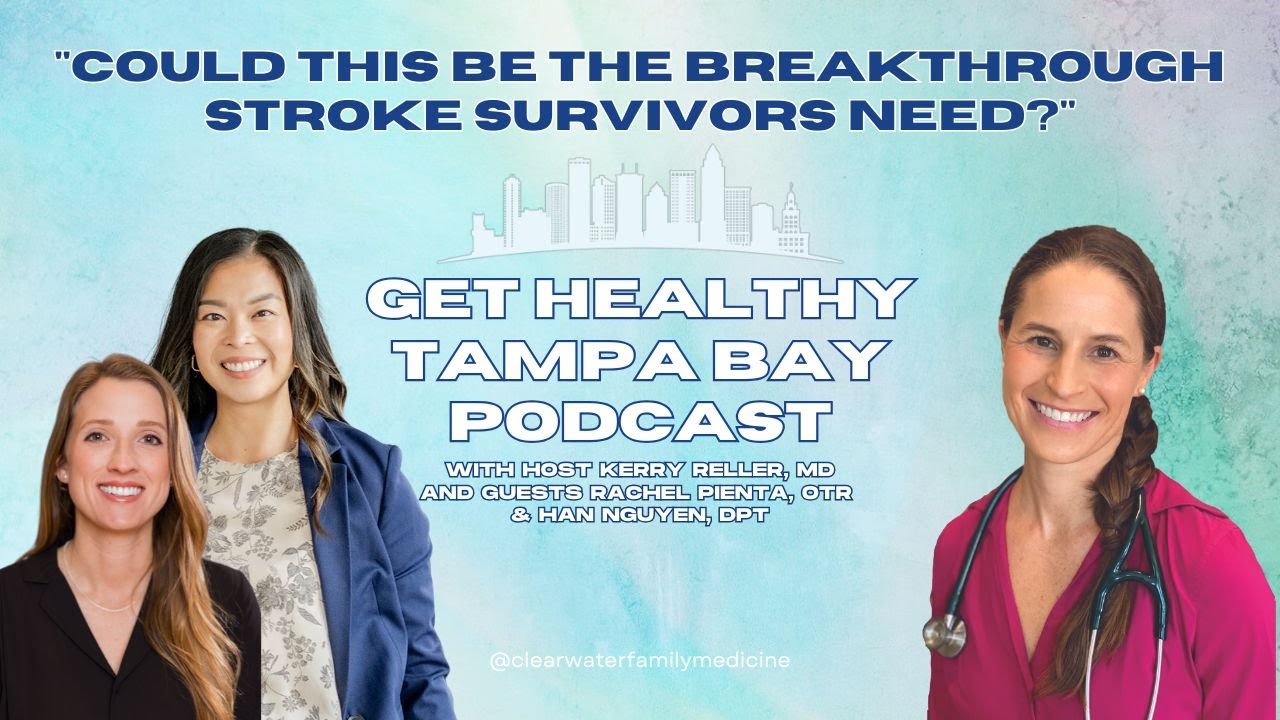
Stroke Recovery with Vivistim featuring Rachel Pienta, OTR and Dr. Han Nguyen, DPT
Recovering hand and arm function after a stroke can feel like it stalls after the first few months. In this episode of the Get Healthy Tampa Bay Podcast, Dr. Kerry Reller talks with Han Nguyen, a doctor of physical therapy, board-certified neurologic specialist and founder of an outpatient neurologic rehab clinic in Pinellas Park, and Rachel Pienta, an occupational therapist and therapy development specialist with Vivistim, about stroke recovery and a newer FDA-approved option for people living with long-term arm and hand weakness.
What Is a Stroke?
A stroke happens when blood flow to part of the brain is interrupted.
Ischemic stroke: About 87 to 90 percent of strokes, caused by a blocked or narrowed blood vessel.
Hemorrhagic stroke: Caused by bleeding in the brain from a ruptured blood vessel.
Transient ischemic attack (TIA): A temporary blockage that resolves on its own, often without lasting deficits, but it is an important warning sign of a future stroke.
Know the Signs: BE FAST
Use the acronym FAST: Face drooping, Arm weakness, usually on one side, Speech difficulty and Time to call 911. Stroke is a medical emergency. Fast treatment matters because clot-dissolving medication or procedures to remove a clot may be options if you reach the hospital quickly.
The Stages of Stroke Recovery
Acute: Hospital care, with early mobilization to prevent complications from bed rest.
Subacute: Han recommends intensive inpatient rehab when possible, with about 90 minutes or more of therapy most days. That is very different from skilled nursing rehab, which usually offers less therapy time.
Home health and outpatient therapy: Home health helps people get safe at home, and outpatient neurologic therapy continues the work, often several times a week.
Common challenges after stroke include weakness on one side, trouble with coordination and fine motor skills and spasticity, an abnormal increase in muscle tone that makes the arm and hand stiff. Recovery often moves from the shoulder outward, so the hand tends to recover last.
What Is Vivistim?
Vivistim was FDA-approved in August 2021 for people with chronic ischemic stroke who still have moderate to severe arm and hand weakness. A small device stimulates the left vagus nerve. This type of device has been used for years to treat epilepsy and depression. What makes Vivistim different is that stimulation is paired with therapy. Each time a patient makes a targeted movement, like brushing their hair, the therapist triggers a brief pulse. The goal is to strengthen the brain connections behind that movement faster than therapy alone.
How the Process Works
Implant: An outpatient procedure under general anesthesia, about 45 to 90 minutes, with a small incision in the neck and a battery placed in the chest, similar to a pacemaker.
In-clinic therapy: About two weeks after surgery, patients start six weeks of therapy, three times a week for 90 minutes.
Home use: Patients swipe a magnet over the device to turn it on during daily tasks like dressing, laundry or writing.
Side effects: Most people do not feel the stimulation. Some notice a tickle in the throat or need to cough.
Key Takeaways
Research supports it: In the study published in The Lancet in 2021, patients who received vagus nerve stimulation plus rehab improved two to three times more than those who did the same rehab without active stimulation.
Time since stroke did not matter: People 9 months to 10 years after their stroke responded similarly.
Some finger movement is needed: Candidates need at least some ability to open the fingers and thumb. If spasticity is limiting, a neurologist or physiatrist may recommend treatments like Botox first.
Motivation matters: Results depend on the effort patients put into therapy and home practice.
Insurance: Medicare was covering the device for qualifying patients at the time of recording. Medicare Advantage and commercial plans typically require prior authorization.
Real-World Wins
Patients often set goals that matter in everyday life, like tying their shoes, flipping a light switch, writing letters to grandchildren or using power tools again. Those are the victories that mean the most.
Conclusion
There is no expiration date on neuroplasticity. Whether or not Vivistim is right for you, intensity, repetition and practicing meaningful tasks can keep helping your brain recover, even years after a stroke. If you live in the Tampa Bay area and need help managing stroke risk factors like blood pressure, cholesterol and diabetes, Clearwater Family Medicine and Allergy can help. Call (727) 446-1097 or visit cfma.health.
About Our Guests
Rachel Pienta, OTR is an occupational therapist and Therapy Development Specialist with Vivistim. She works closely with patients, therapists, and providers to guide stroke survivors through the Vivistim journey and support their recovery.
Dr. Han Nguyen, DPT is a board-certified neurologic physical therapist and founder of Neubility Rehabilitation and Wellness in Pinellas Park, FL. Her clinic specializes in neurologic rehab, including stroke, Parkinson’s, brain injuries, and balance disorders. Dr. Nguyen is passionate about helping patients regain meaningful function through personalized, high-intensity rehab.
Listen to the full episode on the Get Healthy Tampa Bay Podcast: Stroke Recovery with Vivistim Featuring Rachel Pienta, OTR & Han Nguyen, DPT
Listen and Learn More
Watch the full episode above or listen to the Get Healthy Tampa Bay Podcast on your favorite podcast app. To schedule a visit with Dr. Kerry Reller at Clearwater Family Medicine and Allergy in Clearwater or Palm Harbor, call (727) 446-1097.


