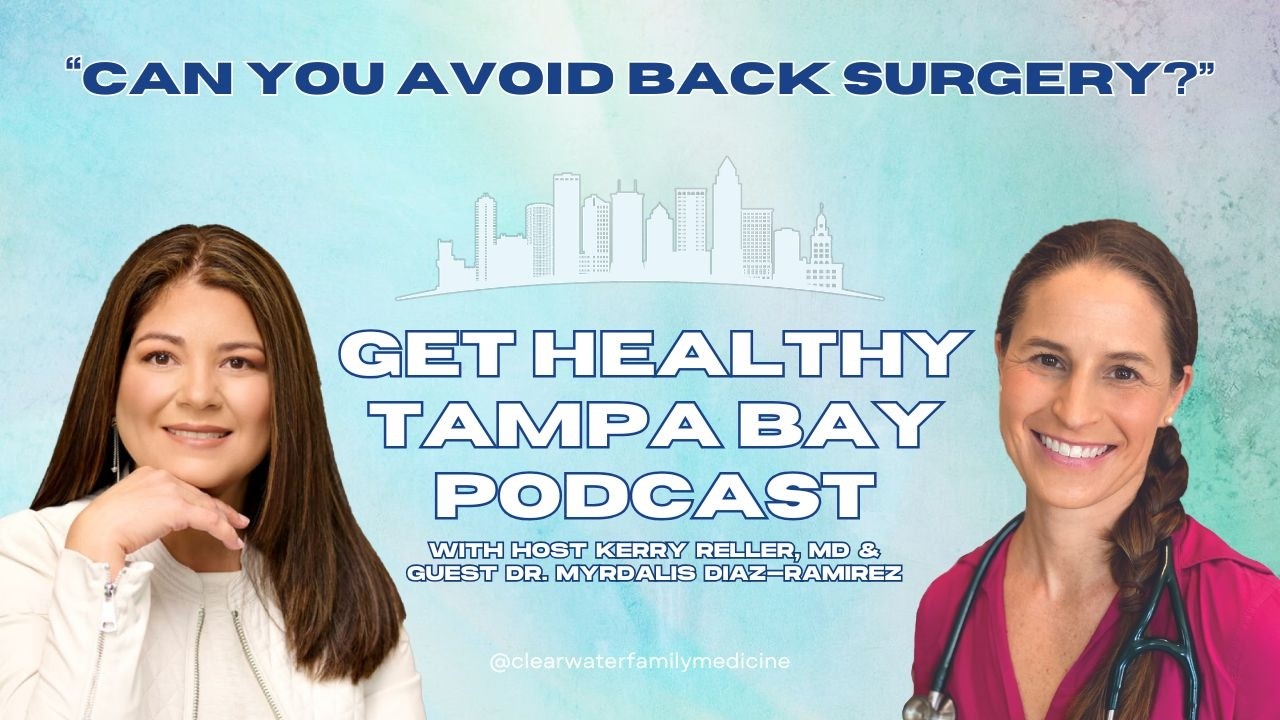
Regenerative Medicine for Back Pain with Dr. Myrdalis Diaz-Ramirez
Many people with chronic back pain have tried physical therapy, chiropractic care, steroid shots and pain medications and still are not getting better. In this episode of the Get Healthy Tampa Bay Podcast, Dr. Kerry Reller talks with Dr. Myrdalis Diaz-Ramirez, an anesthesiologist with 25 years of experience in interventional pain management and founder of Doctor 2 Spine in Tampa, about how regenerative medicine fits into back pain care and why the spine should be treated as a whole.
How Her Own Pain Shaped Her Career
During her anesthesiology residency, Dr. Diaz-Ramirez developed wrist pain and was sent to the pain clinic, a rotation many residents did not enjoy. She loved it. She could see the before and after for patients and their families. She went on to train in pain medicine, later explored functional medicine, and about 10 years ago began using regenerative medicine, which uses substances from a patient's own body to support healing.
The Spine Is a Functional Unit
Many patients come to her focused on one diagnosis, like a herniated disc or sciatica. But the spine is a column made of discs, joints, bones, muscles, tendons and ligaments, and the forces that damage one part usually affect others. Treating only one piece can leave the real source of pain behind. She reviews each patient's MRI with them on a large screen, examines the painful areas by hand, and often finds overlooked problems such as the sacroiliac (SI) joint in the low back.
Key Takeaways
Repeated steroid shots have downsides: Steroid injections can relieve pain temporarily, but even one injection may weaken ligaments, and repeated shots can worsen degeneration.
Not every herniation needs surgery: Small disc bulges that are not pinching a nerve can often improve without surgery. Large herniations causing nerve symptoms may still need a surgeon.
Nerve ablation has trade-offs: Radiofrequency ablation can reduce joint pain, but it also affects the multifidus muscle along the spine, which can weaken without rehab.
Get healthy before treatment: Smoking, uncontrolled diabetes or blood pressure, poor nutrition and mental health struggles can all affect healing and should be addressed first.
Pain medication thinking has changed: Doctors now know high-dose opioids can actually make pain worse over time, a problem called opioid-induced hyperalgesia.
The Biopsychosocial Approach
Dr. Diaz-Ramirez uses the biopsychosocial model of pain, which Dr. Reller also uses in obesity medicine. It looks at the whole person:
Biological: Your anatomy, imaging, movement and medical conditions.
Psychological: Pain can be connected to trauma or mental health, which may need care first.
Social: Do you have support at home, and can you realistically follow the plan? A plan that requires a three-hour drive every week will not work.
Regenerative Treatment Options
Treatment is personalized and done in the office, with patients going home the same day. Options include:
Platelet-rich plasma (PRP): Blood is drawn and spun in a centrifuge to concentrate the platelets, which release healing factors. A related product, plasma concentrate, adds volume.
Bone marrow aspirate: Cells drawn from the pelvic bone marrow, used for problems like disc tears.
Class IV laser therapy: Helps with inflammation and pain, and is an option for patients who do not want injections.
Hyperbaric oxygen: Used through a local partner clinic, it may help raise platelet counts before treatment.
Nutrition support: Essential amino acids before treatment, along with quitting smoking and optimizing blood sugar and blood pressure.
She is clear about the limits. Research on these combinations is still growing, they are generally not covered by insurance, and they are not right for everyone, including some people on blood thinners.
A Patient She Will Never Forget
Her very first PRP patient, Ruth, came to her in her late 70s. Ruth had been told she needed surgery but was not healthy enough for it, so she was sent to pain management for hydrocodone. Dr. Diaz-Ramirez found her pain came from the SI joint. With PRP and plasma concentrate every two to three years and no pain medication in between, Ruth stayed active and independent with her family until she passed away in her late 80s.
Conclusion
If back pain has kept you from your family, your work or the trips you want to take, it may be time to look at your spine as a whole and ask about all of your options, from physical therapy and injections to surgery and regenerative treatments. As Dr. Diaz-Ramirez puts it, we pay for our health either with time or with money. Her practice offers a free phone consultation, and her YouTube channel shares education in both English and Spanish.
Connect with Dr. Myrdalis Diaz-Ramirez
Listen to the full episode on the Get Healthy Tampa Bay Podcast: Regenerative Medicine for Back Pain with Dr. Myrdalis Diaz-Ramirez
Listen and Learn More
Watch the full episode above or listen to the Get Healthy Tampa Bay Podcast on your favorite podcast app. To schedule a visit with Dr. Kerry Reller at Clearwater Family Medicine and Allergy in Clearwater or Palm Harbor, call (727) 446-1097.


