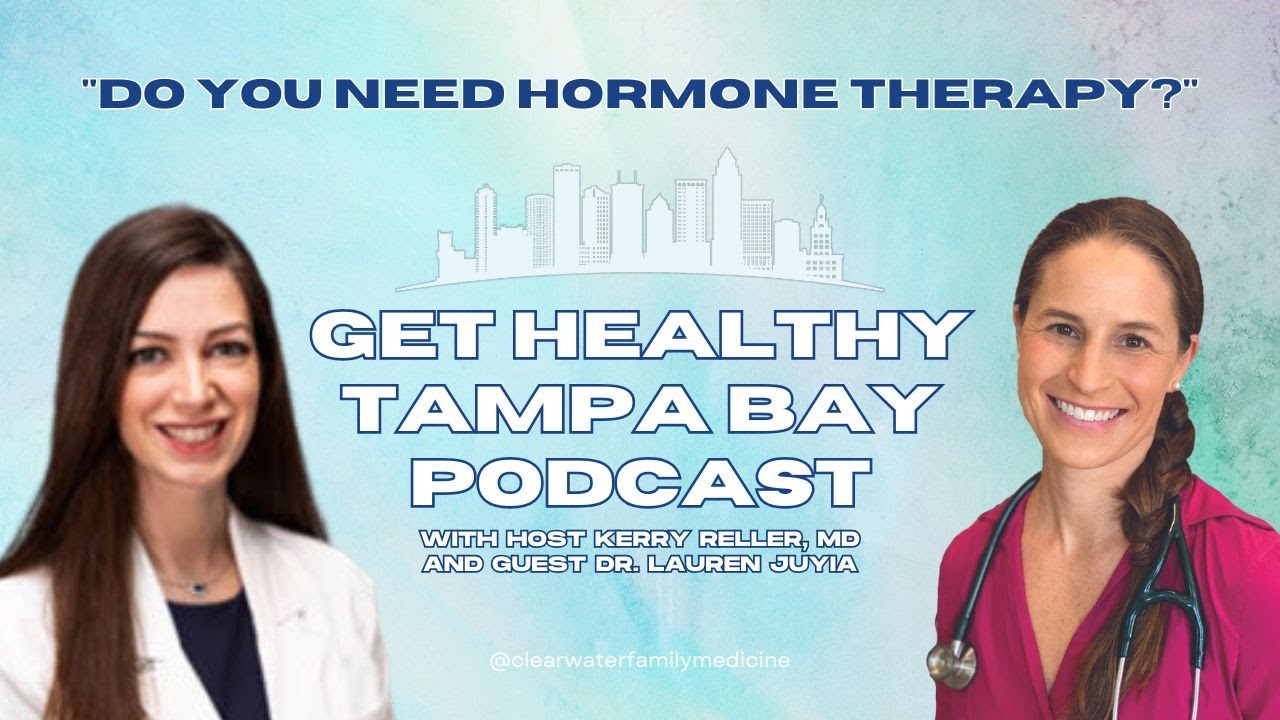
Perimenopause, Menopause and Hormone Therapy with OB-GYN and Cancer Survivor Dr. Lauren Juyia
Hot flashes, shorter cycles, mood swings and sleepless nights can all be signs that your body is entering a new stage. In this episode of the Get Healthy Tampa Bay Podcast, Dr. Kerry Reller talks with Dr. Lauren Juyia, a board-certified OB-GYN who runs a gynecology-only practice, Elite Women's Care, with offices in the Tampa Bay area. Dr. Juyia, known on Instagram as "The Benign GYN," is also a stage 4 colon cancer survivor. They discuss perimenopause, menopause, hormone therapy myths and the importance of cancer screening.
A Personal Reason to Champion Screening
Dr. Juyia was diagnosed with stage 4 colon cancer at 37, with no family history or risk factors. Ironically, she found it because the cancer had spread to her ovaries, and as a gynecologist, she recognized the feeling of an ovarian mass. Colon cancer is appearing earlier and earlier, which is why routine screening now starts at 45, or earlier with a family history. Her message: you do not need risk factors to be at risk. If you notice rectal bleeding or other changes, even if you think it is just hemorrhoids, tell your doctor.
Perimenopause vs. Menopause
Menopause is defined as going 12 months without a period on your own. Everything before that point, once symptoms or cycle changes begin, is perimenopause. Everything after is postmenopause. Common signs of perimenopause include:
Shorter cycles, for example going from 28 days to 21 or 24 days
Heavier or longer bleeding, which can lead to anemia
Hot flashes or feeling unusually hot or cold
Bigger PMS symptoms, including mood swings, cramping and breast tenderness
Worsening anxiety, ADHD symptoms or irritability, and sometimes lower libido
Dr. Juyia explains that hormone swings are bigger during perimenopause as the ovaries respond less predictably, and some people adapt to lower estrogen more easily than others. Estrogen receptors are found throughout the body, which helps explain the wide range of symptoms.
Key Takeaways
Common is not the same as normal: If something is bothering you, it is worth bringing up with your doctor.
Hormone labs are usually not needed: For women over 45 with typical symptoms, diagnosis is based on symptoms and cycle changes. Labs are more useful in younger women to rule out other causes.
There is no target estrogen level: If your symptoms are controlled, your dose is working.
Progesterone protects the uterus: Women with a uterus who take estrogen need progesterone to protect the uterine lining. Over-the-counter progesterone and yam creams are not reliably absorbed and do not provide that protection.
Schedule a separate visit: Menopause concerns deserve their own appointment, apart from a routine wellness exam.
Who Is a Good Candidate for Hormone Therapy?
Many women can safely try hormone therapy, especially if they are within 10 years of menopause (ideally within five), do not have high cardiovascular risk, uncontrolled high blood pressure or a history of hormone-sensitive cancer. A family history of breast cancer is no longer considered a reason to avoid it. Hormone therapy does not directly cause weight loss, but better sleep and less stress can make it easier to exercise and manage cravings.
Clearing Up the Breast Cancer Fear
Much of the fear around hormone therapy comes from early reports of the Women's Health Initiative in 2002. Dr. Juyia notes that many participants were in their 60s and more than 10 years past menopause, and they used horse-derived estrogen and an older synthetic progestin. Estrogen alone did not increase breast cancer risk, and the combination showed only a small increase. Today's estradiol and natural progesterone appear to have a safer profile. Estrogen may even lower colon cancer risk. Mammograms remain the gold standard for breast cancer screening.
What "Bioidentical" Really Means
"Bioidentical" and "natural" are marketing terms. Many FDA-approved hormones are already identical to what the body makes and are safe, affordable and often covered by insurance. Options include pills, gels and patches, which are surprisingly small. The Menopause Society reserves compounded hormones for rare cases, and Dr. Juyia has never needed to prescribe them. She cautions against hormone pellets, which are not FDA-approved, can deliver unpredictable doses and are often expensive.
Trusted Resources
Dr. Juyia recommends the Menopause Society website, menopause.org, and the Ovary Active podcast, hosted by menopause experts who explain the research without selling products.
Conclusion
Dr. Juyia's final advice: get your screenings. Mammograms and colonoscopies are a privilege, and they work. Talk openly with your doctor about what you are experiencing, and schedule enough time to address it. If you live in the Tampa Bay area and need a primary care physician for preventive screening or menopause support, Clearwater Family Medicine and Allergy can help. Call (727) 446-1097 or visit cfma.health.
About Our Guest
Dr. Lauren Juyia is a board-certified OB-GYN with over 10 years of experience and a passion for compassionate, evidence-based women's healthcare. She specializes in GYN-only care at Elite Women’s Care, with locations in Clearwater (soon to move to Tarpon Springs), Brooksville, and Wesley Chapel, Florida. A survivor of stage 4 colon cancer, she is also an advocate for early screening and cancer awareness. Online, she educates and empowers others through her Instagram @thebenigngyn.
Listen to the full episode on: Apple Podcasts | Spotify | Amazon Music | Stitcher | Google Podcasts | Pandora 🔗 Watch on YouTube
Listen to the full episode on the Get Healthy Tampa Bay Podcast: Perimenopause, Menopause & Hormone Therapy with OB-GYN & Cancer Survivor Dr. Juyia
Listen and Learn More
Watch the full episode above or listen to the Get Healthy Tampa Bay Podcast on your favorite podcast app. To schedule a visit with Dr. Kerry Reller at Clearwater Family Medicine and Allergy in Clearwater or Palm Harbor, call (727) 446-1097.


