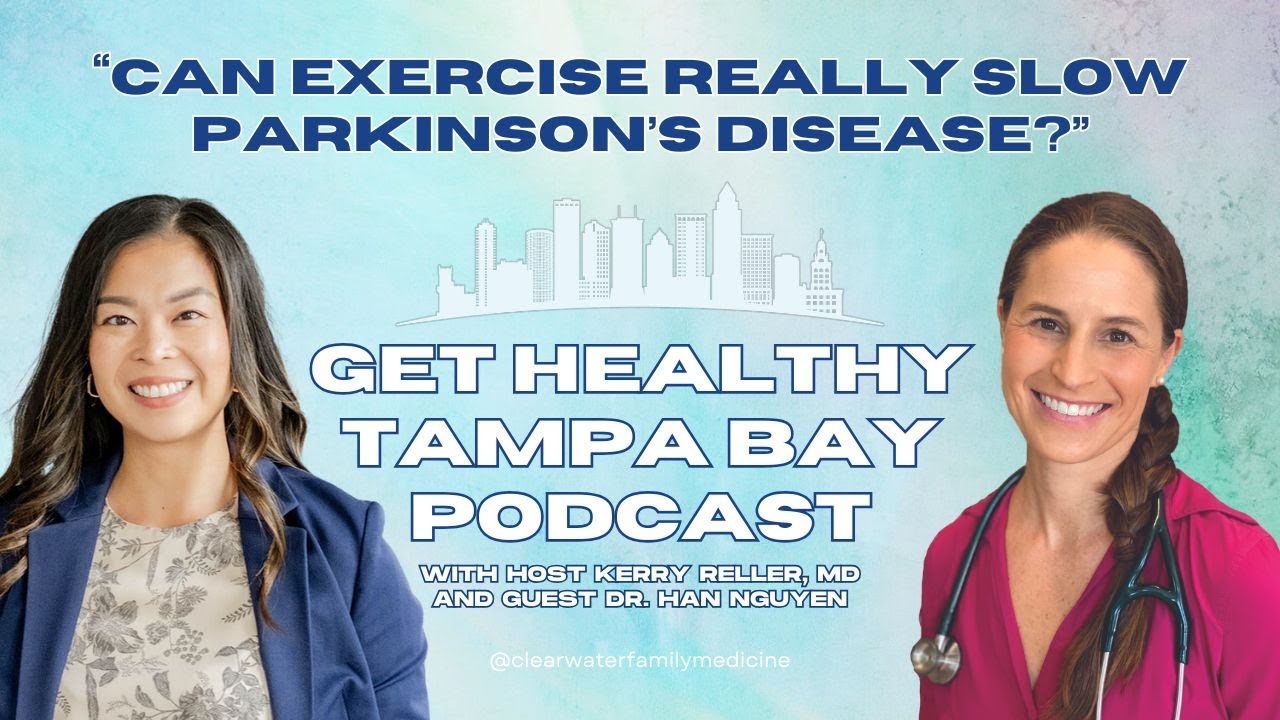
Parkinson's Disease and the Power of Movement with Dr. Han Nguyen, PT, DPT, NCS
Parkinson's disease affects far more than movement, and exercise is one of the most powerful tools we have to slow it down. In this episode of the Get Healthy Tampa Bay Podcast, Dr. Kerry Reller welcomes back Dr. Han Nguyen, a doctor of physical therapy board-certified in neurologic physical therapy and owner of Neubility Rehabilitation and Wellness in Pinellas Park, an outpatient clinic that specializes in neurological conditions.
What Is Parkinson's Disease?
Parkinson's is a progressive neurological condition that develops when brain cells that make dopamine, a chemical that helps control movement, begin to break down. It is the second most common neurodegenerative disease after Alzheimer's. Dr. Nguyen describes it as a disease of automaticity: movements that used to happen automatically now take conscious effort. The four key motor symptoms used in diagnosis are:
1. Slowness of movement (bradykinesia)
2. Stiffness (rigidity), especially in the trunk
3. Resting tremor, a shaking of the hands when they are at rest
4. Balance problems (postural instability)
Diagnosis and Risk Factors
There is no blood test for Parkinson's. A neurologist, ideally a movement disorder specialist with extra training, usually makes the diagnosis based on symptoms and how a person responds to the medication carbidopa-levodopa. A special imaging test called a DaTscan can help confirm the diagnosis. Some other conditions, such as multiple system atrophy, can look similar but respond differently to treatment. Parkinson's is more common in men and in people over 60, though young-onset Parkinson's is increasingly recognized. Some studies have linked pesticide exposure to higher risk. Women tend to have more non-motor symptoms.
Non-Motor Symptoms Matter Too
Parkinson's can also cause constipation, fatigue, memory and thinking changes, depression, anxiety, bone loss, voice changes and double vision from eye muscle problems. Slow digestion can even make medications work less effectively.
Key Takeaways
Exercise slows progression: Besides medication, high-intensity exercise is the main treatment shown to slow Parkinson's.
Start at diagnosis: The best time to see a neurologic physical therapist is right after diagnosis, not after a fall.
Train four areas: Aerobic fitness, strength, balance and flexibility, as recommended by the Parkinson's Foundation.
Think big: Large, exaggerated movements help counter the shrinking movements of Parkinson's.
It is never too late: Even people in assisted living benefit from movement for mood, sleep, digestion and bone health.
Social support helps: Group exercise and support groups are linked to better quality of life.
A Team Approach to Care
Dr. Nguyen describes a holistic team: a primary care physician and neurologist manage medications and other health conditions, physical therapists build exercise programs, occupational therapists help with memory strategies, handwriting and vision exercises, and speech therapists trained in programs like LSVT LOUD or SPEAK OUT! address voice changes. Mental health counseling and nutrition support also play important roles. For some people, deep brain stimulation can be very helpful, especially for tremor, though it typically helps balance less.
What High-Intensity Exercise Looks Like
High intensity is relative to each person. Dr. Nguyen has an 82-year-old patient who does burpees in the clinic. Her team uses harnesses on treadmills for brisk walking and running, interval training with short bursts of effort and jumping exercises, which build bone strength and power, an ability Parkinson's tends to reduce. For people with limited mobility, chair yoga, seated boxing and sit-to-stand exercises are great starting points. Exercise helps the body produce dopamine naturally, and patients almost always feel better afterward.
Local and Online Resources
Rock Steady Boxing: Boxing-based classes for people with Parkinson's, including seated options.
PWR! Moves: An online exercise library developed by physical therapist Dr. Becky Farley.
Neuro Challenge Foundation: Online and in-person classes based in Sarasota.
YMCA programs: Including boot camp and cycling classes for Parkinson's.
PD Life: A Tampa Bay nonprofit offering free exercise classes, education and support groups.
Conclusion
If you or a loved one has Parkinson's, start by seeing a movement disorder specialist to optimize medications, then get evaluated by a neurologic physical therapist so you can exercise safely and know how hard to push. As Dr. Nguyen says, if you are not exercising, start exercising. If you live in the Tampa Bay area and need a primary care home to help coordinate your care, Clearwater Family Medicine and Allergy can help. Call (727) 446-1097 or visit cfma.health.
About Our Guest
Dr. Han Nguyen, PT, DPT, NCS is a Doctor of Physical Therapy and board-certified Neurologic Clinical Specialist. She is the founder of Neubility Rehabilitation & Wellness, the only outpatient clinic in Pinellas County dedicated solely to patients with neurological conditions. Dr. Nguyen is passionate about empowering individuals with Parkinson’s, stroke, MS, spinal cord injuries, and vestibular disorders through personalized, evidence-based therapy and education.
Resources:Parkinson's Foundation Exercise Recommendation
https://www.parkinson.org/sites/default/files/documents/parkinsons-exercise-recommendations-infographic.pdf
Exercise Resources
Tampa Bay area
PD Life (free education on different topics, free group exercise classes, social events and support groups for both people with Parkinson's & caregivers)
https://parkinsonlife.org/
Neurochallenge (free education, group exercise classes virtually including lower level seated classes, support groups virtually and in person)
https://www.neurochallenge.org/
Rocksteady boxing & Tremble Clefs (singing program for people with Parkinsons)
https://thepalmsoflargo.com/parkinsons-programs/
YMCA classes
https://www.stpeteymca.org/programs/parkinson-s-disease-programs/
Not in our area but virtually
PWR! (Parkinson's Wellness Recovery)
https://www.pwr4life.org/moves/
Rouge Physical Therapy and Wellness
https://www.roguept.com/rogue-online
Listen to the full episode on the Get Healthy Tampa Bay Podcast: Parkinson’s Disease and the Power of Movement with Dr. Han Nguyen, PT, DPT, NCS
Listen and Learn More
Watch the full episode above or listen to the Get Healthy Tampa Bay Podcast on your favorite podcast app. To schedule a visit with Dr. Kerry Reller at Clearwater Family Medicine and Allergy in Clearwater or Palm Harbor, call (727) 446-1097.


