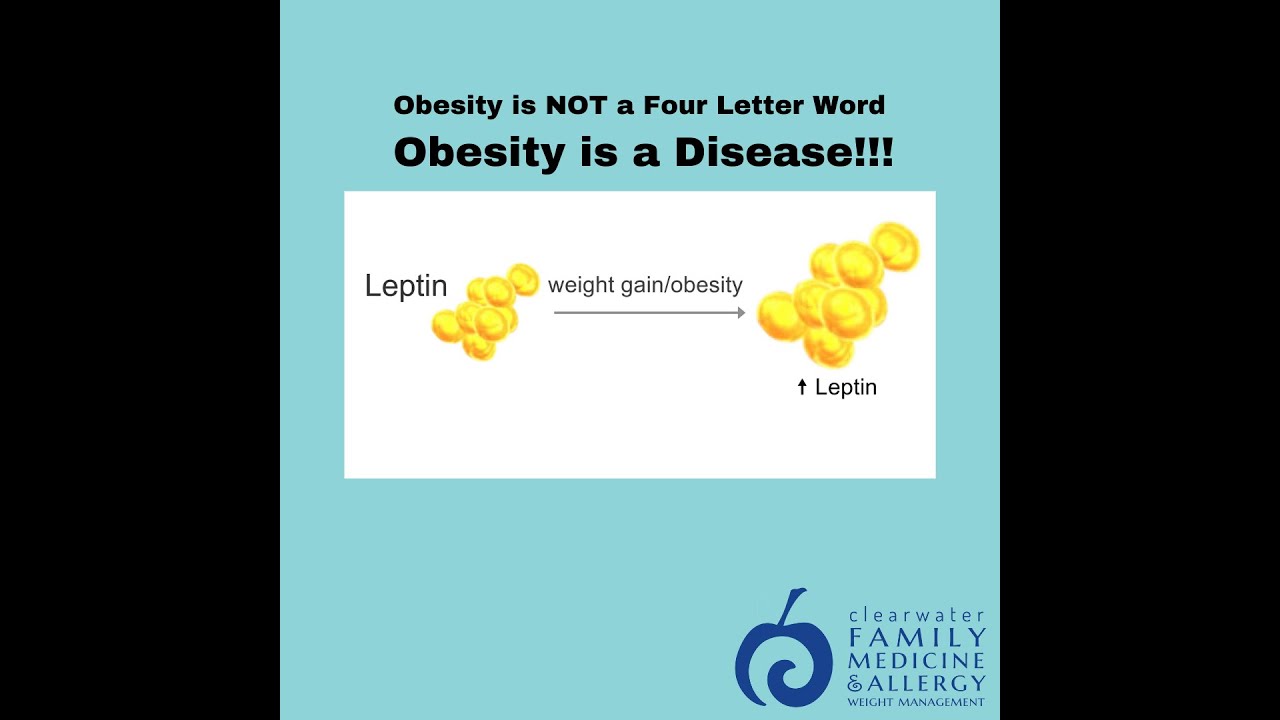
Obesity is NOT a Four Letter Word
"Obesity" is not an insult. It is the medical name for a chronic disease. In this video, Dr. Kerry Reller, a board-certified family and obesity medicine physician in Clearwater, explains what makes obesity a disease, the hormones behind hunger and fullness and why it deserves long-term treatment like any other chronic condition.
What Makes Obesity a Disease?
A disease is a disorder of structure or function in the body that produces specific signs and symptoms. The Obesity Medicine Association defines obesity as a chronic, progressive, relapsing, multifactorial, neurobehavioral disease in which excess body fat leads to fat tissue dysfunction and physical forces that harm metabolic, mechanical and emotional health. Here is what that means in plain language:
Chronic: It is long-lasting. It can go into "remission," but it is a lifelong process, more like a marathon than a sprint.
Progressive: Without treatment, it tends to get worse over time.
Relapsing: Weight can return after a period of improvement, so the habits and treatments that helped need to continue.
Multifactorial: Genetics, environment, culture, family habits, the food industry and life events all contribute. Researchers have identified more than 100 possible contributors, from pregnancy and menopause to stress, sleep, large portions and sugary drinks.
The Brain and Hunger Hormones
Obesity is not simply "calories in, calories out." Hormones from the gut, fat tissue and pancreas send signals to the brain that control hunger and fullness:
Ghrelin: The "hunger hormone," released by the stomach. It rises before meals and tells your brain it is time to eat.
Leptin: The "fullness hormone," released by fat cells. People with obesity usually have high leptin levels but the brain does not respond to it well, which is called leptin resistance.
GLP-1: A gut hormone that slows stomach emptying, boosts insulin release and signals fullness in the brain. Medications that mimic GLP-1, such as semaglutide (Wegovy) and tirzepatide (Zepbound), have changed obesity treatment.
The brain also has a reward system driven by dopamine, which can make us crave sugary foods even when we are not physically hungry. The thinking, planning part of the brain helps us make choices ahead of time.
Fat Tissue and Physical Forces
In obesity, fat tissue releases inflammatory substances that affect the whole body and are linked to conditions like insulin resistance, fatty liver and asthma. Extra weight also adds physical strain, causing joint pain and arthritis, skin rashes in folds and other problems. Every pound you lose takes several pounds of pressure off your knees with each step.
Key Takeaways
Obesity is a medical diagnosis: It is not a judgment of character or willpower.
Weight is a symptom: Obesity is the disease.
Plan ahead: Deciding on meals and treats in advance uses the planning part of your brain instead of impulse.
Treatment is long term: Just like blood pressure medicine, obesity medications are meant to be used long term while they help, not as a short-term fix.
Conclusion
Treating obesity like the chronic disease it is helps remove shame and opens the door to real, lasting treatment. If you are ready for a medical approach to weight management, Dr. Reller offers obesity medicine care at Clearwater Family Medicine and Allergy in Clearwater and Palm Harbor. Call (727) 446-1097 or visit cfma.health.
Medical weight management at CFMA: Dr. Kerry Reller, board certified in obesity medicine, leads a physician-guided program with coaching, labs and medication when appropriate, in Clearwater and Palm Harbor. Learn about our Weight Management Membership.


