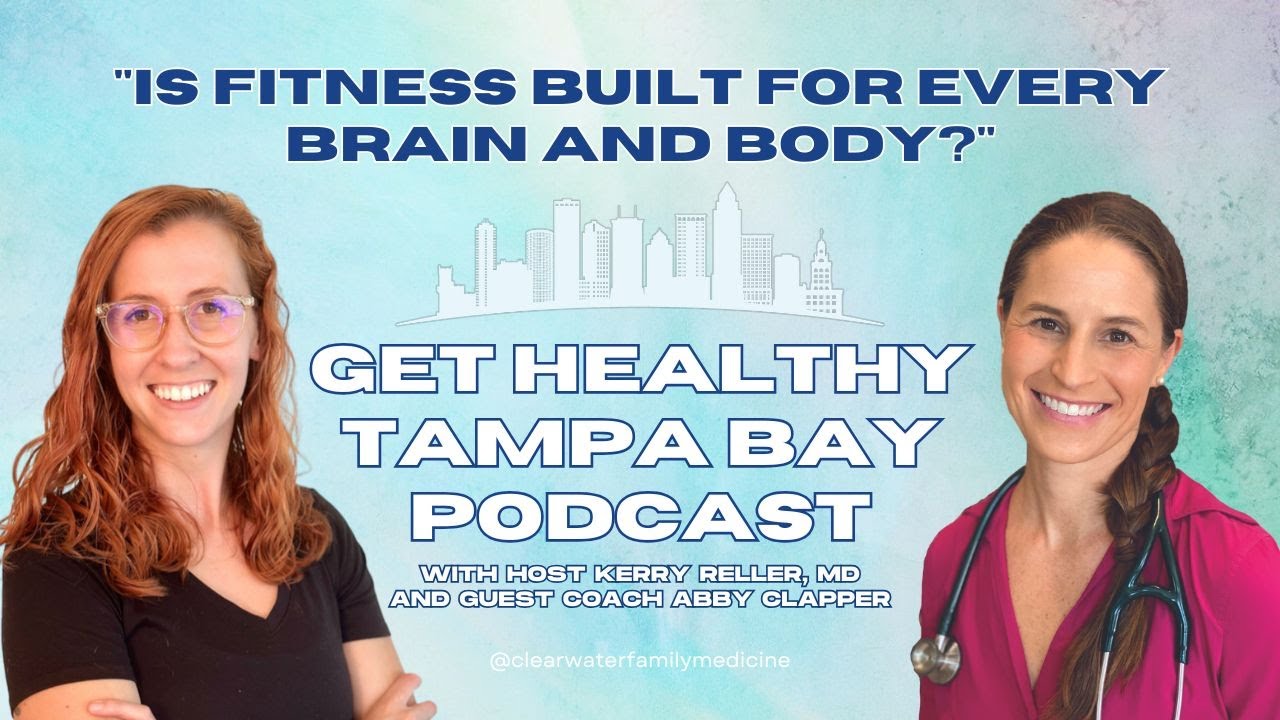
Neurodivergent Fitness and Hypermobility Training Tips with Coach Abby Clapper
Bright lights, loud music and crowded gyms can make exercise feel overwhelming, especially for people whose brains or bodies work a little differently. In this episode of the Get Healthy Tampa Bay Podcast, Dr. Kerry Reller talks with Abby Clapper, a personal trainer, ACSM-certified exercise physiologist, yoga instructor and owner of Endorfin Wellness, about adapting fitness for neurodivergent clients and people with hypermobility and chronic conditions.
What Does Neurodivergent Mean?
Neurodivergence describes brains that process information differently, including ADHD, autism, OCD and some mental health conditions. Every brain is unique, like a thumbprint. Most of Abby's clients are neurodivergent, a niche she fell into and has come to love. She says mainstream fitness culture is often not designed with them in mind. Gyms can be overstimulating with equipment noise, loud music, bright lights and fans, so Abby trains many clients in their homes or through virtual programs they can do on their own schedule.
Adapting Workouts to Each Person
Abby adjusts how she teaches based on how each client learns best. Some respond to verbal cues, others need demonstrations and some benefit from hands-on guidance. Many neurodivergent people have less awareness of how their body moves, so she starts with light weights and basic functional movements like squats, hinges, pushes and pulls before adding accessory exercises. She often starts exercises like chest presses on the floor rather than a bench, which provides stability and helps control range of motion. Dr. Reller shares that she felt safer pressing on the floor before switching to a bench at home.
Key Takeaways
Consistency is the game changer: Having a coach and a regular routine helps many clients, especially those with ADHD, finally see progress.
Rest is part of the plan: Gentle stretching on the couch or in bed can be just as valuable as a weight session on a low-energy day.
Start light: Learning to move joints properly with light weights, or no weights at all, builds a strong foundation.
Celebrate non-scale victories: Strength and function matter more than the number on the scale.
It does not have to be perfect: Small, sustainable changes beat fad diets and quick fixes.
Understanding the Spoon Theory
Abby often shares the spoon theory, a way to describe limited daily energy. Imagine starting each day with a set number of spoons. Getting out of bed, eating breakfast, brushing your teeth and walking the dog each cost spoons. People with neurodivergence or chronic conditions may run out by midday and have to borrow from tomorrow. Recognizing this helps trainers and clients plan workouts realistically.
Training With Hypermobility
Hypermobility means joints move beyond the typical range, and many people do not realize they have it until a professional points it out. It can occur with conditions like Ehlers-Danlos syndrome. Hypermobile joints are more prone to injury, and people may feel exercises in the wrong muscles, such as feeling a back row in the shoulder or triceps. Abby uses careful form checks and cues to keep joints in the right position. Strength training helps stabilize loose joints, but she recommends starting light and working with a coach or someone who can check your form. Dr. Reller notes that pregnancy also loosens joints, so form and stability matter then too.
A Win Worth Celebrating
One of Abby's clients, who manages endometriosis flare-ups, used to need friends to push her in a wheelchair at theme parks. After steadily building strength, she has been able to enjoy theme park days with little assistance. She still has flare-ups, but she feels stronger and more capable.
Conclusion
Fitness should fit your brain, your body and your life. Start where you are, go at your own pace and focus on long-term consistency rather than quick results. If you live in the Tampa Bay area and want support with weight management, joint health or finding safe ways to stay active, Clearwater Family Medicine and Allergy can help. Call (727) 446-1097 or visit cfma.health.
About Our Guest
Abby Clapper is a certified personal trainer, exercise physiologist, and yoga instructor with a kinesiology degree from the University of Wisconsin Oshkosh. She is the founder of Endorfin Wellness, where she specializes in inclusive training for neurodivergent clients and those with hypermobility or chronic conditions. Abby is also the host of the Talk Your Abs Off podcast, where she shares practical, sustainable fitness tips for real life.
Connect with Abby
Website: endorfinwellness.com/free-resources
Instagram: @coachabbyclapper
Facebook: facebook.com/coachabbyclapper
YouTube: Coach Abby Clapper
LinkedIn: Abby Clapper
TikTok: @coachabbyclapper
Guest Links
Listen to the full episode on the Get Healthy Tampa Bay Podcast: Neurodivergent Fitness & Hypermobility Training Tips with Coach Abby Clapper
Listen and Learn More
Watch the full episode above or listen to the Get Healthy Tampa Bay Podcast on your favorite podcast app. To schedule a visit with Dr. Kerry Reller at Clearwater Family Medicine and Allergy in Clearwater or Palm Harbor, call (727) 446-1097.


