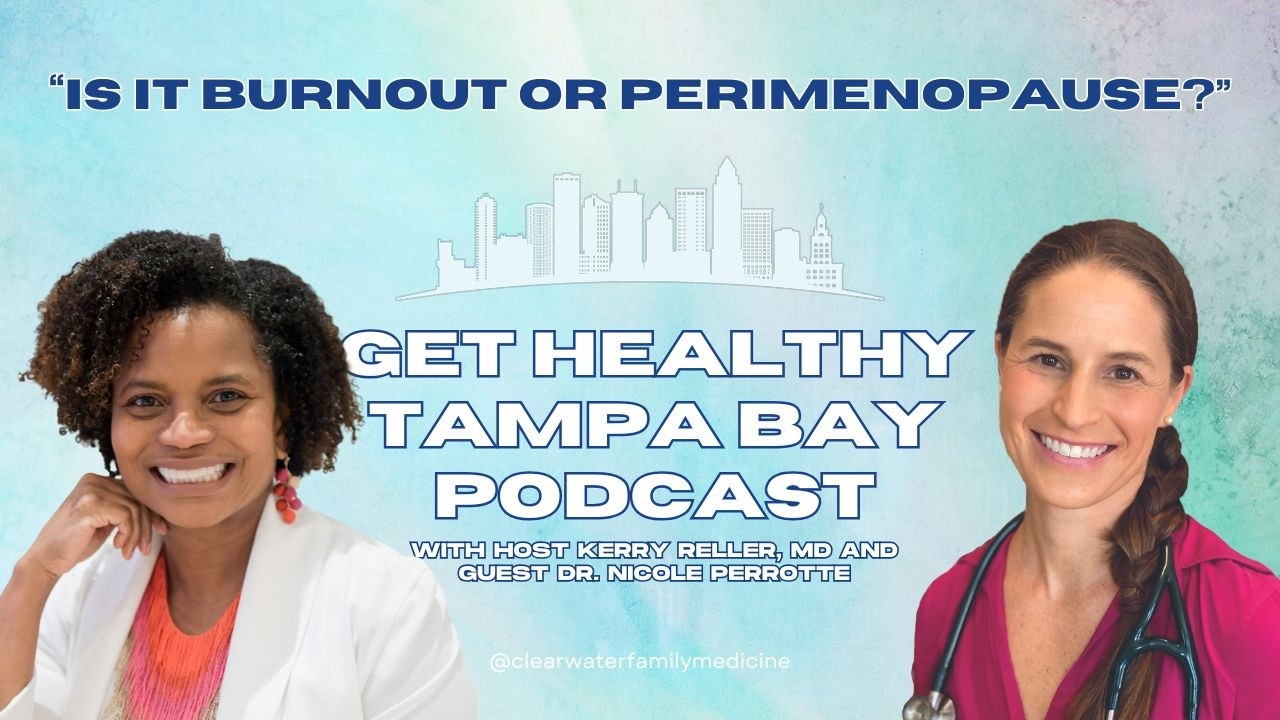
Menopause, Burnout & Hormones with Dr. Nicole Perrotte
Exhausted, not sleeping, gaining weight, snapping at your family and told it is "just stress"? You are not alone, and you are not broken. In this episode of the Get Healthy Tampa Bay Podcast, Dr. Kerry Reller talks with Dr. Nicole Perrotte, a board-certified internal medicine physician, certified life and health coach and founder of Thrive MD, a virtual menopause practice, about the overlap between burnout and perimenopause and how hormones plus lifestyle can help women feel like themselves again.
A Doctor Who Lived It
Dr. Perrotte spent 12 to 14 years as a hospitalist working seven 12-hour shifts in a row. After having children, she burned out, found coaching and began helping other physicians with burnout. Then, in her early 40s, she started waking at 2 or 3 a.m., having hot flashes, feeling exhausted and gaining weight. Her doctor told her she was too young and needed a vacation or a date night. A year later, things were worse. It was not until a friend mentioned starting hormones that Dr. Perrotte, herself a physician, realized she was in perimenopause. Once she found a doctor who treated it, she felt much better.
Why So Many Women Get the Runaround
Nearly every woman Dr. Perrotte talks with has a similar story of seeing several doctors before anyone mentions perimenopause. Because hormones affect every system in the body, women may be sent to a cardiologist for palpitations, a sleep doctor for insomnia, a therapist for anxiety and an orthopedist for joint pain. Most doctors received little training on menopause, and many still remember the 2002 Women's Health Initiative study, which was widely misinterpreted and led to years of fear about hormone therapy. Disparities are even worse for Black women and women of color.
Key Takeaways
Perimenopause can start in your early 40s or earlier: Being "too young" is not a reason to dismiss symptoms.
Labs can look normal: Hormones swing up and down during perimenopause, so a blood test is just a snapshot. Symptoms should guide treatment.
Hormones and lifestyle work best together: Hormones alone can make you better, and lifestyle alone can make you better, but combining them gives the best results.
Your body is asking for a reset: Like a car that needs fresh oil and new wipers, your body needs support at this stage, not just endurance.
Small pharmacies may help with shortages: Independent pharmacies and online options such as Cost Plus Drugs may have estrogen patches in stock when big chains do not.
Why Treating Menopause Matters Long Term
Weight and belly fat: Hormone changes shift fat to the belly as visceral fat, which raises insulin resistance. That is why "eat less, exercise more" often stops working. Hormones, strength training and protein help.
Heart disease: Heart disease risk rises sharply after menopause, and estrogen may help reduce it.
Bones: About one in two women will have a fracture caused by osteoporosis. Estrogen helps protect bone, and hip fractures can lead to nursing home stays and higher mortality.
Brain health: Nearly 70% of people with dementia are women. Research is still developing, but estrogen may help protect the brain, and insulin resistance also raises dementia risk.
Urinary tract infections: Low estrogen in vaginal and urinary tissues increases UTIs, which in older women can lead to dangerous infections and hospital stays.
A Patient Success Story
One patient came to Dr. Perrotte after seeing six or seven doctors, including a therapist, cardiologist and sleep specialist, plus an ER visit. She was in her early 40s, had just gone through a divorce and felt like everything was falling apart. Her previous labs were borderline, so she had been told she was fine. After a thorough evaluation, Dr. Perrotte started treatment. Within three to four weeks, her symptoms went from moderate or severe to little or none. She was sleeping better, in a better mood, exercising more, eating less sugar and no longer snapping at her kids.
Three Things You Can Do Today
1. Track your symptoms: Note your sleep, mood, food and symptoms, including how often they happen and how severe they are. A clear record makes it easier for your doctor to see the pattern.
2. Rethink exercise: Instead of intense 40-minute sweat sessions, combine strength training, moderate cardio and activities like Pilates or yoga. Skip crash diets and one-meal-a-day plans.
3. Stay hydrated: Good hydration makes a real difference in how you feel.
Conclusion
If you see yourself in this story, you deserve a doctor who listens. Bring your symptom tracker, ask about perimenopause and menopause directly, and know that effective treatment, combined with nutrition, exercise and stress management, can help you thrive in midlife and protect your heart, bones and brain for years to come.
About Our Guest
Dr. Nicole Perrotte is a Board-Certified Internal Medicine physician, Certified Health and Wellness Coach, and the founder of ThriveWellMD, a physician-led practice dedicated to helping peri(menopause) women feel like themselves again. With over two decades of experience across clinical medicine, physician wellness, and leadership development, Dr. Perrotte brings a unique blend of medical expertise and coaching insight to the way she cares for women. She is a graduate of St. George’s University School of Medicine and completed her Internal Medicine residency at MCP Hahnemann in Philadelphia.
After witnessing firsthand the gaps in care for women navigating burnout, hormonal shifts, and midlife transitions, she built her practice on what she wished she had, one that integrates evidence-based medicine, lifestyle strategy, and mindset work. Her signature ThriveWell Method™ helps women move from exhaustion and frustration to clarity, confidence, and sustainable health.
As a speaker and educator, Dr. Perrotte is known for translating complex physiology into practical, relatable strategies women can actually use in their daily lives. Her work has been featured in collaboration with organizations such as the American College of Physicians, the American Women’s Medical Association, Morehouse School of Medicine, and the Pan American Health Organization, including articles in Forbes and VoyageATL. Outside of her work, she enjoys traveling, photography, exploring new foods, and spending time with her husband and children.
Listen to the full episode on the Get Healthy Tampa Bay Podcast: Menopause, Burnout & Hormones with Dr. Nicole Perrotte
Listen and Learn More
Watch the full episode above or listen to the Get Healthy Tampa Bay Podcast on your favorite podcast app. To schedule a visit with Dr. Kerry Reller at Clearwater Family Medicine and Allergy in Clearwater or Palm Harbor, call (727) 446-1097.


