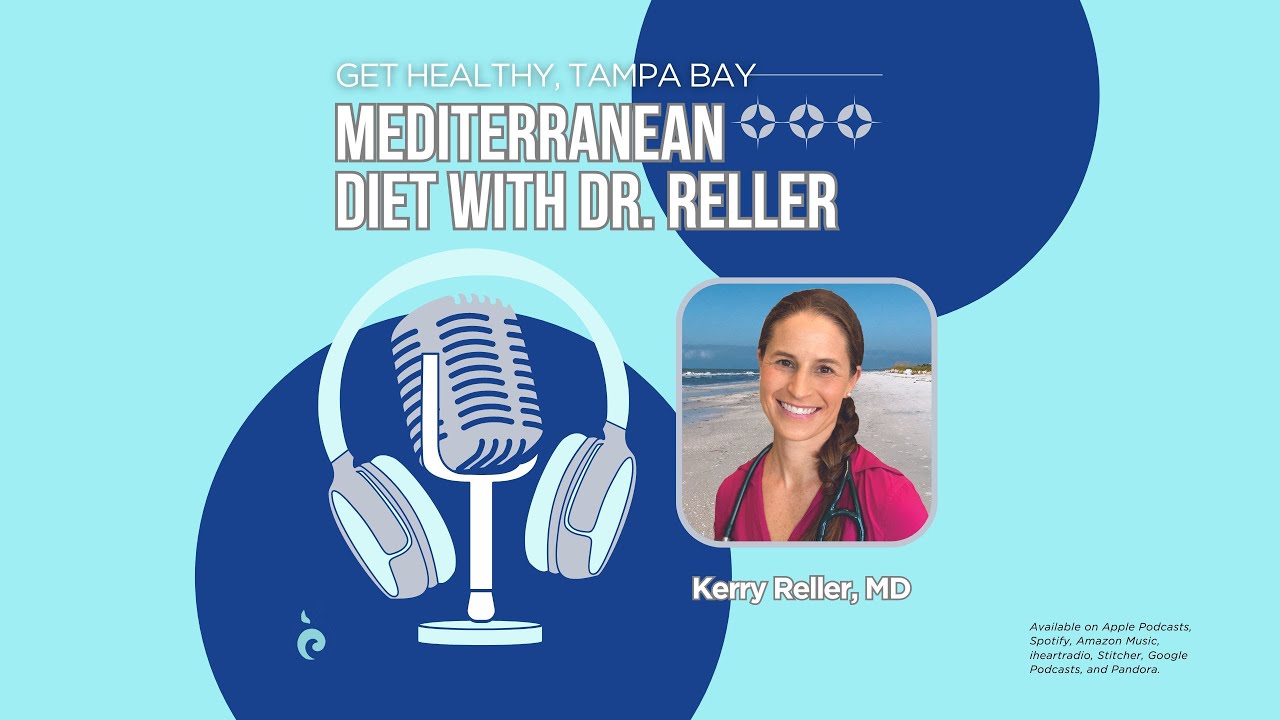
Mediterranean Diet with Dr. Reller
The Mediterranean diet has been ranked the best overall diet by U.S. News and World Report for seven years in a row, and it is one of Dr. Kerry Reller's top recommendations for her patients. In this solo episode of the Get Healthy Tampa Bay Podcast, she explains what this pattern of eating includes, why extra virgin olive oil is so powerful and the myths that keep people from trying it.
Why the Mediterranean Diet Stands Out
In the 2024 rankings, a panel of experts named the Mediterranean diet best overall, best for diabetes, best heart-healthy diet, best for bone and joint health, best family-friendly diet and easiest to follow. The DASH diet, designed to lower blood pressure, ranked second, and the MIND diet, a blend of the two that supports brain health, ranked third. Two of the world's five "blue zones," where people live the longest with the least disease, are in the Mediterranean: Ikaria in Greece and Sardinia in Italy. Research links Mediterranean-style eating to lower rates of heart disease, stroke, type 2 diabetes, certain cancers and cognitive decline.
What You Eat
Plenty: Vegetables (especially leafy greens), fruits, whole grains, beans and lentils, nuts, seeds, herbs, spices and extra virgin olive oil. Aim for a rainbow of colors through the week for a variety of antioxidants.
Seafood: At least twice a week.
Moderate: Poultry, eggs and dairy, especially fermented options like yogurt and goat cheese, about one to two servings a day.
Limited: Red meat about twice a month, processed meats rarely and sweets in small portions once or twice a week.
Drinks: Mostly water and tea. Wine is optional, with no more than one 5-ounce glass a day for women and two for men, with meals. Newer research suggests less is better, so do not start drinking for health benefits.
Pasta and bread are included, but as smaller side portions, and bread is dipped in olive oil instead of butter. Whole potatoes with the skin are fine a few times a week.
The Power of Extra Virgin Olive Oil
Extra virgin olive oil is the main fat in this way of eating. It is rich in heart-healthy monounsaturated fat and more than 30 antioxidant compounds. Oleocanthal, which gives it a peppery taste, has anti-inflammatory effects similar to ibuprofen in lab studies.
In the large PREDIMED trial of about 7,400 people at high heart risk, those who followed a Mediterranean diet with extra olive oil or nuts had about 30 percent fewer heart attacks, strokes and heart-related deaths than those on a low-fat diet. In follow-up analyses, each extra 10 grams of olive oil a day was linked to about a 10 percent lower risk. Despite the calories, participants eating three to four tablespoons a day did not gain weight and had less harmful belly fat.
Tips for using it:
Yes, you can cook with it: Home cooking temperatures are safe for extra virgin olive oil.
Pair it with vegetables: Olive oil helps your body absorb vegetables' antioxidants. Try roasting a tray of broccoli, carrots or green beans with olive oil, salt and pepper.
Choose "extra virgin": Bottles labeled "pure" or "light" olive oil are refined and lose many beneficial compounds.
Store it in a dark cabinet to prevent oxidation.
It Is About How You Eat, Too
In Mediterranean cultures, meals are a priority. Families cook and eat together, use local, seasonal foods, eat slowly and enjoy conversation. That sense of community is a big part of why people in the blue zones live so long.
Key Takeaways
It is not expensive: Shopping for whole, seasonal foods and skipping processed snacks balances the cost of fish and produce.
It is not all pasta and bread: Vegetables, beans, fish and olive oil are the stars.
Portions still matter: People in Okinawa, another blue zone, practice eating until about 80 percent full.
It is not restrictive: Treats, red meat and cheese all fit in moderation.
It is not just for weight loss: The biggest benefits are for heart, brain and metabolic health.
Conclusion
The Mediterranean diet is less a diet and more a delicious, sustainable way of living. Start by drizzling olive oil on your vegetables, adding fish twice a week and sitting down to enjoy meals with the people you love. If you want help building a healthy eating plan, Dr. Reller offers primary care, medical weight management and allergy and asthma care at Clearwater Family Medicine and Allergy. Call (727) 446-1097 or visit cfma.health.
Connect with Dr. Kerry Reller
My linktree: linktr.ee/kerryrellermd
Podcast website: https://gethealthytbpodcast.buzzsprout.com/
Facebook: https://www.facebook.com/ClearwaterFamily
Instagram: https://www.instagram.com/clearwaterfamilymedicine/
Clearwater Family Medicine and Allergy Website: https://cfma.health
Listen to the full episode on the Get Healthy Tampa Bay Podcast: Mediterranean Diet with Dr. Reller
Listen and Learn More
Watch the full episode above or listen to the Get Healthy Tampa Bay Podcast on your favorite podcast app. To schedule a visit with Dr. Kerry Reller at Clearwater Family Medicine and Allergy in Clearwater or Palm Harbor, call (727) 446-1097.


