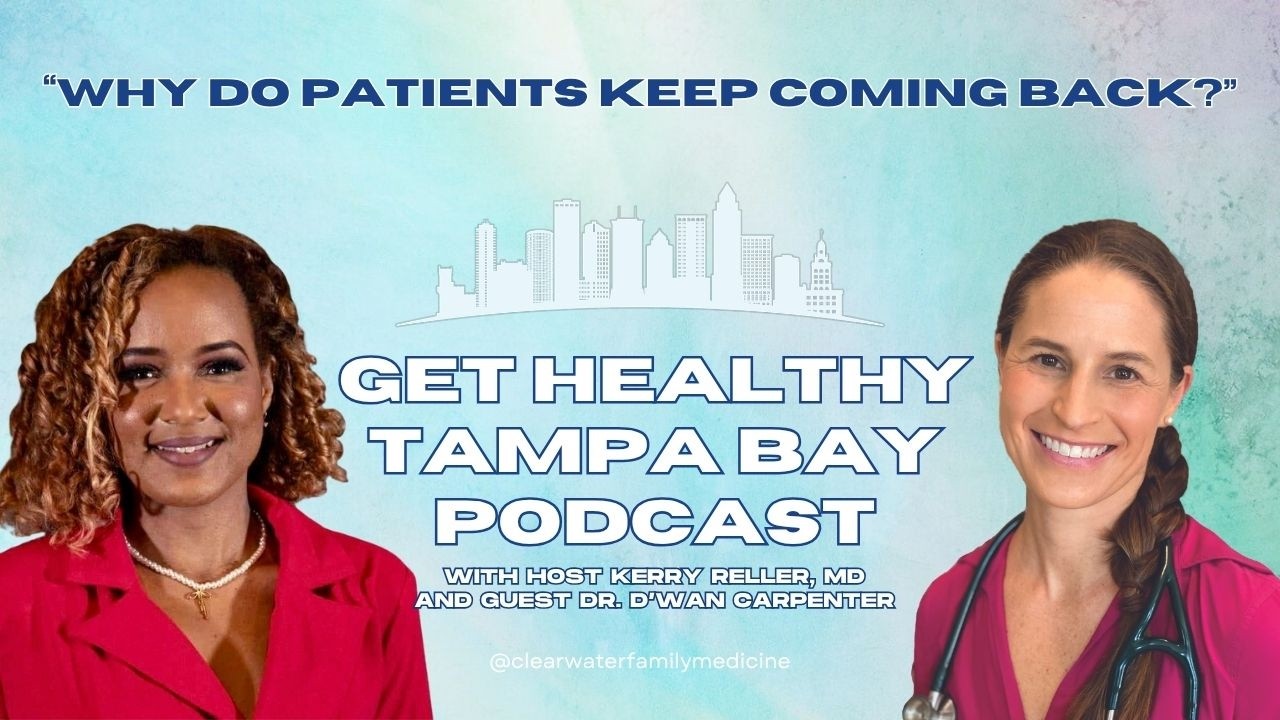
Lifestyle Medicine & Small Habits for Big Health Changes with Dr. D’Wan Carpenter
What happens after you leave the hospital matters just as much as what happens inside it. In this episode of the Get Healthy Tampa Bay Podcast, Dr. Kerry Reller talks with Dr. D'Wan Carpenter, known as Dr. D, a physical medicine and rehabilitation physician who is also board certified in lifestyle medicine, about how small, realistic habit changes can prevent the same health problems from coming back.
What Is Physical Medicine and Rehabilitation?
Physical medicine and rehabilitation (PM&R) doctors help people regain function after an illness, injury or hospital stay. In a rehab hospital, Dr. D works with therapists, nurses and other professionals to help patients recover enough to go home and live as close to their usual lives as possible. Some PM&R doctors specialize in pain or sports medicine, while Dr. D practices general PM&R.
The Revolving Door That Led Her to Lifestyle Medicine
Dr. D kept seeing the same stroke patients return with another stroke or complications. Rehab helped them recover, but nothing else in their lives had changed. A colleague suggested lifestyle medicine. While some stroke risk comes from genetics and family history, many risk factors can be controlled, including high blood pressure, high cholesterol, diabetes (which doubles stroke risk), smoking and lack of exercise. She realized that daily habits were driving much of the risk.
The Pillars of Lifestyle Medicine
Nutrition: Whole-food, plant-based or plant-predominant eating.
Physical activity: Moving more throughout the day.
Sleep: Restorative, quality rest.
Stress management: Healthy ways to cope with life's demands.
Avoiding risky substances: Including tobacco, excess alcohol and drugs.
Social connection: The COVID shutdowns showed how much our health depends on relationships.
Spiritual health: Dr. D adds a seventh pillar. With patients' permission, she may pray with them or share scripture or inspirational quotes, and encourages them to involve their own spiritual supports.
What Improves With Lifestyle Changes?
High blood pressure, diabetes and heart disease: Fast and processed foods are loaded with sodium and hidden sugar, even salad dressings. Reading labels and moving more can make a big difference, often visible on labs within months.
Pain: What we eat affects inflammation, and losing weight takes pressure off arthritic joints. Mood also plays a big role, since even mild depression can make pain feel much worse.
Mental health: When people feel better physically, they move more, connect more and feel better emotionally, creating a positive cycle.
A Note on Meat
Lifestyle medicine favors plant-based eating, and processed meats such as bacon have been linked to higher cancer risk, especially colon cancer. If you eat meat, Dr. Reller suggests looking for grass-fed and higher-quality sources. Dr. D adds that labels like "free range" do not always mean what you think, so buying locally can help you know where food comes from. A simple place to start is "Meatless Mondays."
Key Takeaways
Start small: Going from zero to 100 is not sustainable. Pick one low-effort change and notice how you feel.
Focus on what you add: Instead of a list of forbidden foods, think about what you are adding to your diet and activity.
Swap gradually: If you eat white rice with every meal, try mixing white and brown rice and slowly shift the ratio as your taste adjusts.
Fit movement into your life: Park farther away, take a lap around the grocery store before you shop, or use a standing desk or walking pad.
Check your commitment: Dr. D asks patients to rate how committed they are to their goal, which helps reveal where to start.
Remove barriers: If you hate meal prepping, find another way, like paying someone to do it.
Learn to say no: "No" is a complete sentence. Cutting back on obligations can free up time and energy for your health.
The best "diet" is the lifestyle you can stick with. As the book Atomic Habits teaches, tiny changes add up.
Conclusion
You have one life to live, and it is far better when you are healthy enough to enjoy it. Start with one small thing, then keep building from there. If you have had a stroke, heart event or other major health change, ask your care team not just about rehab, but about the lifestyle changes that can keep you from going back.
Listen to the full episode on the Get Healthy Tampa Bay Podcast: Lifestyle Medicine & Small Habits for Big Health Changes with Dr. D’Wan Carpenter
Listen and Learn More
Watch the full episode above or listen to the Get Healthy Tampa Bay Podcast on your favorite podcast app. To schedule a visit with Dr. Kerry Reller at Clearwater Family Medicine and Allergy in Clearwater or Palm Harbor, call (727) 446-1097.


