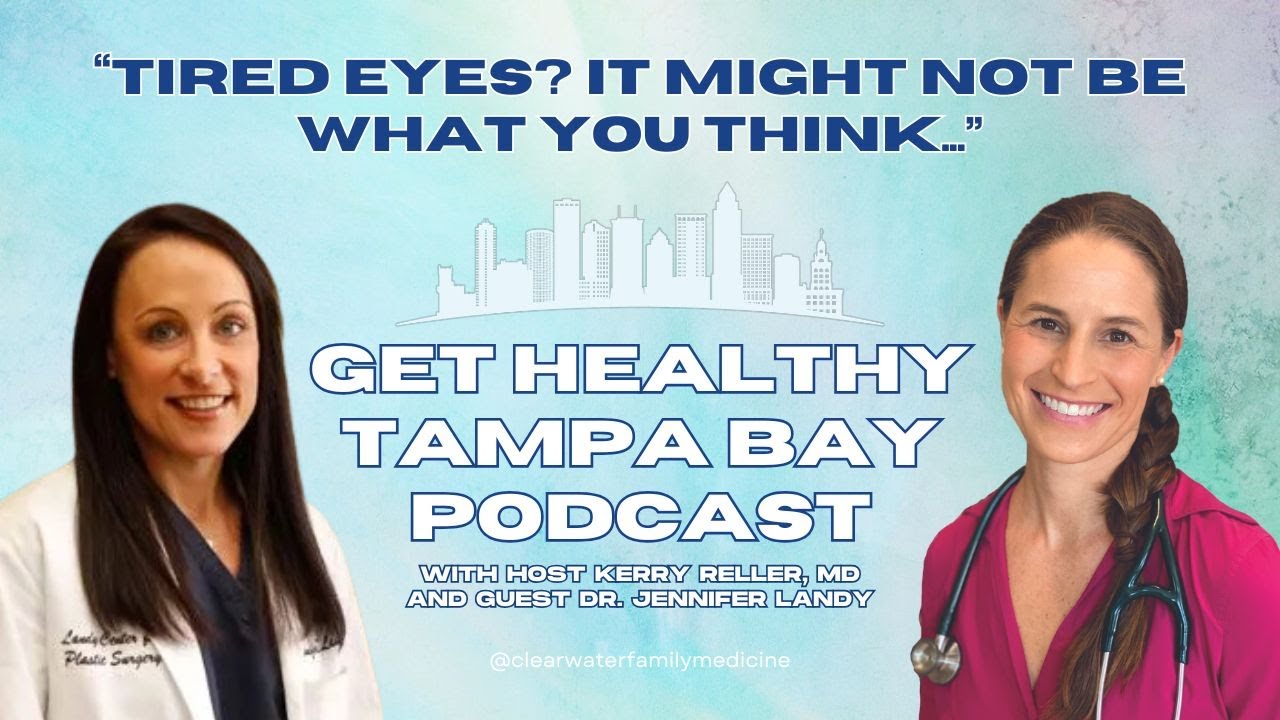
Is Eyelid Surgery Cosmetic or Medically Necessary? Oculoplastics with Dr. Jennifer Landy
If your eyelids feel heavy by the end of the day or you find yourself turning your head to see while changing lanes, your eyelids may be affecting your vision. In this episode of the Get Healthy Tampa Bay Podcast, Dr. Kerry Reller talks with Dr. Jennifer Landy, an oculoplastic surgeon with offices in St. Petersburg, Brandon and South Tampa, about when eyelid surgery is cosmetic, when it is medically necessary and what recovery really looks like.
What Is an Oculoplastic Surgeon?
Oculoplastic surgeons specialize in surgery of the upper and lower eyelids, tear ducts and the bony area around the eyes (the orbit). Dr. Landy started in general surgery, then completed an ophthalmology residency and an oculoplastic surgery fellowship. She notes that oculoplastic surgeons are usually the best choice for eyelid problems because of their specialized training.
Three Different Eyelid Problems
Many people assume all eyelid surgery is the same, but Dr. Landy explains there are three distinct issues, and many people develop all three with age:
1. Brow ptosis: A drooping brow, which often sags at the outer edges first.
2. Excess eyelid skin: Extra skin hanging over the lashes, causing a heavy, hooded look.
3. Eyelid ptosis: The eyelid itself droops, usually because the muscle that lifts it weakens. This can also be present from birth or happen at a younger age.
How It Affects Your Vision
Patients often say their eyes feel tired, they have to lift their eyelids to read or they cannot see well to the sides. Because hooding usually starts at the outer edges, peripheral vision is often affected first. Some patients think their eyesight is getting worse even though their glasses prescription has not changed. Dr. Landy's quick home test: while reading, watching TV or riding as a passenger, gently lift your eyelids. If your vision improves, surgery may help.
Key Takeaways
Insurance may cover it: Surgery may be considered medically necessary if eyelids measurably block vision. Insurers require specific measurements and a visual field test.
Your bother level matters: Dr. Landy does not recommend surgery for people who are not bothered by their eyelids, no matter how they look.
It is a true surgery: Expect about two weeks of swelling and bruising, and plan for full healing over six months to a year.
Botox and fillers will not fix it: They may give younger patients a slight lift, but they cannot remove skin or raise a drooping lid.
An eye drop is available: A prescription eye drop can lift the eyelid by a millimeter or two in some people, but it must be used daily and is not a substitute for surgery.
What to Expect From Surgery
Most eyelid surgeries are done at an outpatient surgery center under light sedation and take about 20 to 30 minutes for both eyes. Patients get medical clearance from their primary care physician or specialists first, including a plan for any blood thinners. For two weeks afterward, avoid heavy lifting, swimming pools and exercise. Possible side effects include drier eyes, more light sensitivity and small changes in vision, so Dr. Landy recommends waiting to update your glasses prescription until after healing. The incision sits in the natural eyelid crease and usually heals with little visible scarring. Vitamin E cream or certain scar gels may be used later, but avoid getting anything in the eyes.
How Long Do Results Last?
Removed skin does not grow back, but aging continues. Genetics and lifestyle play a big role, and smoking and heavy sun exposure speed up aging. Some people need only one surgery in their lifetime. People with muscle weakness conditions like myasthenia gravis can still benefit from eyelid surgery, though their eyelids are expected to droop again over time.
Conclusion
Droopy eyelids are a normal part of aging for many people, but they do not have to limit your vision or daily activities. If heavy eyelids are bothering you, a consultation with an oculoplastic surgeon can help you understand your options without committing to surgery. If you live in the Tampa Bay area and need a primary care physician for surgical clearance or a referral, Clearwater Family Medicine and Allergy can help. Call (727) 446-1097 or visit cfma.health.
About Our Guest
Dr. Jennifer S. Landy is a board-certified ophthalmologist and fellowship-trained oculoplastic surgeon with over 15 years of experience. She specializes in reconstructive surgery of the eyelids and tear ducts, combining advanced surgical techniques with personalized patient care.
She holds her medical degree cum laude from the University of Maryland and completed her ophthalmology residency at the University of South Florida, where she served as Chief Resident. She currently practices in:
Brandon: brandoneyeassociates.com
St. Petersburg: sight360.com
Tampa (Cosmetic Office): midtownaesthetics.com
Outside of work, Dr. Landy enjoys outdoor adventures and traveling with her husband and two children.
Connect with Dr. Brandy
Listen to the full episode on the Get Healthy Tampa Bay Podcast: Is Eyelid Surgery Cosmetic or Medically Necessary? Oculoplastics w/ Dr. Jennifer Landy
Listen and Learn More
Watch the full episode above or listen to the Get Healthy Tampa Bay Podcast on your favorite podcast app. To schedule a visit with Dr. Kerry Reller at Clearwater Family Medicine and Allergy in Clearwater or Palm Harbor, call (727) 446-1097.


