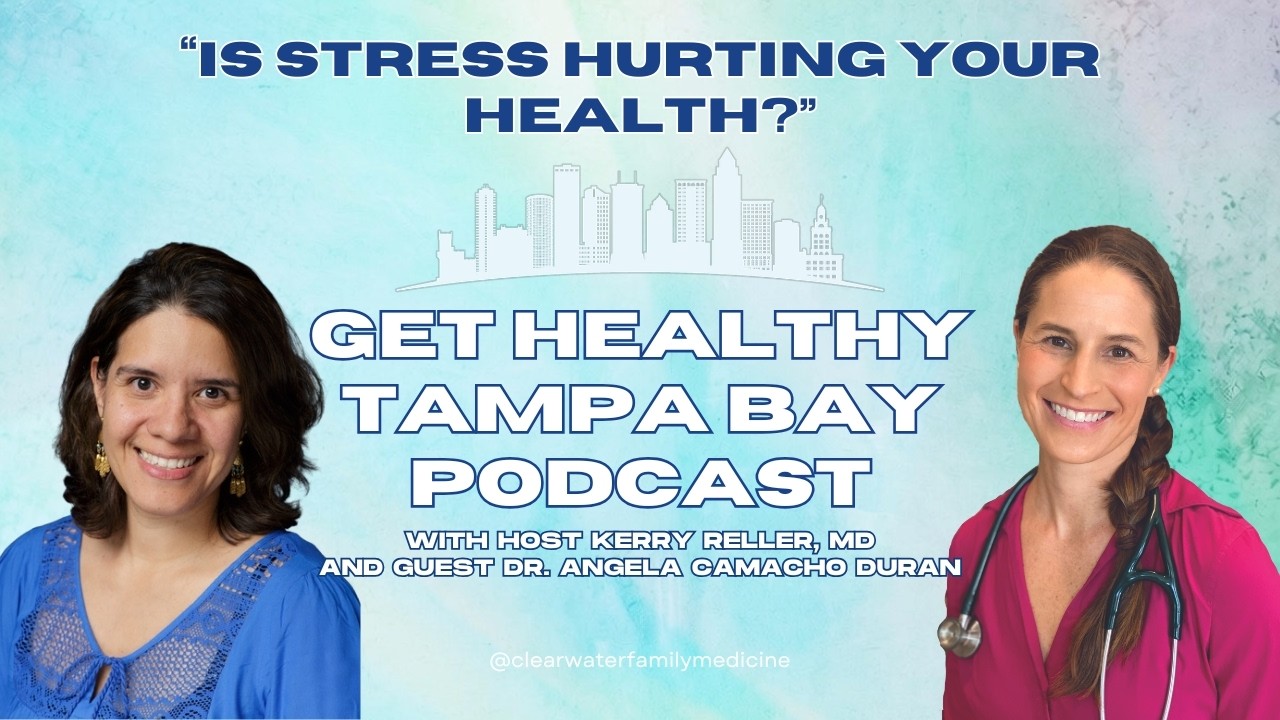
How Chronic Stress Affects Your Physical Health with Dr. Angela Camacho Duran
We often treat mental health and physical health as two separate things. In this episode of the Get Healthy Tampa Bay Podcast, Dr. Kerry Reller talks with Dr. Angela Camacho Duran, a double board-certified adult psychiatrist who specializes in consultation-liaison psychiatry, about why they are really two sides of the same coin and how chronic stress can quietly affect the body.
What Is Consultation-Liaison Psychiatry?
Dr. Camacho Duran works where psychiatry and general medicine meet. In the hospital, she helps medical and surgical teams care for patients who develop emotional or psychiatric symptoms while being treated for something else. A common example is depression after a heart attack, which matters because it can lower a patient's motivation for cardiac rehab and affect recovery. She also helps with delirium, the sudden confusion and disorientation older adults can develop during a hospital stay for something like pneumonia or a urinary tract infection. In her private practice, she uses lifestyle medicine and psychotherapy to help people with chronic illness, grief, trauma and difficult life transitions.
Key Takeaways
There is no health without mental health: Getting help from a psychiatrist or therapist does not mean your physical symptoms are "all in your head." The two kinds of care go hand in hand.
The connection runs both ways: Chronic illness can lead to brain fog, poor sleep, low mood and loss of interest in life. Depression and trauma, in turn, can raise the risk of physical illness over time.
Chronic stress shows up in the blood: Inflammatory markers such as interleukin-6 and C-reactive protein tend to be higher in people under long-term stress, including caregivers of loved ones with dementia and adults who experienced childhood trauma.
Stress can weaken vaccine responses: Some studies show that people with depression or chronic stress respond less strongly to vaccines such as shingles, pneumonia and flu shots.
Depression can slow healing: Patients with chronic wounds or ulcers who are depressed tend to heal more slowly and return to the hospital sooner, partly because depression makes self-care harder.
Not all stress is bad: Short-term stress, like exercise, a test or public speaking, helps us rise to a challenge. It becomes harmful when it lasts too long and the body never gets to recover.
Understanding Allostatic Load
Dr. Camacho Duran explains that the body works to stay balanced around a set point, a process called homeostasis. When a challenge comes along, the nervous, hormone and immune systems shift together to adapt, which is called allostasis. When stress never lets up, those systems stay switched on. The fight-or-flight response stays on guard even when there is no danger, the immune system loses its rhythm, and the body settles into low-grade, chronic inflammation. This wear and tear is called allostatic load, and it is one way chronic stress can set the stage for illness.
Conclusion
Taking care of your emotional health is part of taking care of your physical health. Just as you see your primary care doctor, cardiologist or gynecologist, it is worth checking in on how you are feeling and how you are handling stress. If you are living with a chronic condition and also struggling with mood, sleep or focus, talk with your doctor about getting support for both. In Part 2, Dr. Camacho Duran shares practical ways to manage stress and protect your mental health.
About Our Guest
Dr. Angela Camacho Duran is an Adult Psychiatrist, subspecialty in Consultation-Liaison, and founder of Camacho Duran Integrative Psychiatry LLC. Dr. Camacho completed medical school at Escuela Colombiana de Medicina, Bogota, Colombia, finished Psychiatry residency and CL Fellowship at Harvard Medical School, and completed fellowship in Psychodynamic Psychotherapy at the Boston Psychoanalytic Institute. Dr. Camacho has been the Director of CL Psychiatry services in several academic institutions, including the University of Missouri Kansas City and the University of Florida, Gainesville. She is currently an active member and fellow of the American Psychiatric Association and a member of the Academy of CL Psychiatry and the American College of Lifestyle Medicine.
Connect with Dr. Angela Camacho Duran
Listen to the full episode on the Get Healthy Tampa Bay Podcast: How Chronic Stress Affects Your Physical Health with Dr. Angela Camacho Duran
Listen and Learn More
Watch the full episode above or listen to the Get Healthy Tampa Bay Podcast on your favorite podcast app. To schedule a visit with Dr. Kerry Reller at Clearwater Family Medicine and Allergy in Clearwater or Palm Harbor, call (727) 446-1097.


