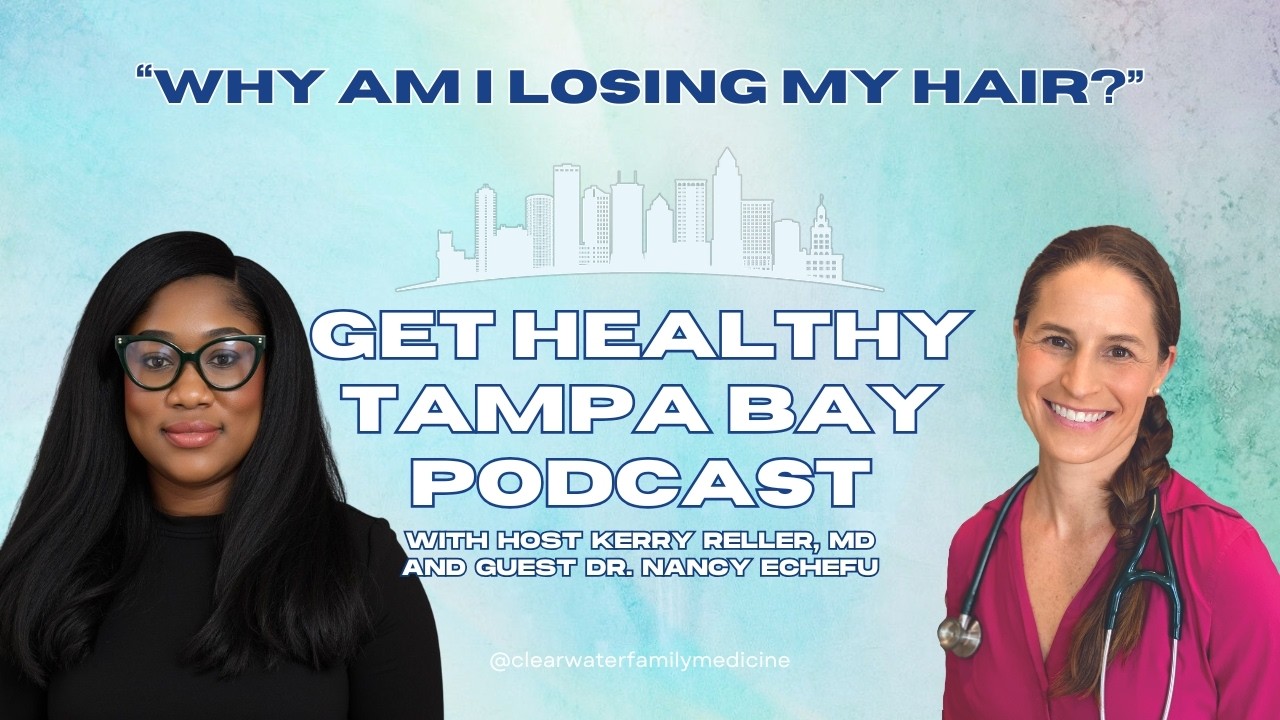
Hair Loss Explained: Causes & Treatments with Dr. Nancy Echefu
More hair in the shower drain, a thinner ponytail or a wider part can be upsetting, and the internet is full of oils, serums and supplements promising a fix. In this episode of the Get Healthy Tampa Bay Podcast, Dr. Kerry Reller talks with Dr. Nancy Echefu, a hair transplant physician and owner of Havilah Hair Restoration in Peachtree City, Georgia, about what really causes hair loss and which treatments actually work.
From Burnout to Hair Restoration
Dr. Echefu came to hair restoration after experiencing hair loss herself while working in emergency medicine. Burnout, stress and constantly changing hairstyles that pulled on her hair took a toll she did not notice until she looked in the mirror. Today her clinic offers medical treatment, regenerative therapy, hair transplant and scalp micropigmentation in one place, so patients get the full picture instead of only the one option a clinic happens to offer.
Key Takeaways
Hair loss is not one diagnosis: Just as diabetes can be type 1 or type 2, there are many types of hair loss, and some people have several at once. The right treatment depends on the type.
Start with a proper evaluation: See a dermatologist, or a trichologist (scalp and hair specialist). A good evaluation includes your history, medications, a review of other symptoms, targeted blood work and sometimes a scalp biopsy.
Hair loss can be a clue to other conditions: Thyroid problems, autoimmune disease, metabolic syndrome and gut issues that cause nutrient deficiencies can all show up as hair loss.
The most common type is androgenetic hair loss: About 70% of her patients have it. It is driven by androgen hormones and genetics, and shedding from stress, rapid weight loss or new medications can make it more noticeable.
Watch for traction: Tight buns, ponytails and styles that pull or tug on the hair can cause traction alopecia. Styling is fine as long as there is no tension.
Supplements are not a treatment: Dr. Echefu does not recommend collagen or hair supplements, since there is no good evidence they regrow hair. Her first advice is often to "trash" the online products and start over.
What About GLP-1 Medications?
About half of the women in Dr. Echefu's clinic take a GLP-1 medication. Rather than blaming the medication, she looks at how fast someone is losing weight, whether they are getting enough protein and whether anything else is going on. In her experience, shedding related to GLP-1 weight loss typically appears within the first three to six months. Hair loss that continues well beyond that usually points to another cause, such as androgenetic hair loss. She does not discourage patients from a medication that is helping their heart, liver and weight.
Treatments That Actually Work
Minoxidil: Increases blood flow and keeps hair in the growth phase. If 2% topical is not working, she may move to 5%, switch from liquid to foam if the scalp is irritated, or use oral minoxidil, which she generally prefers.
Finasteride and androgen blockers such as spironolactone: Block the hormones that drive androgenetic hair loss. The choice also depends on whether a woman is premenopausal, perimenopausal or postmenopausal.
Microneedling: Helps topical minoxidil absorb and activate in the scalp.
PRP (platelet-rich plasma): Growth factors from your own blood are injected into the scalp or applied with microneedling, usually monthly for three to four treatments, then every six months for maintenance. For people who dislike needles, her clinic also offers an ultrasound-based treatment.
Hair transplant: Rebuilds a receding hairline or bald areas. Many busy professionals can return to work right away, and no immunosuppressive drugs are needed. Women go through a thorough workup first, and those with active scarring alopecia are not yet candidates.
Scalp micropigmentation: A scalp tattoo that covers shiny or thin areas. It is a coverage option, not a hair loss treatment.
Set Realistic Expectations
Whatever treatment you use, you have to keep using it. If you stop, shedding usually returns within a few months. For someone who has been losing hair for 10 years, Dr. Echefu may set a goal of regrowing about 60%, and anything beyond that is a bonus. She has seen patients in their 60s and 70s regrow hair.
Conclusion
Regrowing your hair is possible, but not with a DIY fix. The biggest mistake is following everyone's advice instead of getting a diagnosis. Make an appointment with a dermatologist or hair specialist, stop styles that pull on your hair, and give treatment time to work. Dr. Echefu offers free virtual consultations seven days a week and free downloadable hair regrowth journals, including one for menopausal women, to help you track what you have tried and how it is working.
About Our Guest
She is the 2024 Regional Winner of Best of Georgia, was featured in Best in Georgia Magazine 2025, VoyageATL, and Women's Insider, and is the founder and host of the annual Hair Loss Shows. Dr. Echefu is also the only female hair transplant physician in South Georgia recognized by the International Society of Hair Restoration Surgery (ISHRS), where she serves as a Patient Advocate.
Connect with Dr. Nancy Echefu
Listen to the full episode on the Get Healthy Tampa Bay Podcast: Hair Loss Explained: Causes & Treatments with Dr. Nancy Echefu
Listen and Learn More
Watch the full episode above or listen to the Get Healthy Tampa Bay Podcast on your favorite podcast app. To schedule a visit with Dr. Kerry Reller at Clearwater Family Medicine and Allergy in Clearwater or Palm Harbor, call (727) 446-1097.


