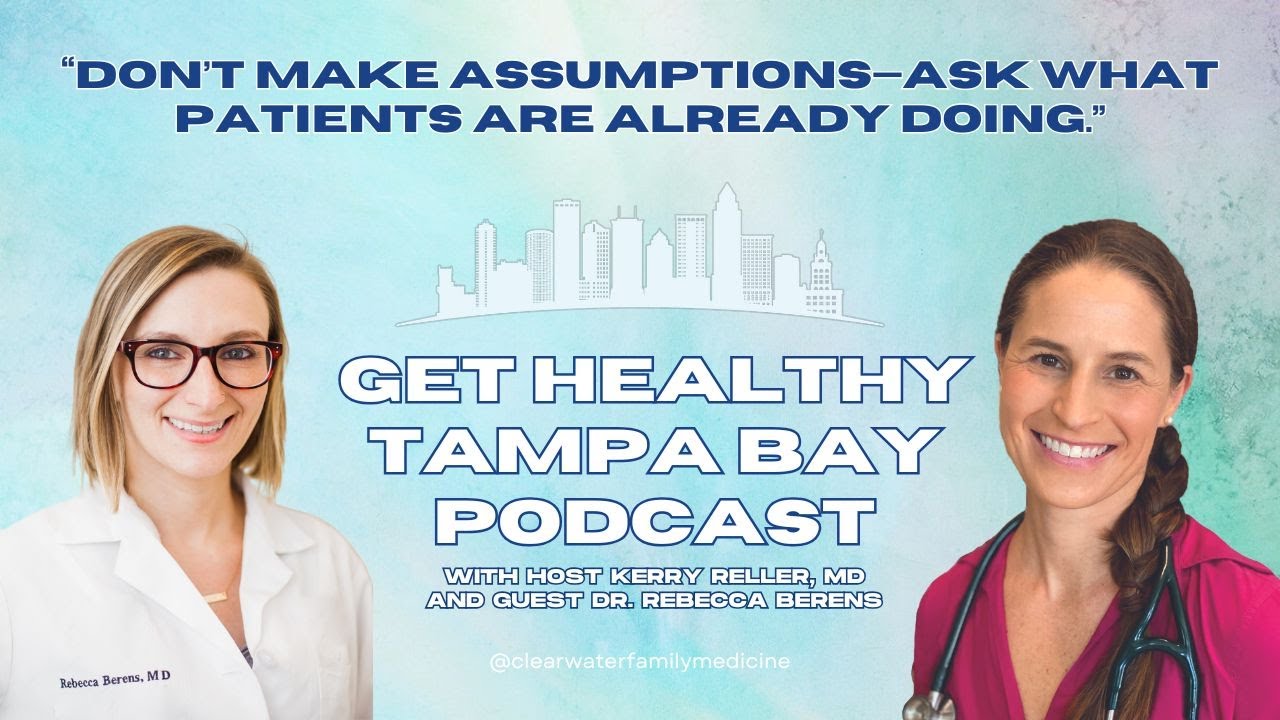
GLP-1s, Diet Culture, and Eating Disorders, Dr. Rebecca Berens on Doing No Harm
Well-meaning health advice can sometimes do real harm, especially for people who have struggled with their relationship with food. In this episode of the Get Healthy Tampa Bay Podcast, Dr. Kerry Reller talks with Dr. Rebecca Berens, a family medicine physician and owner of Vida Family Medicine in Sugar Land, Texas, about diet culture, disordered eating and how doctors can care for metabolic health and GLP-1 treatment without causing harm.
A Doctor Who Understands
Dr. Berens has run her private practice for more than six years. Many of her patients are in recovery from disordered eating or have experienced weight stigma at the doctor's office and avoided care afterward. She developed an eating disorder in college, which shaped how she approached medical training. She saw how comments meant to help can be triggering, and she has always taken a weight-neutral, nonjudgmental approach.
Disordered Eating vs. Eating Disorders
Eating disorders, such as anorexia nervosa, bulimia and binge eating disorder, have specific diagnostic criteria. Disordered eating is broader. It describes eating patterns that take up an outsized place in someone's life, such as constant weighing, measuring, planning or worrying about food, or skipping social events to stick to a plan. Dr. Berens believes many people struggle with some degree of disordered eating because these behaviors are so normalized, and even some standard medical diet advice falls into this category.
Why Eating Disorders Deserve Attention
They are more common than many think: Binge eating disorder affects an estimated 2% of people, and anorexia and bulimia about 1% to 2%, likely underreported.
They affect everyone: Not just young, affluent women, but people of all genders and ages.
Anorexia is serious: It has one of the highest mortality rates of any psychiatric condition, from both medical complications and suicide.
Risk is complex: Genetics play a large role, along with food insecurity, trauma, depression, anxiety, ADHD and autism.
How Diet Culture Shows Up in Health Care
Social media amplifies image-focused messages and influencers selling supplements, diet programs and fitness plans, often mixed with kernels of truth. Even in medicine, there can be an assumption that anything leading to weight loss must be healthy, without asking about the actual evidence or possible harms.
Red Flags Doctors Can Look For
Very rigid eating windows or strict rules about when food is allowed
Cutting out entire food groups for weight control rather than cultural, religious or ethical reasons
A history of large weight swings and repeated dieting, which is also linked to problems like fatty liver
Vomiting, laxatives, diet pills, diuretics or exercise used to "make up for" eating
Dr. Berens asks every new patient to walk through a typical day of eating and drinking, and she asks directly about compensating behaviors. Asking everyone helps remove shame and opens the door to honest conversation.
A Whole-Person Approach to Metabolic Health
Never assume: A patient with prediabetes, high cholesterol or high blood pressure may already be eating well and moving as much as they can. Assumptions make people feel blamed and less likely to return.
Look at the full picture: Living situation, work, stress, social support, sleep and substance use all matter. Sleep is often the biggest problem.
Focus on behaviors, not numbers: Choose one behavior to improve at a time, like more consistent meals, better sleep, more water and less caffeine or alcohol. Health often improves whether or not weight changes.
Medication can help: For people who have tried everything, medications such as metformin, often helpful in PCOS, may be appropriate.
Using GLP-1 Medications Carefully
Dr. Berens prescribes GLP-1 medications for metabolic conditions like diabetes, prediabetes and fatty liver, not for losing weight before a wedding. She starts low, goes slow and adjusts based on metabolic health rather than a goal weight. She involves a dietitian to prevent undereating and muscle and bone loss, and a therapist when needed. Someone still deep in an active eating disorder is generally not a good candidate. She does not view GLP-1s as a treatment for binge eating disorder itself, since binging often follows restriction or is linked to ADHD, and the root cause needs to be addressed.
What Parents Can Do
Parents are not to blame for a child's eating disorder, but they can model a healthy relationship with food. Eat regular meals, avoid cutting out food groups, do not criticize bodies and focus on what bodies can do and on nourishment rather than size.
Key Takeaways
Do not skip breakfast: A balanced breakfast with protein, fat, carbohydrates and fiber sets the tone for the day, supports digestion and helps prevent overeating late at night.
It is healthier to eat something than nothing when you are working long hours or traveling.
Build a team: See your doctor for labs if you have a health concern, a therapist if body image is driving your worries, and a dietitian if you are confused about what to eat.
Conclusion
Health is about behaviors and the whole person, not just a number on the scale. If you think you may be struggling with your relationship with food, you are not alone, and help is available. Start by talking with a doctor, therapist or dietitian you trust. You can also reach the National Alliance for Eating Disorders helpline at (866) 662-1235.
About Our Guest
Dr. Berens is a family physician and founder of Vida Family Medicine where she provides primary care to individuals and families. Prior to opening her private practice she worked in and led a community health center in Philadelphia, PA and taught medical students and residents in Houston, TX at Baylor College of Medicine. She treats each patient as an individual and tailors prevention and treatment plans to the needs of each patient rather than using a one-size-fits-all approach. She particularly enjoys caring for individuals recovering from disordered eating and who struggle with metabolic conditions such as PCOS and metabolic syndrome. Her office is welcoming to all, and her care is trauma-informed and weight-neutral.
Connect with Dr. Berens
Listen to the full episode on the Get Healthy Tampa Bay Podcast: GLP-1s, Diet Culture, and Eating Disorders, Dr. Rebecca Berens on Doing No Harm
Listen and Learn More
Watch the full episode above or listen to the Get Healthy Tampa Bay Podcast on your favorite podcast app. To schedule a visit with Dr. Kerry Reller at Clearwater Family Medicine and Allergy in Clearwater or Palm Harbor, call (727) 446-1097.


