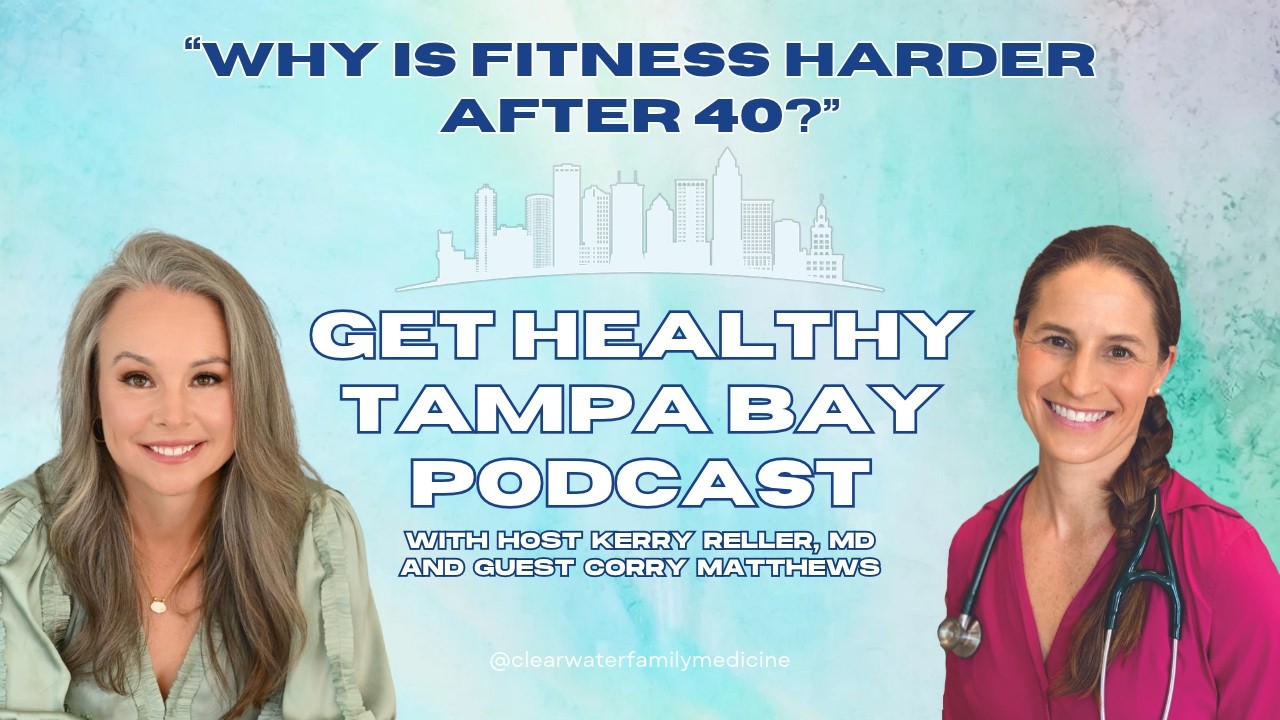
Fitness and Nutrition After 40 with Corry Matthews
"I haven't changed my eating or my exercise, so why am I gaining weight?" It is one of the most common things women in their 40s say. In this episode of the Get Healthy Tampa Bay Podcast, Dr. Kerry Reller talks with Corry Matthews, a fitness and nutrition coach with 30 years of experience and a master's degree in sports medicine, about why the old rules stop working after 40 and what to do instead.
When the Old Approach Stops Working
Corry has trained military service members, owned two nutrition stores and competed in bodybuilding. Then, in her 40s, she found herself 25 pounds heavier despite knowing everything about fitness. Her doctor told her she was just getting older and her hormones were normal. Over the next year she changed how she ate and lost the 25 pounds, mostly body fat from her midsection. That experience shaped her mission: helping women cut through the flood of social media tips and focus on what actually works as their hormones shift.
Key Takeaways
Doing more can backfire: Many women respond to midlife weight gain by adding more cardio and more gym sessions. Corry often has them pull back to about three strength sessions a week plus walking, and they frequently feel less puffy and see the scale move.
Walking is popular for a reason: It is easy on the joints and less stressful on the body than intense cardio.
Strength training protects muscle and bone: Keep it basic with squats, push-ups and crunches. Corry likes orthopedic surgeon Dr. Vonda Wright's benchmark that every woman should be able to do 11 real push-ups.
Exercise snacks count: Do squats while the coffee brews, counter push-ups the next day and crunches the day after. A busy client who started with five minutes a day felt better within two weeks.
Walk after dinner: A short walk after meals helps with blood sugar and digestion.
Eat your protein and vegetables first: If you do not want to change what you eat, try changing the order. Eating protein and vegetables before carbohydrates helps you feel full sooner.
Corry's 21-Day Nutrition Reset
Corry and her business partner created a 21-day reset that removes common trigger foods one group at a time, every three days, and keeps them out for the rest of the 21 days. The order she uses is alcohol, pork and red meat first, then added sugar (no more than 20 grams a day), then grains such as wheat, corn, oats and rice, and later dairy. Lentils, chickpeas, sweet potatoes, vegetables and quality proteins stay in. Afterward, clients add back the food they miss most and track how they feel, including brain fog, bloating and hot flashes. Corry noticed that dessert at dinner during perimenopause meant a 3 a.m. hot flash for her.
Dr. Reller notes that elimination diets work best with a good symptom diary, and that the goal is not to cut foods out forever if that is not sustainable. Reading labels is a big part of the process, since added sugar hides in ketchup, salad dressing and even peanut butter. If wine comes back in, Corry suggests treating it like dessert and enjoying it with a balanced meal rather than on its own before bed.
How Much Protein Do You Need?
Corry's rule of thumb is about 1 gram of protein per pound of lean body mass. For a simpler target, aim for roughly 100 grams a day, or about 25 grams at each meal plus protein in your snacks. She recommends a balanced plate: one quarter protein, one quarter complex carbohydrates and one half vegetables. She also warns against "protein maxing" and protein-loaded products that are full of other ingredients. For people on GLP-1 medications who struggle to eat, a whey isolate protein shake can help.
Redefining Fit After 40
For Corry, now approaching 50 and recovering from spinal fusion surgery and a diagnosis of osteoporosis, being fit means being able to do everything she wants for as long as possible, like watching her daughters grow up and being an active grandmother one day. She currently strength trains four days a week and walks about 10,000 steps a day.
Conclusion
Corry's biggest message is "please don't wait." Do not put your life on hold until you lose the weight. If your health is holding you back, talk to your doctor, a health coach, a nutritionist or a trainer, and if your doctor is not listening, find one who will. Corry also offers more than 150 free recipes on her website, including gluten-free and dairy-free options.
About Our Guest
Corry Matthews is a fitness, nutrition, and hormone expert with 25+ years of experience helping women build strength, improve their health, and better understand their bodies.
Connect with Corry Matthews
Listen to the full episode on the Get Healthy Tampa Bay Podcast: Fitness and Nutrition After 40 with Corry Matthews
Listen and Learn More
Watch the full episode above or listen to the Get Healthy Tampa Bay Podcast on your favorite podcast app. To schedule a visit with Dr. Kerry Reller at Clearwater Family Medicine and Allergy in Clearwater or Palm Harbor, call (727) 446-1097.


