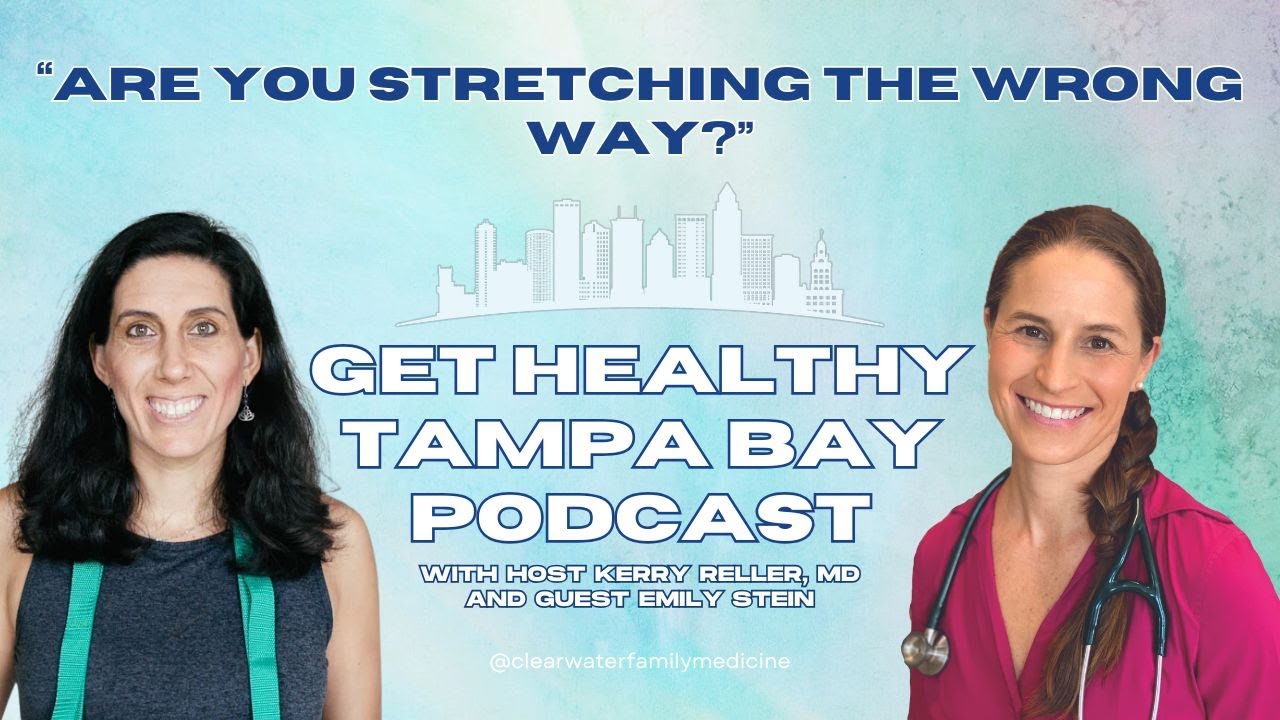
Emily Stein on Active Isolated Stretching, Body Rolling & Foot Fitness for Mobility
Most of us spend hours sitting at desks, in cars and on our phones, and our bodies feel it. In this episode of the Get Healthy Tampa Bay Podcast, Dr. Kerry Reller talks with Emily Stein, a personal trainer and mobility and flexibility specialist who owns Roll for Fitness in Tampa, about how stretching, body rolling and foot work can help with posture, tightness and balance.
Helping People Connect With Their Bodies
Emily grew up dancing and doing yoga, and her passion has always been helping people move better and feel more connected to their bodies. She combines personal training and Pilates with three specialized methods: Active Isolated Stretching, Yamuna Body Rolling and Yamuna Foot Fitness. Her focus is working "from the ground up," supporting posture, feet, flexibility and back health along with strength.
What Is Active Isolated Stretching?
Active Isolated Stretching (AIS) was developed by kinesiotherapist Aaron Mattes. Instead of holding a stretch for a long time, you actively move into a stretch, hold it for about two seconds and release, repeating several times. Each repetition lets the muscle lengthen a little more without forcing it into pain. With assisted stretching, Emily helps guide the movement at the end of the range. There are dozens of stretches targeting specific muscles, such as the hamstrings, hip rotators and outer thigh. Emily notes that different approaches work for different people, and some prefer longer holds like those used in yin yoga.
Body Rolling With Small Balls
Yamuna Body Rolling uses balls about 6 to 10 inches in size to apply gentle pressure along muscles and bones. Emily uses rolling before stretching for very tight clients, since tight tissue can be hard to stretch. Beginners start with the softest ball and short sessions. Many clients find rolling relaxing, and some notice better posture and easier digestion. It can be adapted for people with conditions like fibromyalgia or arthritis by keeping sessions short to avoid flare-ups. Dr. Reller adds that during menopause, pelvic floor tension is common, and relaxation techniques may help some women.
Key Takeaways
We were not made to sit all day: Take short movement or dance breaks throughout the day.
Stretching does not have to take long: Even a few repetitions or two minutes of stretching can help.
Mobility helps prevent injury: Spending 10 minutes on flexibility before or after a workout can make a difference.
Start gently: Stretch only to the point of mild tension, never into pain.
Balance and stability matter: Being able to get down to the floor and back up is an important part of everyday strength.
Strength and flexibility go together: Emily pairs stretching with strengthening so improvements last.
Foot Fitness for Balance
Your feet are your foundation. Emily uses textured tools called foot wakers to stimulate the feet, improve awareness and practice shifting weight. This can be helpful for people working on balance and stability, including those with Parkinson's disease, plantar fasciitis or flat feet. She also looks at how people walk to identify habits that may contribute to discomfort.
Simple Posture Tips to Try Today
Squeeze your shoulder blades: While sitting, draw your shoulders back and gently squeeze your shoulder blades together to lift your chest.
Unlock your knees: When standing, keep a slight bend in your knees instead of locking them.
Support your back: Place a small ball or pillow behind your back at your desk, and make sure your chair fits you.
Move while you watch TV: Use screen time to roll out your feet or stretch.
Conclusion
Flexibility and mobility are often overlooked, but small daily habits can help you move with less tightness and more confidence. Start gently, be consistent and pair stretching with strength. If you are dealing with ongoing back pain, joint pain or balance problems, check with your doctor before starting a new routine. If you live in the Tampa Bay area, Clearwater Family Medicine and Allergy can help. Call (727) 446-1097 or visit cfma.health.
Connect with Emily
Listen to the full episode on the Get Healthy Tampa Bay Podcast: Emily Stein on Active Isolated Stretching, Body Rolling & Foot Fitness for Mobility
Listen and Learn More
Watch the full episode above or listen to the Get Healthy Tampa Bay Podcast on your favorite podcast app. To schedule a visit with Dr. Kerry Reller at Clearwater Family Medicine and Allergy in Clearwater or Palm Harbor, call (727) 446-1097.


