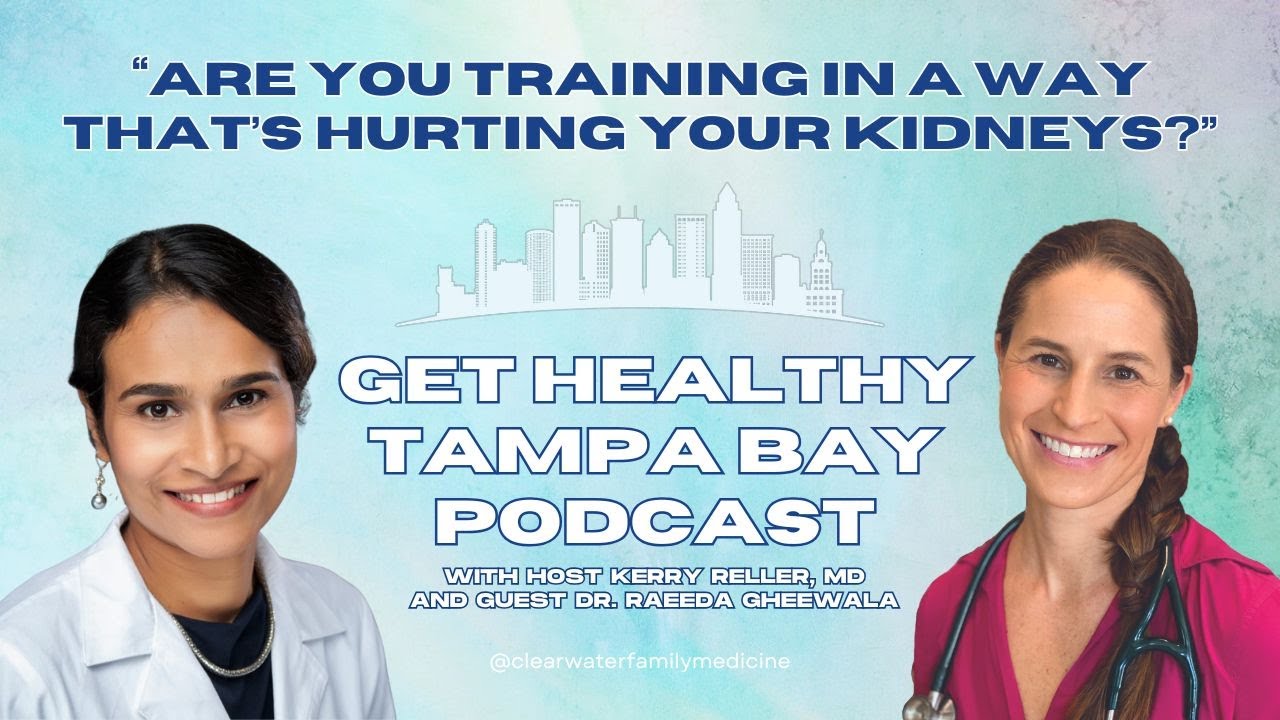
Dr. Raeeda Gheewala on Sports Nephrology, Hydration, NSAIDs, Protein & Kidneys
Kidney disease is often silent until it is advanced, and athletes and active people face some unique risks. In this episode of the Get Healthy Tampa Bay Podcast, Dr. Kerry Reller talks with Dr. Raeeda Gheewala, known as "The Kidney Queen," a double board-certified internist and nephrologist in Austin, Texas, who is pioneering the field of sports nephrology. They cover hydration, heat illness, pain relievers, protein, creatine and the early warning signs that your kidneys need attention.
The Story Behind Sports Nephrology
Dr. Gheewala's mission began with a former NFL player who first came to her in his mid-30s with kidney failure, needing dialysis. He described years of uncontrolled blood pressure, gout flares from a high-meat diet meant to bulk him up, and team physicals where his blood pressure was not always checked. He died within two years of starting dialysis. She believes earlier awareness and prevention could have changed his course, and she now focuses on protecting athletes' long-term kidney health.
Why Kidney Health Gets Overlooked
Medicine tends to react to kidney problems rather than prevent them. Many patients are referred to a kidney specialist only after the damage is advanced. The kidneys filter the blood, keeping nutrients and removing waste. A blood test called the estimated glomerular filtration rate (GFR) shows how well they are filtering. GFR declines slowly with age, but high blood pressure, diabetes, repeated dehydration and heat illness can speed that decline. Dr. Reller shares a patient who developed chronic kidney disease after taking an over-the-counter headache powder every day for years.
Key Takeaways
Be careful with NSAIDs after a hard workout: Ibuprofen (Advil, Motrin) and naproxen (Aleve) reduce blood flow to the kidneys. Taking them while dehydrated after exercise is a double hit. Rehydrate, eat and cool down first, and consider acetaminophen (Tylenol) or non-drug options.
Blood in the urine is never normal: Red, maroon or brown urine after intense exercise can signal rhabdomyolysis, a dangerous muscle breakdown that can injure the kidneys. Get evaluated right away.
Foamy urine deserves a checkup: It can be a sign of protein leaking into the urine.
More water is not always better: During long endurance events, drinking only plain water can dangerously lower blood sodium (hyponatremia), causing nausea, headache, seizures or coma. Drink to thirst and include electrolytes.
Diuretics for "making weight" are risky: Using water pills to drop weight before competing can dehydrate you and damage the kidneys.
Know your blood pressure: High blood pressure and diabetes are the two most common causes of kidney disease in the United States.
Heat Illness Is an Emergency
Heat exhaustion can progress to heat stroke, a medical emergency that affects the brain. Athletes who are not used to the heat, such as those traveling south for competition, are at higher risk. Dr. Gheewala wants heat stroke to get the same attention as concussions and sudden cardiac arrest, and she is creating a course to help athletic trainers recognize and respond to heat illness, rhabdomyolysis and hyponatremia early.
Protein, Creatine and Supplements
Protein needs depend on activity level. Dr. Gheewala suggests roughly 0.8 to 1 gram per kilogram of body weight per day for moderately active people, about 1 to 1.2 grams for those training several times a week, and around 1.4 to 1.8 grams for elite athletes. Regularly going above about 2 grams per kilogram adds extra filtering work for the kidneys. Creatine has been studied for decades and is safe for most healthy people. Because creatinine is a natural breakdown product of creatine, some people see a small rise in their blood creatinine that does not necessarily mean kidney damage. Knowing your baseline and rechecking labs on a well-hydrated day helps sort out what is really going on. Dr. Gheewala suggests starting creatine at a lower dose and increasing gradually to limit bloating. Caffeine also makes you urinate more, so balance caffeinated drinks with water.
Using Electrolyte Drinks Wisely
Electrolyte drinks work best when sipped slowly before and during time in the heat. If you drink one all at once while you are not dehydrated, healthy kidneys simply flush out the extra salt and water. They are generally fine for people with normal kidney function, but people with advanced kidney disease should avoid them, because extra salt and potassium can raise blood pressure or cause dangerous heart rhythms. Sports drinks like Gatorade work but contain a lot of sugar, which matters most for people with diabetes.
Labs That Help Protect Your Kidneys
Two simple screening tests can catch kidney disease early: a blood test for kidney function (creatinine and GFR) and a urine albumin-to-creatinine ratio. Dr. Gheewala recommends screening for anyone with risk factors such as diabetes, high blood pressure or high cholesterol, and for active people who want to be proactive. In people with kidney disease, she also checks electrolytes, calcium, phosphorus, vitamin D and blood counts, since the kidneys help keep bones strong and signal the body to make red blood cells. She likes to see patients by stage 3 kidney disease, when there is still a lot of room for prevention.
Conclusion
Dr. Gheewala's favorite health tip is to know your blood pressure, because it changes over time and has no symptoms until it causes harm. Dr. Reller recommends choosing a validated upper-arm cuff from validatebp.org. Build a simple hydration habit, such as filling a water bottle the night before, take bathroom breaks instead of holding it, and ask your doctor what your lab results mean. As Dr. Gheewala says, peak performance comes with peak health, and that includes your kidneys. If you live in the Tampa Bay area and want help with blood pressure, diabetes or preventive screening, Clearwater Family Medicine and Allergy can help. Call (727) 446-1097 or visit cfma.health.
About Our Guest
Dr. Raeeda Gheewala is a double board-certified physician in Internal Medicine and Nephrology with over two decades of clinical experience. She has dedicated her career to advancing kidney health and exploring its vital connection to physical performance. As one of the few specialists in Sports Nephrology, Dr. Gheewala blends her expertise in kidney medicine with her passion for sports and wellness, helping athletes optimize hydration, recovery, and kidney function for peak performance.
Beyond her clinical work, she advocates for prevention and proactive health, empowering individuals to protect their kidneys through informed lifestyle choices. Her patient-centered, holistic approach has earned her respect among colleagues and athletes alike.
Dr. Gheewala continues to educate and inspire through her practice, speaking engagements, and online platform, where she shares evidence-based insights on how balanced living supports kidney and overall health.
Connect with Dr. Gheewala
Listen to the full episode on the Get Healthy Tampa Bay Podcast: Dr. Raeeda Gheewala on Sports Nephrology, Hydration, NSAIDs, Protein & Kidneys
Listen and Learn More
Watch the full episode above or listen to the Get Healthy Tampa Bay Podcast on your favorite podcast app. To schedule a visit with Dr. Kerry Reller at Clearwater Family Medicine and Allergy in Clearwater or Palm Harbor, call (727) 446-1097.


