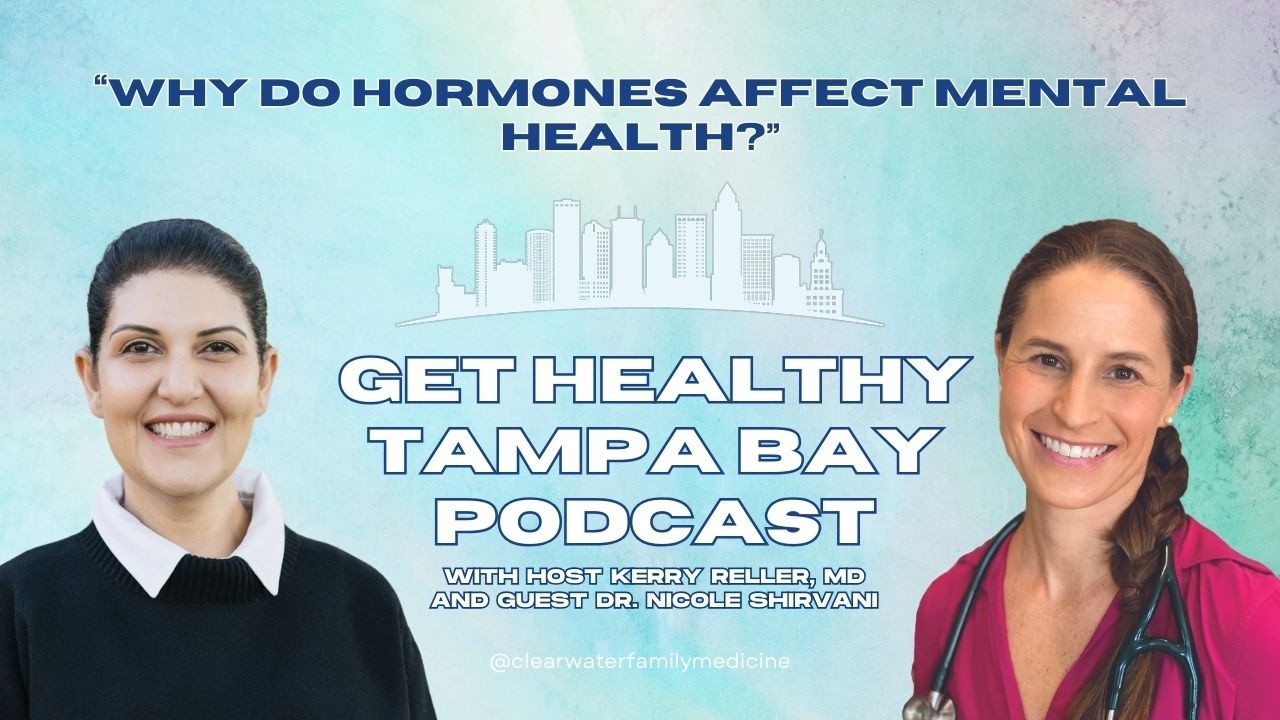
Dr. Nicole Shirvani on Women’s Mental Health, Hormones, and Strength Training
Women's mental health is shaped by every stage of life, from the menstrual cycle and pregnancy to perimenopause and menopause. In this episode of the Get Healthy Tampa Bay Podcast, Dr. Kerry Reller talks with Dr. Nicole Shirvani, a Tampa-area psychiatrist who specializes in women's mental health and integrative psychiatry, about how hormones affect mood and why strength training, nature and a little time to yourself can be powerful parts of treatment.
The "Accidental Psychiatrist"
Dr. Shirvani planned to become an anesthesiologist until her final medical school rotation in psychiatry, which she loved. She trained at the Cleveland Clinic and had her daughter during residency. Her own struggles during pregnancy led her to focus on women's mental health. Today she combines traditional treatments like medication and therapy with an integrative approach that includes exercise, nature, sleep habits, evidence-based supplements and, when appropriate, hormone therapy.
How Hormones Affect Mood
Estrogen influences brain chemicals such as serotonin and dopamine, which help regulate mood, motivation and the feeling of reward. As estrogen declines during perimenopause and menopause, many women notice anxiety or depression, sometimes for the first time, or old symptoms resurfacing after years in remission. Other common signs include trouble sleeping, night sweats, brain fog and feeling unlike yourself. Women may also notice mood changes tied to their menstrual cycle or after pregnancy or loss.
Treatment May Include More Than Antidepressants
When a woman in her late 40s comes in with new anxiety, Dr. Shirvani asks about her menstrual cycles. If they are becoming irregular, she may refer her to an OB-GYN to consider an estrogen patch and sometimes progesterone. Some women feel much better with hormones alone. Others benefit from both hormones and an SSRI (selective serotonin reuptake inhibitor), which helps keep more serotonin available between brain cells. The two can work together to restore balance.
Key Takeaways
Strength training is good for your brain: Exercise releases endorphins and boosts dopamine and serotonin. It also raises BDNF (brain-derived neurotrophic factor), which helps the brain form new connections.
Ten minutes counts: Research suggests even 10 minutes of strength training three times a week can make a difference. Ten minutes is far better than zero, and the benefits build over time.
Muscle helps blood sugar and mood: Building muscle improves insulin sensitivity, keeps blood sugar more stable and protects bones from fractures.
Inflammation and depression are linked: People with chronic depression often have low-grade inflammation. As estrogen, which is anti-inflammatory, drops, inflammation and cortisol can rise, creating a vicious cycle.
Sleep is restorative: During sleep, the body repairs itself and makes neurotransmitters. Poor sleep worsens mood and focus.
Omega-3s have evidence: Randomized controlled trials support omega-3 fatty acids for mood.
Better Sleep Without Starting With Medication
Practice good sleep hygiene: Avoid screens before bed, keep your bedroom calm and comfortable, skip the laptop in bed, keep a consistent bedtime and get into bed when you are actually tired.
Consider CBT-I: Cognitive behavioral therapy for insomnia is effective, and free online resources are available.
Ask about supplements: Options such as melatonin, L-theanine and magnesium work differently for different people.
Get Outside and Schedule Time to Do Nothing
Time in nature can lower cortisol and the stress response. Some countries in Europe even "prescribe" nature as part of treatment. Dr. Shirvani also schedules time to do nothing. She starts each morning with a cup of coffee and 10 quiet minutes with her dogs, without making lists or planning her day, and notices her day feels different when she skips it. If doing nothing feels impossible, put it on your calendar.
Exercise at Every Age
For older adults, exercise remains one of the most protective things for the brain and may slow cognitive decline. Chair yoga, tai chi, programs like SilverSneakers and specialized classes for people with Parkinson's disease can help. Always choose a plan that matches your abilities and check with your care team first.
The Biggest Myth
Many people think menopause is just hot flashes and poor sleep. It can also bring brain fog, anxiety, depression and even physical symptoms like a frozen shoulder or reduced mobility, and not every woman has the same symptoms.
Conclusion
If you can do only one thing this week, give yourself 10 minutes a day just for you, and find a strength training program you can stick with. If mood changes are showing up alongside changes in your cycle, talk with your doctor about whether hormones may be playing a role.
About Our Guest
Dr. Nicole Shirvani is a board-certified psychiatrist with a passion for Women’s Mental Health. She uses a compassionate and holistic treatment approach tailored for you and may include traditional medications, supplements, mind-body practices including sleep, diet and nutrition, and strength training.
Connect with Dr. Nicole
Listen to the full episode on the Get Healthy Tampa Bay Podcast: Dr. Nicole Shirvani on Women’s Mental Health, Hormones, and Strength Training
Listen and Learn More
Watch the full episode above or listen to the Get Healthy Tampa Bay Podcast on your favorite podcast app. To schedule a visit with Dr. Kerry Reller at Clearwater Family Medicine and Allergy in Clearwater or Palm Harbor, call (727) 446-1097.


