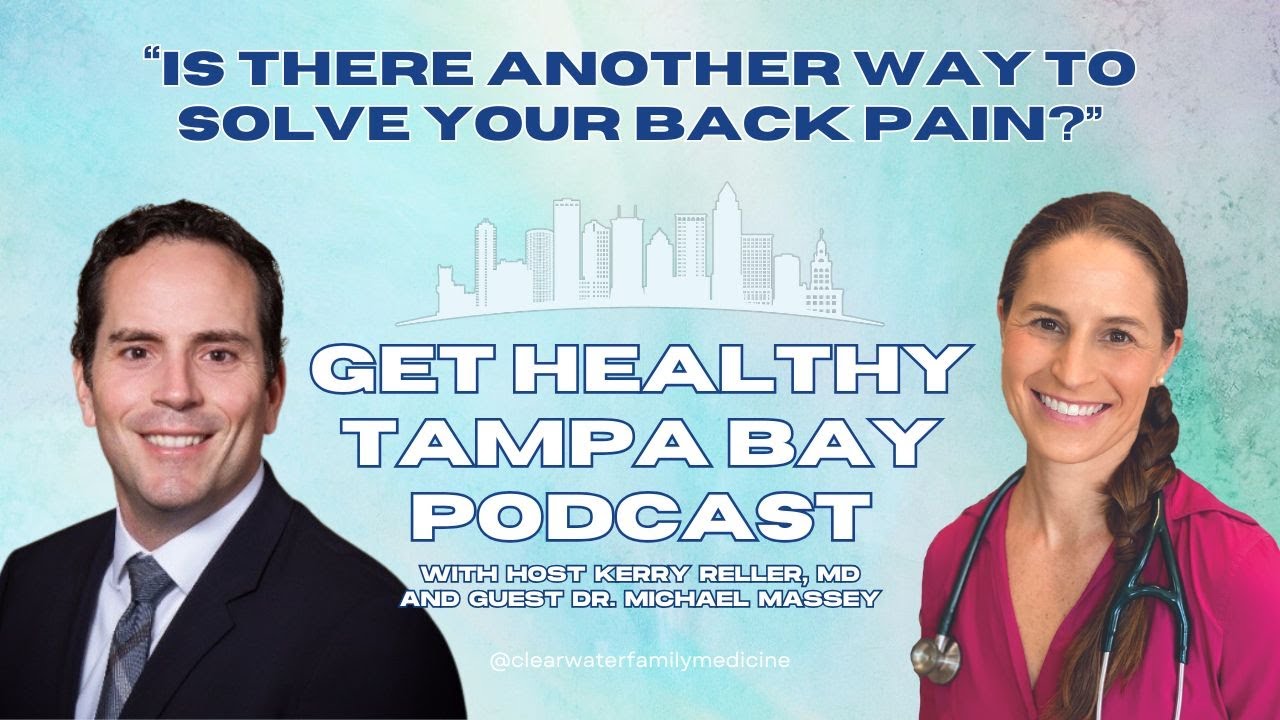
Dr. Michael Massey on Managing Pain Without Surgery: Rehab, Injections and Real Relief
Almost everyone deals with significant back or neck pain at some point, and it is easy to feel like surgery or strong medication is the only answer. In this episode of the Get Healthy Tampa Bay Podcast, Dr. Kerry Reller talks with Dr. Michael Massey, a physical medicine and rehabilitation physician fellowship-trained in pain medicine, who founded Gulf Coast Pain Care in Palm Harbor, about how to manage pain in a healthy, comprehensive way.
A Personal Reason to Choose Pain Medicine
At 16, Dr. Massey developed severe low back pain with pain radiating down his leg. An MRI showed a herniated disc, and an orthopedic surgeon recommended surgery. His uncle, who worked in pain medicine at Stanford, advised against it because he had no leg weakness and was so young. With physical therapy and time, he recovered, though it took more than a year. Flare-ups at ages 20 and 25 taught him how hard it can be to navigate the health care system with severe pain, and that experience shapes how he cares for patients today.
Everyone Experiences Pain Differently
Two people with the same broken arm can have completely different pain experiences. One may shrug it off while the other is in tears. Genetics and life experiences both play a role. Dr. Massey says the key is to meet each patient where they are.
Key Takeaways
Don't panic: Severe low back or neck pain is very common and often improves on its own.
Know the red flags: New weakness in an arm or leg is never normal. Get evaluated right away.
Motion is lotion: Bed rest usually makes things worse. Keep moving as much as your body comfortably allows.
Don't fight through sharp pain: Approaches like McKenzie exercises focus on movements that do not worsen pain.
Be careful with anti-inflammatories: Taking ibuprofen or naproxen like candy can cause stomach ulcers and kidney damage.
Have realistic expectations: Disc injuries can take months to heal, not weeks.
A Healthy Approach to Back and Neck Pain
Dr. Massey's approach starts with a clear diagnosis and ruling out problems that truly need surgery. From there, physical therapy or chiropractic care can teach exercises patients eventually do on their own. Other helpful tools include dry needling, massage, cupping, acupuncture, topical treatments and time. He cautions against passive treatments that go on for months without progress. The goal is a rehab plan that steadily improves function until patients no longer need regular visits. Acetaminophen (Tylenol) can be useful, and magnesium may help with muscle tension, tension headaches and sleep, though it can loosen stools. An anti-inflammatory diet may also help.
When to See a Pain Specialist
Dr. Massey typically sees patients about four to six weeks after an injury if they are not improving. He determines whether surgery is truly needed and refers to a surgeon when it is. If not, options may include an epidural steroid injection, which does not cure the problem but can calm pain enough for patients to participate in rehab. He also sees many second opinions. One patient, in tears and certain she needed surgery, agreed to try therapy first and later thanked him for helping her avoid an operation she did not need.
Options for Chronic Pain
Dr. Massey describes five main approaches to chronic pain:
1. Surgery: Sometimes surgery can cure chronic pain, such as a hip replacement for severe arthritis.
2. Interventional procedures: Injections and other targeted treatments.
3. Medications: Including duloxetine (Cymbalta), which is FDA-approved for depression, anxiety, chronic musculoskeletal pain and nerve pain. Opioids may sometimes be appropriate, but it is important to think about how long you will need them.
4. Therapies: Physical therapy, supplements and psychological treatments such as art therapy, which can help people process difficult experiences tied to their pain.
5. Acceptance: Learning healthy ways to live with pain that cannot be fully cured.
Regenerative treatments like platelet-rich plasma (PRP), prolotherapy and shockwave therapy are emerging options for some conditions.
Conclusion
Most back and neck pain improves with the right diagnosis, consistent rehab, realistic expectations and time. Before jumping to surgery or strong medications, get advice from a provider you trust and keep moving. If you live in the Tampa Bay area and are struggling with pain, Clearwater Family Medicine and Allergy can help evaluate your symptoms and connect you with the right specialists. Call (727) 446-1097 or visit cfma.health.
About Our Guest
Dr. Michael Massey is the founder of Gulf Coast Pain Care in Palm Harbor, Florida. He is board-certified in Physical Medicine and Rehabilitation and fellowship-trained in Pain Medicine. After years of building a hospital-based pain service in Minnesota, Dr. Massey relocated to Florida, where he now helps patients manage all types of pain, neck, back, nerve pain, and more, using a comprehensive, patient-first approach. He also runs MedLCP, providing medical-legal evaluations and life care planning.
Connect with Dr. Massey
Listen to the full episode on the Get Healthy Tampa Bay Podcast: Dr. Michael Massey on Managing Pain Without Surgery: Rehab, Injections & Real Relief
Listen and Learn More
Watch the full episode above or listen to the Get Healthy Tampa Bay Podcast on your favorite podcast app. To schedule a visit with Dr. Kerry Reller at Clearwater Family Medicine and Allergy in Clearwater or Palm Harbor, call (727) 446-1097.


