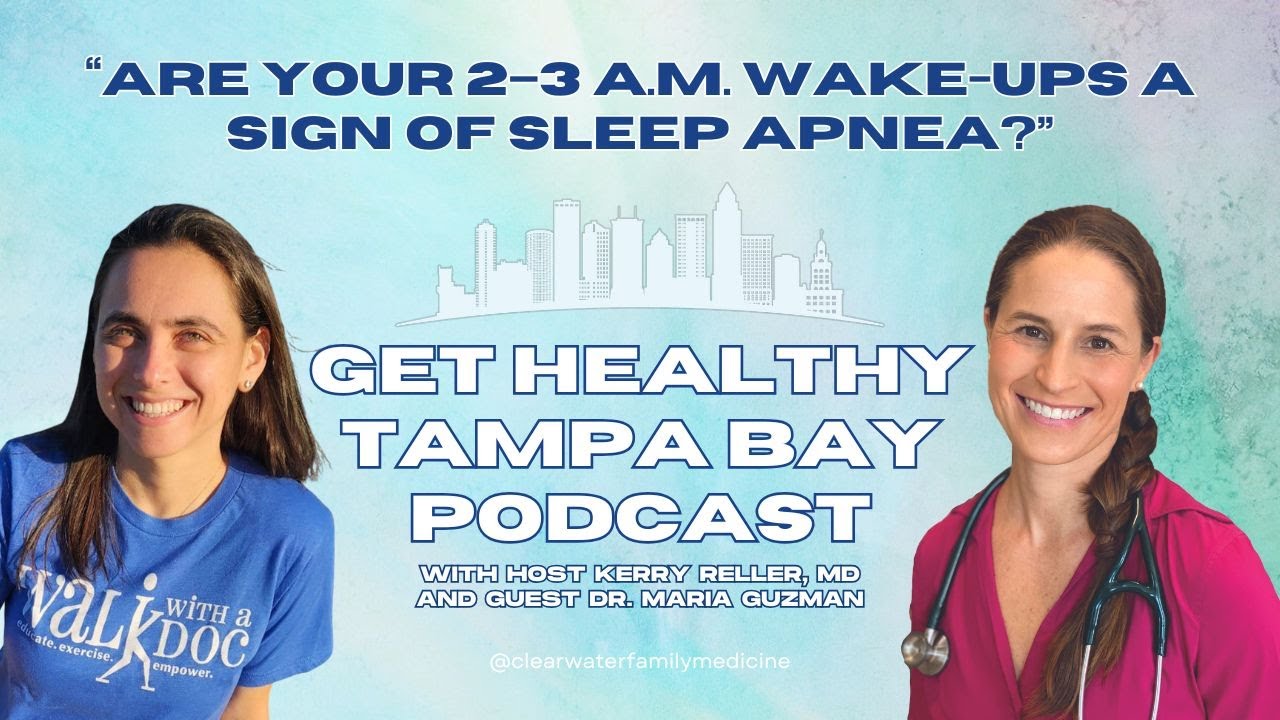
Dr. Maria Guzman on Midlife Sleep, Apnea in Women & New Treatments
Sleep affects nearly every system in the body, yet it is often overlooked, especially for women in midlife. In this episode of the Get Healthy Tampa Bay Podcast, Dr. Kerry Reller talks with Dr. Maria Guzman, who is triple board-certified in internal medicine, sleep medicine and obesity medicine and founded Dream Life Medicine and Wellness in St. Petersburg. They discuss why sleep apnea is often missed in women, common sleep disorders, new treatments and simple ways to sleep better.
Why Sleep Matters So Much
Sleep is a vital function. During sleep, the brain consolidates memories, regulates emotions and clears out waste that builds up during the day. Poor sleep affects the heart, lungs, metabolism and mental health. Dr. Guzman trained at Mayo Clinic and Emory and saw how many chronic illnesses are linked to preventable problems with weight and sleep. Frustrated by insurance rules that kept patients from getting the right sleep tests, she opened a direct care practice that offers transparent pricing and more time with each patient.
Sleep Apnea Is Not Just a Man's Disease
Obstructive sleep apnea happens when the airway relaxes and collapses during sleep, causing pauses in breathing of at least 10 seconds. Central sleep apnea happens when the brain's breathing control does not respond quickly enough to rising carbon dioxide. Sleep apnea is more common in men earlier in life, but after perimenopause and menopause, women's risk rises two to three times. Dr. Guzman explains that estrogen and progesterone help regulate breathing and promote sleep, so as they decline, breathing control weakens and sleep becomes more fragmented. Women also tend to have more breathing pauses during REM sleep, later in the night, which can be missed if a study looks only at the overall average.
Key Takeaways
Women with insomnia deserve a sleep evaluation: Waking at 2 or 3 a.m. and not falling back asleep may be a sign of sleep apnea, not just stress.
Screening tools can miss women: Common questionnaires give points for being male, having a large neck or a high BMI, so thinner people and women may screen falsely low.
Treat apnea even without sleepiness: Moderate or severe sleep apnea raises the risk of high blood pressure, stroke, atrial fibrillation and diabetes.
People with these conditions should be screened: High blood pressure, atrial fibrillation, diabetes and obesity are all reasons to check for sleep apnea.
Snoring during pregnancy matters: By the third trimester, about 20% of women may develop at least mild sleep apnea. Talk with your doctor if you start snoring.
Other Common Sleep Disorders
Chronic insomnia: Trouble falling or staying asleep at least three nights a week for three months, with daytime effects.
Restless legs syndrome: An uncomfortable urge to move the legs in the evening, often linked to low iron, especially in women who menstruate.
Periodic limb movement disorder: Leg twitching during sleep that disrupts sleep quality.
Dr. Guzman notes that sleeping pills are often prescribed for insomnia without looking for an underlying sleep disorder, and many have significant side effects.
Easier Testing and New Treatments
Home sleep tests are more comfortable than ever, including devices worn on the wrist and finger, and some rings are now FDA-cleared to help diagnose sleep apnea. In-lab studies are still important for complex conditions like narcolepsy or central sleep apnea. CPAP remains the most effective treatment for obstructive sleep apnea. If it is uncomfortable, a different mask style or adjusting the humidity and air temperature can help. Treating nasal allergies, for example with a steroid nasal spray, can also make CPAP easier to use. Zepbound (tirzepatide) is now FDA-approved for moderate to severe sleep apnea in adults with obesity, and an oral medication that helps keep the airway muscles toned is being studied. Oral appliances are another option for some people.
Simple Steps for Better Sleep
Skip the nightly glass of wine: Alcohol may help you fall asleep, but it breaks down into substances that cause middle-of-the-night waking.
Be cautious with CBD and THC gummies: Relying on them long-term may worsen anxiety and sleep.
Keep a consistent wake time: Try to wake within an hour of your usual time, even on weekends.
Get morning sunlight: A walk outside supports your body clock.
Give yourself at least seven hours: Sleep deprivation is a common cause of brain fog, fatigue and headaches.
Conclusion
Good sleep is one of the foundations of good health. If you snore, wake up often, feel exhausted during the day or have been told you stop breathing at night, talk with your doctor about a sleep evaluation. If you live in the Tampa Bay area, Clearwater Family Medicine and Allergy offers sleep apnea screening, home sleep testing and allergy care that can make CPAP easier to use. Call (727) 446-1097 or visit cfma.health.
About Our Guest
Dr. Guzman is a triple board-certified physician in internal medicine, sleep medicine, and obesity medicine, trained at Mayo Clinic and Emory University. With years of experience and a passion for empowering others, she combines medical expertise with a deep understanding of the challenges busy individuals face. Dr. Guzman inspires and empowers patients to live the healthiest version of themselves through a holistic and evidence-based approach. Her passion is working with patients to unlock their potential and reach their health goals in a way that feels doable and sustainable, so they can enjoy a life that they LOVE living!
Connect with Dr. Guzman
Listen to the full episode on the Get Healthy Tampa Bay Podcast: Dr. Maria Guzman on Midlife Sleep, Apnea in Women & New Treatments
Listen and Learn More
Watch the full episode above or listen to the Get Healthy Tampa Bay Podcast on your favorite podcast app. To schedule a visit with Dr. Kerry Reller at Clearwater Family Medicine and Allergy in Clearwater or Palm Harbor, call (727) 446-1097.


