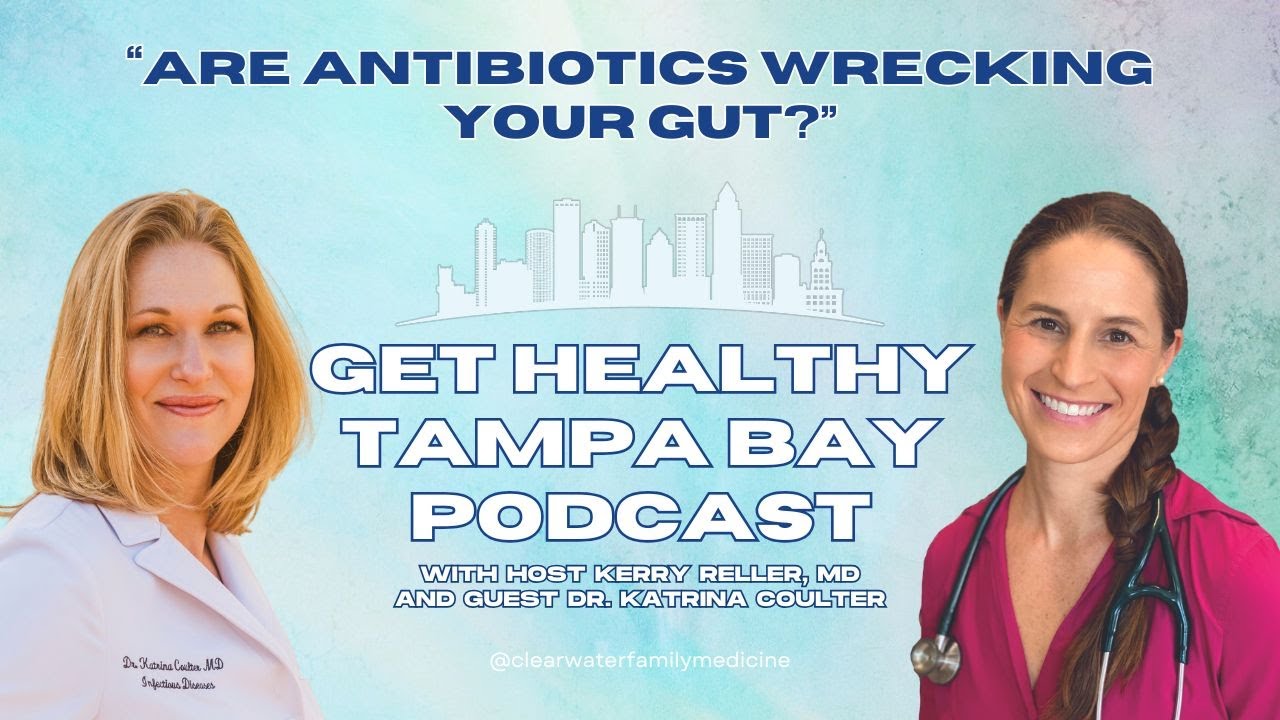
Dr. Katrina Coulter on Gut Health, Antibiotics and How to Feed Your Microbiome
Trillions of bacteria, fungi and other microbes live on and inside us, and they do far more than help us digest food. In this episode of the Get Healthy Tampa Bay Podcast, Dr. Kerry Reller talks with Dr. Katrina Coulter, an infectious disease specialist who splits her time between the hospital and clinic, about how the microbiome protects us, how antibiotics affect it and simple ways to keep your gut healthy.
What Is the Microbiome?
The microbiome is the community of microbes that live on our skin, in our mouth and throughout the digestive tract. Dr. Coulter calls them our "friendly crew." On the skin, harmless bacteria compete for space and resources, making it harder for more aggressive germs like strep to take hold when we get a cut. In the gut, healthy colonies help us harvest energy from food and move harmful invaders along. Each area of the body, from the nose to the armpits, has its own unique microbiome.
The Gut-Brain Connection
Research over the past two decades has shown that the gut and brain constantly communicate through the vagus nerve. Much of the body's serotonin is made in the gut, and gut bacteria influence signals that affect mood, energy and cravings. Dr. Coulter explains that what you eat shapes which bacteria thrive, and those bacteria can, in turn, drive cravings for more of the same foods. GLP-1, the hormone that helps signal fullness, is released in the gut, which helps explain how GLP-1 medications affect appetite.
Antibiotics: Lifesaving but Not Harmless
Antibiotics save lives, but they also kill helpful bacteria as innocent bystanders. Dr. Coulter notes that the effects on the microbiome can last for months, and some studies suggest up to two years. Antibiotics given early in life have been linked to a higher risk of weight gain later. Overuse also drives antibiotic resistance, and heavy antibiotic use in industrial agriculture contributes even more. Many sinus infections are viral or allergic, so antibiotics will not help, and patients who have had multiple antibiotic allergies may need a different approach altogether.
Key Takeaways
Eat more fiber: Aim for 25 to 35 grams a day from fruits, vegetables, nuts, seeds and whole grains. Most Americans get far less.
Eat a variety of plants: Try for 30 different plant foods each week to feed a diverse microbiome.
Add fermented foods: Yogurt, cottage cheese, kefir, sauerkraut, kimchi and kombucha contain live bacteria.
Limit ultra-processed foods: If your grandparents would not recognize it as food, it is probably not great for your gut.
Move your body: Exercise is linked to a more diverse microbiome and helps the intestines move.
Ask questions about antibiotics: It is okay to ask your clinician whether an antibiotic is truly needed.
Preventing Urinary Tract Infections
For people with frequent urinary tract infections, Dr. Coulter recommends simple strategies:
Drink more water: Increasing daily water intake has been shown to significantly reduce recurrent UTIs.
Try double voiding: After urinating, stand up, wash your hands and then sit back down to empty your bladder fully.
Consider vaginal estrogen: For perimenopausal and postmenopausal women, it is proven to reduce UTIs.
Skip unnecessary testing: Bacteria in the urine without symptoms (asymptomatic bacteriuria) usually does not need antibiotics.
For chronic sinus symptoms, antihistamines and saline rinses can help, but always use distilled or boiled and cooled water in nasal rinses, never plain tap water.
Probiotics and Food Quality
Dr. Coulter prefers getting probiotics from food because fermented foods offer more variety plus fiber. If you take a probiotic supplement during antibiotics, choose one with six or more strains, and refrigerated products tend to be more robust. She does not recommend at-home stool tests yet, since the science is not ready to guide treatment. When possible, she favors locally sourced, pasture-raised meats, noting that grass-fed beef has a healthier fat profile. Dr. Reller adds that continuous glucose monitors can show how differently individuals respond to the same foods.
Conclusion
A healthy microbiome is your best protection, and the time to build it is before you need antibiotics. Eat more fiber and plants, add fermented foods, cut back on ultra-processed foods and keep moving. If you live in the Tampa Bay area and have questions about recurrent infections, allergies or gut health, Clearwater Family Medicine and Allergy can help. Call (727) 446-1097 or visit cfma.health.
About Our Guest
Dr. Katrina Coulter is a board-certified infectious disease physician who has spent over a decade treating patients in hospital and clinic settings. She now focuses on microbiome health, gut function, and lifestyle strategies to prevent infections and support immune balance. Dr. Coulter offers coaching and educational content via her website katrinacoultermd.com and her YouTube channel, where she teaches how to live in harmony with your microbiome.
Listen to the full episode on the Get Healthy Tampa Bay Podcast: Dr. Katrina Coulter on Gut Health, Antibiotics, and How to Feed Your Microbiome Right
Listen and Learn More
Watch the full episode above or listen to the Get Healthy Tampa Bay Podcast on your favorite podcast app. To schedule a visit with Dr. Kerry Reller at Clearwater Family Medicine and Allergy in Clearwater or Palm Harbor, call (727) 446-1097.


