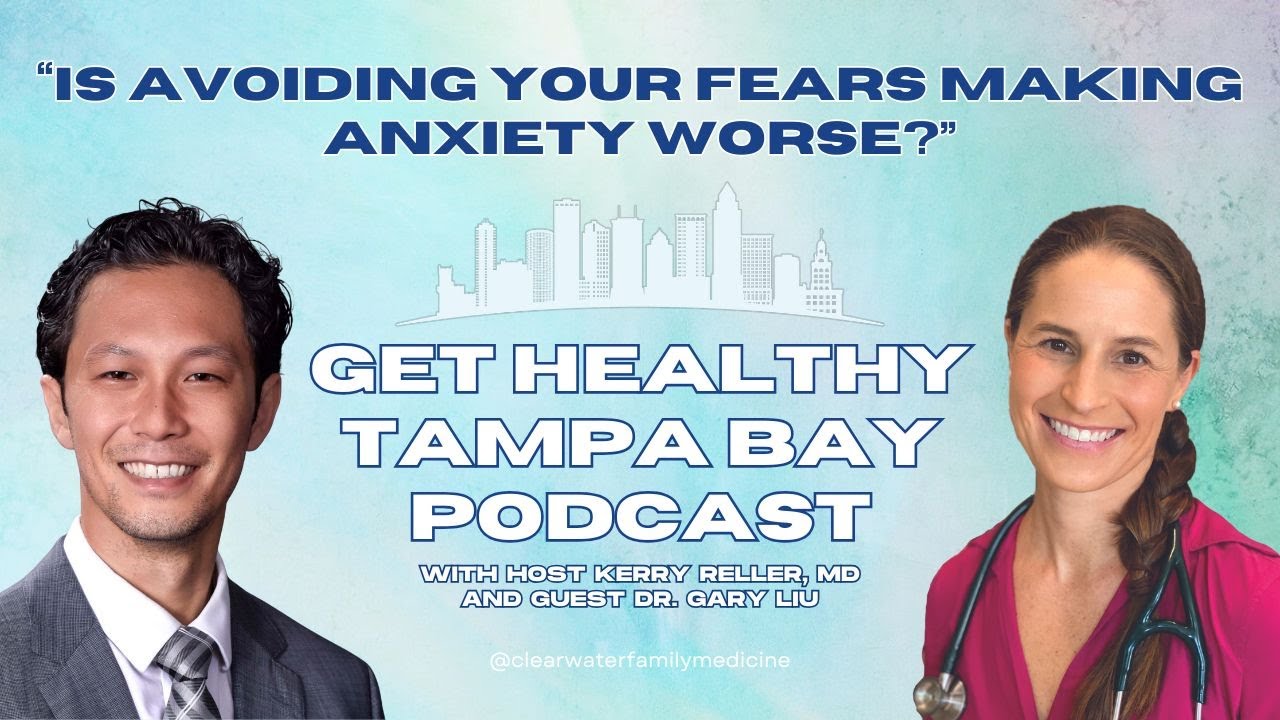
Dr. Gary Liu on Anxiety, Depression, ADHD and Evidence-Based Psychiatry in Tampa Bay
With so much mental health information on social media, it can be hard to know what is accurate. In this episode of the Get Healthy Tampa Bay Podcast, Dr. Kerry Reller talks with Dr. Gary Liu, a physician-scientist and adult psychiatrist who recently opened Eve Psychiatry in South Tampa, about evidence-based care for ADHD, anxiety and depression, and why meaning, connection and movement matter just as much as medication.
A Physician-Scientist's Approach
Dr. Liu completed a combined MD-PhD program at Baylor College of Medicine, where he studied how brain cells process sensory information, followed by a research-track psychiatry residency at the University of Pennsylvania. His research training taught him to read studies closely, understand who a treatment was tested on and spot the difference between what data shows and how it is marketed. In practice, he makes careful diagnoses, uses treatments with good evidence and prescribes the lowest effective dose.
Diagnosing ADHD Carefully
ADHD is a neurodevelopmental condition, which means symptoms should be present before about age 12, even if they become more noticeable as life gets busier with college, careers or children. Many patients now arrive believing they have ADHD based on social media. Dr. Liu explains that trouble focusing can come from many conditions, including anxiety, depression and poor sleep, so he takes a thorough history of childhood and current symptoms. To judge whether treatment is working, he looks beyond questionnaires to real-life changes like grades, work performance and feedback from family members.
Facing Fears With Exposure Therapy
Fear is normal and protective. Dr. Liu notes that our brains evolved to react to real dangers, but they can overreact to situations that are unlikely to cause harm, leading people to avoid things they need or want to do. Exposure therapy helps by building a "fear ladder" of situations rated from 0 to 100, starting with something mildly uncomfortable, like looking at a photo of a snake, and gradually working up. He compares it to eating your favorite tacos: the first bite is amazing, but after repeated tacos, the excitement fades. In the same way, repeated exposure helps anxiety come down on its own. Medication can sometimes help people tolerate this work without dulling their emotions.
Key Takeaways
What you avoid persists: Avoidance brings short-term relief but tends to make anxiety worse over time.
Medication is a tool, not a cure: It can provide the energy and focus needed to make other changes.
Look at your sources of meaning: Family, friends, community, faith, relationships and purpose all affect mental health.
Small steps count: Making your bed or reaching out to one old friend can be a meaningful start.
Exercise is powerful medicine: Aerobic fitness and leg strength are linked to longevity and independence as we age.
Do the opposite of isolation: When you feel depressed, reach out to others even when you do not want to.
Finding Meaning
Inspired by Viktor Frankl's book Man's Search for Meaning, Dr. Liu asks patients how "full" their buckets of meaning are, including family, friends, community, spirituality, relationships and finances. If someone's life feels empty in many of these areas, treatment focuses on rebuilding those connections, sometimes with medication to help them get started. He also references Make Your Bed, a reminder that small daily actions build momentum.
Why Exercise Matters for Mental Health
If the benefits of exercise could be put into a pill, Dr. Liu says, it would be the best-selling medication of all time. People almost always feel and sleep better after moving. For weight loss, though, diet plays a bigger role: a mile of running burns roughly 100 calories, while one large cookie can contain 300 to 500. A modest daily calorie reduction combined with strength training can support steady fat loss while preserving muscle. Dr. Reller adds that finding your personal "why" is key to staying motivated.
Conclusion
Dr. Liu's most important message is for anyone feeling persistently sad: depression tells us to isolate, but connection is what helps. Reach out to a friend, family member or professional, even when it feels hard. If you or someone you love is in crisis, call or text 988. If you live in the Tampa Bay area and want help with anxiety, mood or overall wellness, Clearwater Family Medicine and Allergy can help. Call (727) 446-1097 or visit cfma.health.
About Our Guest
Dr. Gary Liu is an adult psychiatrist and physician-scientist based in South Tampa. After earning his MD/PhD at Baylor College of Medicine and completing a psychiatry residency at the University of Pennsylvania, he founded Eve Psychiatry. Dr. Liu integrates neuroscience research with compassionate, whole-person care, helping patients manage anxiety, depression, ADHD, and more.
Connect with Dr. Gary Liu
Listen to the full episode on the Get Healthy Tampa Bay Podcast: Dr. Gary Liu on Anxiety, Depression, ADHD & Evidence-Based Psychiatry in Tampa Bay
Listen and Learn More
Watch the full episode above or listen to the Get Healthy Tampa Bay Podcast on your favorite podcast app. To schedule a visit with Dr. Kerry Reller at Clearwater Family Medicine and Allergy in Clearwater or Palm Harbor, call (727) 446-1097.


