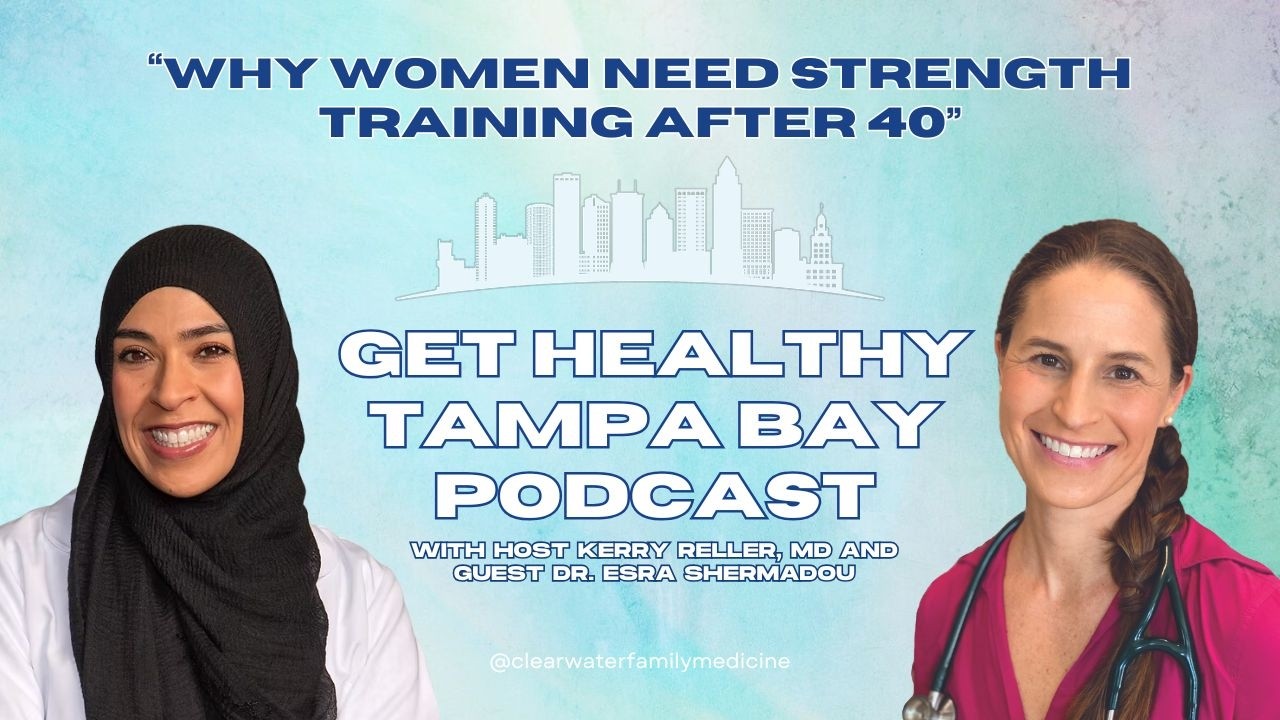
Dr. Esra Shermadou on Strength Training, Bone Health & Healthy Aging
Most of us stopped jumping, sprinting and hopping once we left childhood, but these simple movements may be some of the best things you can do for healthy aging. In this episode of the Get Healthy Tampa Bay Podcast, Dr. Kerry Reller talks with Dr. Esra Shermadou, a family medicine and obesity medicine physician and founder of Sakina Health in Dayton, Ohio, about how jump training, power and strength protect your bones, balance and independence as you age.
From Cancer Patient to Fitness Advocate
At age 21, Dr. Shermadou was diagnosed with cancer and went through chemotherapy and a stem cell transplant. She had never exercised before, but lying in a hospital bed for months made her miss movement. Letters from the Leukemia and Lymphoma Society about marathons inspired her, and once she was healthy she started with home workout videos, ran a half marathon and later fell in love with strength training. Today her practice helps adults improve their metabolic health through sustainable weight loss, hormone optimization, strength training and nutrition.
Why Jump Training Matters
Jump training is also called plyometric or impact training. Benefits include:
Stronger bones: Bone constantly breaks down and rebuilds, so you essentially have new bone about every 10 years. Impact helps your body build it back stronger. Studies have shown increased bone density at the hip (femoral neck), wrist and shin with jump training.
Healthier tendons and ligaments: Jumping makes tendons more elastic and less stiff, which can reduce injury risk.
Better heart and lung fitness: Dr. Shermadou noticed she could run farther with less effort within weeks. It can also help improve VO2 max, a strong predictor of longevity.
Better balance and fall prevention: Multidirectional jumps train your body to react and stabilize, helping prevent falls and fractures.
Better insulin sensitivity: Short bursts of high-intensity activity help target visceral belly fat.
Why Bone Health Cannot Wait
Bone density starts to decline with age, especially for women during perimenopause and after menopause as estrogen drops. Men lose about 1% of bone density per year as they get older too. A hip fracture is serious: up to about 30% of people die within the first year from complications such as blood clots and infections. Both doctors feel routine bone density screening, which officially starts at 65 for women, comes too late. Estrogen therapy also protects bone and is FDA-approved for preventing osteoporosis in appropriate women.
How to Add Jumping to Your Day
Option 1: Do about 50 jumps a day, spread out in short bursts, such as 20 in the morning, 20 in the afternoon and 10 at night.
Option 2: Do about 10 minutes of multidirectional jumping three times a week, including forward and backward jumps, jump rope, box jumps and side-to-side hops or "skaters."
If you are just starting: Sit and stomp your feet firmly, or hold onto a desk and stomp or do small jumps. Try stepping down from a stair (about 6 to 8 inches) and landing with both feet.
Progress slowly: You will get benefits from any starting point. Physical therapy is a great way to rebuild balance first if you are unsteady.
Do Not Forget Power
We lose power, the ability to move quickly, faster than we lose strength. Power comes from fast-twitch muscle fibers and helps you catch yourself if you trip or get up quickly after a fall. Try kettlebell swings, ball slams, battle ropes or short 10- to 30-second bursts on an elliptical or bike, followed by a slower recovery. These movements also train your nervous system so your balance reflexes kick in when you need them.
Key Takeaways
Jumping is not bad for healthy joints: Starting slow can actually strengthen tendons and joints over time. If you have arthritis, prior surgery or an orthopedic injury, check with your doctor or physical therapist first.
Leaking urine is common but treatable: If jumping causes leaking, see a pelvic floor physical therapist rather than giving up the exercise. Using the bathroom right before helps too.
Weighted vests have pros and cons: Dr. Shermadou uses one for incline treadmill walking to raise her heart rate quickly, but she does not think walking with a vest does much for bone density on its own. Strength training is still better.
It is never too late: You can start at any age and modify any exercise for your fitness level or limitations.
Conclusion
Being stronger than you think builds confidence that carries into the rest of your life. Start with movement of any kind, add a little impact and power, and challenge yourself to step slightly outside your comfort zone. Your bones, balance and future independence will thank you.
Connect with Dr. Shermadou
Listen to the full episode on the Get Healthy Tampa Bay Podcast: Dr. Esra Shermadou on Strength Training, Bone Health & Healthy Aging
Listen and Learn More
Watch the full episode above or listen to the Get Healthy Tampa Bay Podcast on your favorite podcast app. To schedule a visit with Dr. Kerry Reller at Clearwater Family Medicine and Allergy in Clearwater or Palm Harbor, call (727) 446-1097.


