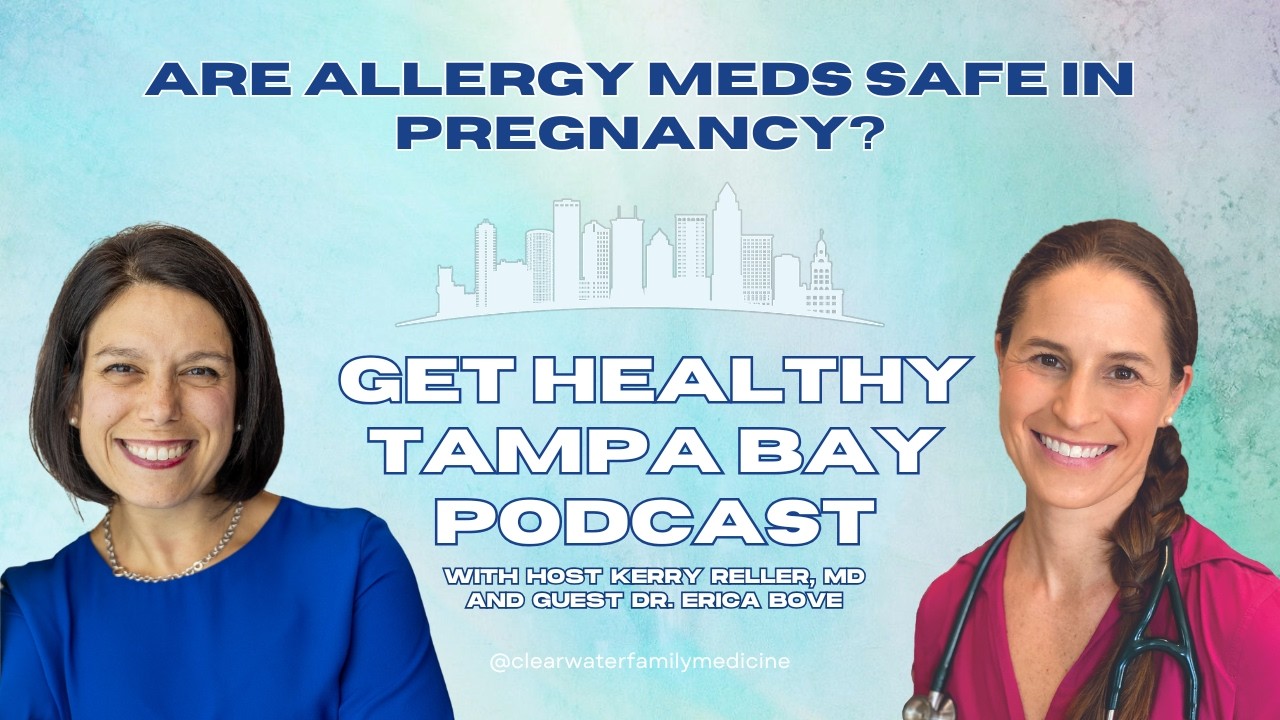
Dr. Erica Bove + Dr. Kerry Reller: Allergy & Asthma Med Safety for TTC & Pregnancy Q&A
"Is my inhaler safe if I'm trying to get pregnant?" "Should I stop my allergy medicine now that I'm expecting?" These are some of the most common worries women bring to their doctors. In this special episode of the Get Healthy Tampa Bay Podcast, Dr. Kerry Reller, a family physician and allergist and owner of Clearwater Family Medicine and Allergy, shares her guest appearance on the Love and Science podcast with her friend and fellow Notre Dame alum, fertility specialist Dr. Erica Bove. Together they answer common questions about managing allergies and asthma while trying to conceive, during fertility treatment and in pregnancy.
From Engineer to Allergist
Dr. Reller studied electrical engineering at Notre Dame and worked in the field before realizing she wanted to work with people instead of behind a computer screen. After a post-baccalaureate program and medical school, she trained in family medicine. She then joined her father, a longtime allergist, in practice about 10 years ago, learned allergy and asthma care from him and later took over the practice.
The Most Important Message
Well-controlled asthma is safer than poorly controlled asthma in pregnancy. Both mom and baby need plenty of oxygen, and uncontrolled asthma is linked to worse outcomes for the baby. Do not stop your asthma inhalers when you are trying to conceive or once you become pregnant. They are considered safe, and the goal is to have your asthma under control before pregnancy.
Safe Ways to Manage Allergies
Saline nasal rinses: A simple, drug-free way to clear allergens and mucus.
Avoid your triggers: Keep pets out of the bedroom, bathe dogs weekly and use a HEPA air filter.
Antihistamines: Loratadine (Claritin) and cetirizine (Zyrtec) are the most studied in pregnancy. Fexofenadine (Allegra) is also a good, non-drowsy option.
Nasal steroid sprays: These remain first-line treatment. Budesonide (sold as Rhinocort) has the most pregnancy data, and fluticasone (Flonase) is likely fine too. They help with postnasal drip, congestion and itchy, watery eyes.
Cromolyn nasal spray: A steroid-free mast cell stabilizer that is very safe in pregnancy.
Treating allergies matters, because untreated symptoms can disrupt your sleep, leave you exhausted and worsen asthma.
What to Avoid
Oral decongestants such as pseudoephedrine (Sudafed): Avoid during pregnancy and breastfeeding, since they can reduce breast milk supply.
Phenylephrine: The oral form has been shown not to work, and the nasal spray form should be avoided in pregnancy.
Oxymetazoline (Afrin): Acceptable for short-term use, and sometimes longer when paired with a nasal steroid under a doctor's guidance.
Montelukast (Singulair): It is generally considered safe to continue if you are already stable on it, but Dr. Reller would not usually start it before or during pregnancy.
Dust Mite and Travel Tips
If your symptoms are worse in the morning, dust mites in your bed may be the cause.
Wash a mattress pad weekly in hot water, tumble pillows in the dryer for 15 minutes and consider allergy-proof mattress and pillow covers.
Do not run a humidifier if you are allergic to dust mites or mold.
When traveling, start nasal rinses and steroid sprays before you leave, and ask hotels for non-feather pillows if you are allergic to feathers.
Allergy Shots and Biologics in Pregnancy
Allergy shots (immunotherapy): If you are already on a stable maintenance dose, it is fine to continue during pregnancy. However, doctors do not start shots or increase doses during pregnancy because of the small risk of a severe reaction. If you are planning a pregnancy or fertility treatment, consider starting early enough to reach maintenance first. Shots should not be started if asthma is uncontrolled.
Allergy testing: It is fine to do during the preconception phase, but it is usually not started during pregnancy.
Biologics: Medications such as Xolair and Dupixent, used for asthma, eczema, chronic hives, nasal polyps and food allergy, should generally be continued in pregnancy if they are keeping you well controlled, and safety data is growing.
Reactions to Progesterone During Fertility Treatment
Dr. Bove sees patients who react to progesterone-in-oil injections used during IVF, with welts or even fevers. Dr. Reller explains that because the body makes its own progesterone, people are usually reacting to other ingredients, such as the peanut-based oil in some progesterone products or additives like polyethylene glycol. People with a peanut allergy often need a compounded version. An allergist may be able to test for and even desensitize to specific components. In some cases, a natural-cycle frozen embryo transfer that relies on the body's own progesterone may be an option. Dr. Reller also notes that estrogen therapy can sometimes aggravate chronic hives.
Can You Prevent Allergies in Your Baby?
Research on a mother's diet during pregnancy is inconclusive. Dr. Reller recommends eating a normal, varied diet unless you are allergic to a food, while avoiding foods that carry infection risk in pregnancy. What matters most is introducing common allergens like peanut to your baby early, around four to six months. Vaginal birth may lower the risk of asthma and allergies in children, and babies with eczema are at higher risk of food allergies because allergens can enter through broken skin. As allergists like to say, through the skin allergies begin, through the diet they stay quiet.
Key Takeaways
Well-controlled allergies and asthma are safer for mom and baby than uncontrolled symptoms
Many allergy and asthma medications are safe in pregnancy
Some medications are best avoided, so review yours with your doctor
Allergy shots can often be continued during pregnancy
Talk with an allergist before and during pregnancy
Conclusion
If you are trying to conceive, going through fertility treatment or pregnant, do not stop your allergy or asthma medications on your own. Talk with your doctor, keep your asthma controlled and use the safest effective treatments. Clearwater Family Medicine and Allergy welcomes new patients at our Clearwater and Palm Harbor offices. Call (727) 446-1097 or visit cfma.health.
Clearwater Family Medicine and Allergy has cared for allergy and asthma patients in the Tampa Bay area since 1979, when Dr. Reller's father, allergist and immunologist Dr. J. Wayne Phillips, founded the practice.
About Our Guest
Erica Bove, MD, is a double board certified OB-GYN and Reproductive Endocrinologist (REI) physician at the University of Vermont, She is also the CEO and founder of Love and Science: Thriving Through Infertility. She has a keen interest in marrying an evidence-based approach with intuitive knowing in the context of a trusting relationship. She empowers women physicians to build their families with confidence, self compassion and community. Her mission is to heal and support the healers and to create a legacy she is proud of.
Connect with Dr. Bove
Listen to the full episode on the Get Healthy Tampa Bay Podcast: Dr. Erica Bove + Dr. Kerry Reller: Allergy & Asthma Med Safety for TTC & Pregnancy Q&A
Listen and Learn More
Watch the full episode above or listen to the Get Healthy Tampa Bay Podcast on your favorite podcast app. To schedule a visit with Dr. Kerry Reller at Clearwater Family Medicine and Allergy in Clearwater or Palm Harbor, call (727) 446-1097.


