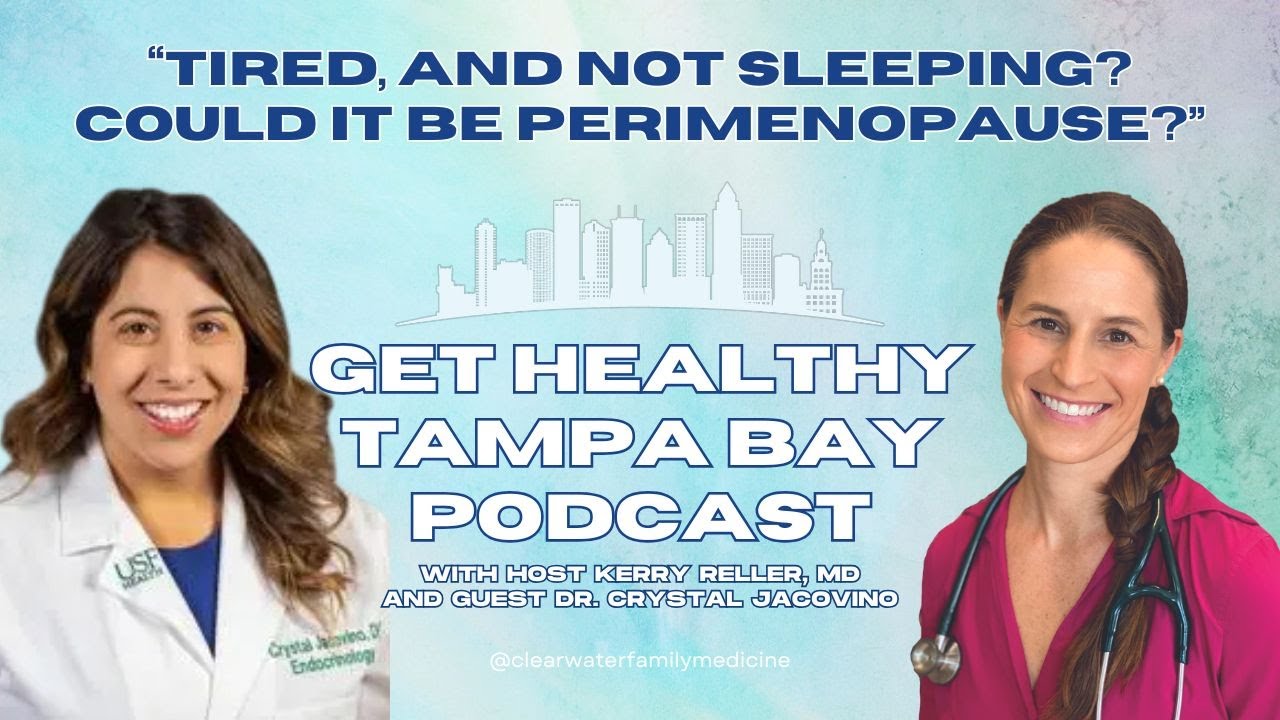
Dr. Crystal Jacovino on Menopause, Metabolism and Hormones That Help You Feel Like You Again
"I'm doing everything the same, but the weight keeps piling on." It is one of the most common frustrations women share in their 40s and 50s. In this episode of the Get Healthy Tampa Bay Podcast, Dr. Kerry Reller talks with Dr. Crystal Jacovino, a board-certified internist and endocrinologist who treats obesity and hormone health through Henry Meds, about how perimenopause and menopause affect metabolism, body composition and sleep, and what can help.
Why Hormones Change Your Body
Dr. Jacovino chose endocrinology because it is a field where people can truly get better. During perimenopause, estrogen and progesterone fluctuate unpredictably, like a roller coaster, while testosterone tends to decline more steadily. As estrogen drops, the body begins storing more fat in the belly as visceral fat, the deep fat around the organs. This type of fat is linked to insulin resistance, type 2 diabetes and heart disease, and it is hard to exercise away. At the same time, women often lose muscle, which lowers their resting metabolism. Cholesterol numbers also tend to worsen during this transition. In her research, Dr. Jacovino found that diet changes alone lowered inflammation markers in premenopausal women but were not enough in perimenopausal and postmenopausal women.
Strength Training Is Essential
Many women Dr. Jacovino's age grew up fearing that lifting weights would make them bulky, so they spent their gym time on cardio machines. Resistance training builds and preserves muscle, protects bones, helps manage appetite and supports metabolism. If you are eating and exercising the same way you did a few years ago but gaining weight, your body's needs have changed, and adding strength training is one of the most powerful things you can do.
Key Takeaways
Weight changes are not inevitable: Studies using body composition scans suggest that early hormone therapy may help limit unhealthy fat gain.
Labs are often not needed: The Menopause Society generally recommends treating perimenopause and menopause based on symptoms.
Perimenopause can be treated: Estrogen can be given steadily while progesterone is taken only part of the month (cyclical progesterone), mimicking a natural cycle.
Start low and adjust: Use the lowest effective dose for symptom control and add one hormone at a time.
Sleep matters: Poor sleep makes it much harder to exercise, plan healthy meals and resist fast food.
Testosterone for Women
Dr. Jacovino usually optimizes estrogen and progesterone first, since that alone may improve energy and libido. If symptoms like low libido or muscle weakness persist, she may add a low dose of testosterone, checking labs to keep levels in a safe range. She also uses low-dose testosterone for hypoactive sexual desire disorder (HSDD), a condition causing persistently low sexual desire, even in some premenopausal women.
Hormone Therapy and Breast Cancer Fears
The biggest worry Dr. Jacovino hears is breast cancer risk. Much of that fear stems from early results of the Women's Health Initiative (WHI) study, which used oral hormones in many women who were older or years past menopause. Longer-term follow-up has shown that estrogen alone was not linked to higher breast cancer risk, while combined oral estrogen and progestin carried a small increase. Today, treatment is individualized based on each woman's risk, using options like transdermal patches, vaginal estrogen or lower doses, along with regular breast screening.
What "Bioidentical" Really Means
"Bioidentical" is more of a marketing term than a medical one. Many FDA-approved hormones, including estradiol patches and micronized progesterone, are already identical to the hormones the body makes. Dr. Jacovino sometimes uses compounded hormones to fine-tune very low doses for patients who are nervous about starting, but she notes there is no proven advantage otherwise. Dr. Reller adds that FDA-approved options are often more affordable and may be covered by insurance.
Sleep and Perimenopause
Hot flashes can begin up to 10 years before menopause, and sleep disruption can be subtle, like waking at 2 or 4 a.m. without drenching sweats. Melatonin levels also decline with age. Dr. Jacovino often starts with cognitive behavioral strategies for sleep before medications, after ruling out sleep apnea. Dr. Reller notes that taking progesterone at night can also help with sleep.
A Patient Success Story
One of Dr. Jacovino's patients lost 35 pounds on semaglutide but still felt exhausted and frustrated with belly fat and loose skin. After starting a low-dose estrogen patch with cyclical progesterone, she slept better within two months, felt energized and started strength training with resistance bands. Dr. Reller has seen similar results when combining GLP-1 treatment, hormone therapy and lifestyle changes.
Conclusion
Perimenopause and menopause bring real changes, but you do not have to accept weight gain and exhaustion just because your mother or aunt did. Prioritize strength training and sleep, and talk with a knowledgeable clinician about whether hormone therapy is right for you. The earlier, the better. If you live in the Tampa Bay area, Clearwater Family Medicine and Allergy offers menopause care and weight management. Call (727) 446-1097 or visit cfma.health.
About Our Guest
Dr. Crystal Jacovino is a board-certified internist and endocrinologist with advanced training in obesity medicine and metabolic health. She currently sees patients via telehealth through Henry Meds, where she specializes in weight loss, HRT, testosterone replacement, and endocrine care. A Fellow of the Academy of Clinical Endocrinology, Dr. Jacovino is known for her patient-centered, evidence-based approach to hormonal and metabolic wellness.
Listen to the full episode on the Get Healthy Tampa Bay Podcast: Dr. Jacovino on Menopause, Metabolism & Hormones That Help You Feel Like You Again
Listen and Learn More
Watch the full episode above or listen to the Get Healthy Tampa Bay Podcast on your favorite podcast app. To schedule a visit with Dr. Kerry Reller at Clearwater Family Medicine and Allergy in Clearwater or Palm Harbor, call (727) 446-1097.


