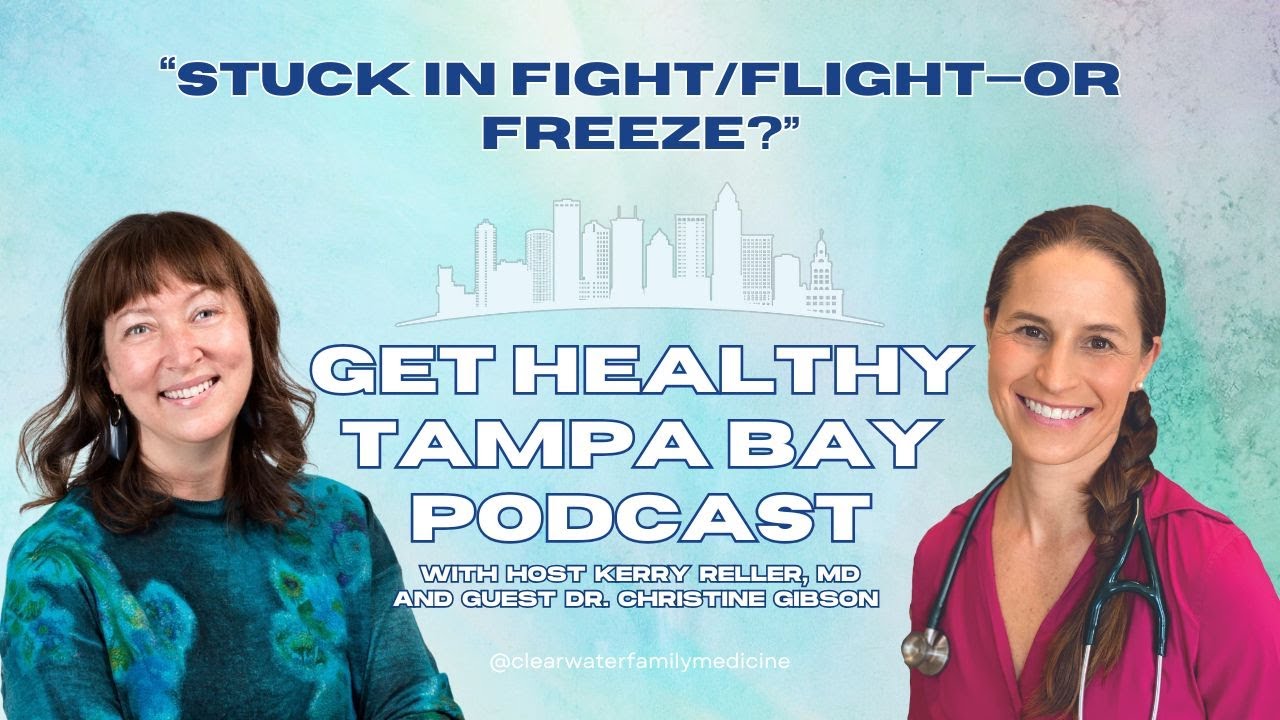
Dr. Christine Gibson on Trauma Tools, Polyvagal Basics & Everyday Regulation at Home!
Trauma is more common than most of us realize, and it affects the body as much as the mind. In this episode of the Get Healthy Tampa Bay Podcast, Dr. Kerry Reller talks with Dr. Christine Gibson, a family physician and trauma therapist from Canada, known on social media as the "TikTok Trauma Doc" and author of The Modern Trauma Toolkit. She shares simple, body-based tools anyone can use to calm the nervous system and build resilience.
From Hospital Medicine to Trauma Therapy
Dr. Gibson worked as a hospitalist, in a low-income community health center and as director of a health equity residency program. She realized she had learned to tune out her own body's signals during 100-hour weeks and difficult patient outcomes. After living through the 2015 earthquakes in Nepal, she developed physical symptoms of stress and began studying trauma. She noticed that many of her patients, including refugees, people living on low incomes and people using substances, had experienced trauma that primary care was not equipped to address.
Trauma Responses Make Sense
One of the most important lessons Dr. Gibson learned is that trauma responses are not signs that something is wrong with you. They are your brain's natural way of protecting you from future danger. After the earthquakes, the vibration of a garage door opening could instantly make her feel threatened. Instead of asking "What's wrong with my brain?" she encourages people to ask "What's right with my brain that it's doing this?" Trauma can come from big events like disasters or hurricanes, but also from neglect, bullying or repeated stress. What feels traumatic is personal.
Fight, Flight and Freeze
When the nervous system senses danger, it may shift into fight or flight, with a racing mind, trouble sleeping and tense muscles. Or it may go into a freeze or shutdown response, which can look like depression: low motivation, trouble getting out of bed or endless scrolling. Like an opossum playing dead, this is a built-in survival reflex that happens outside our conscious control. Because the thinking brain goes offline during intense stress, you often cannot simply think your way out of a trauma response.
Key Takeaways
Notice: Learn what your nervous system looks like when it is overactive or underactive.
Shift: Use simple body-based tools to calm or energize your nervous system.
Reconnect: Rediscover who you are and what you value once stress reflexes are no longer in charge.
Connection heals: Connection can come from people, pets, nature, music or spirituality.
Stress affects physical health: Dr. Gibson has seen patients' blood pressure, diabetes and asthma improve as they learned to manage stress.
Your brain can rewire: With practice, new habits can begin to take hold in as little as a month.
Simple Tools You Can Try Today
Breath: If you feel revved up, make your exhale longer. If you feel shut down, make your inhale longer.
Gaze: Look at something close, then something far away, for a few breaths each.
Butterfly tap: Cross your arms over your chest and gently alternate tapping each hand on your upper chest.
Havening: Gently brush your fingertips across your palms, shoulders or cheeks, the places we instinctively touch when comforting someone. Dr. Gibson notes that studies suggest this kind of soothing touch shifts the brain toward slower, calmer brain waves.
EFT tapping: A form of self-acupressure that research suggests can reduce stress and chronic pain.
Guided imagery: Visit your happy place in your mind, or notice the smells, textures and sights around you on a walk.
Notice the good: Our brains are wired to notice the negative more than the positive. Try finding one thing you like about each person you meet.
How Childhood Stress Affects Adult Health
The landmark Adverse Childhood Experiences (ACE) study found that difficult experiences in childhood are linked to higher rates of heart disease, cancer and other problems later in life. Dr. Gibson explains that when the body is stuck in fight-or-flight mode, the rest-and-digest systems that support digestion, fertility and immune function cannot work as well. Calming the nervous system helps restore that balance.
"What If" Affirmations
Positive affirmations can feel false when you are struggling. One of Dr. Gibson's most popular tips is to add "what if" to the beginning: "What if I am a good person?" "What if good things could happen to me?" This plants seeds of possibility without forcing you to believe something you are not ready to accept. Dr. Reller compares it to the ladder method, building up step by step to statements you truly believe.
Conclusion
If you feel like you are on the struggle bus, start by noticing whether your nervous system feels revved up or shut down, then try a few simple tools to find what works for you. Your body already knows how to calm itself. You just need to practice. Learn more in The Modern Trauma Toolkit at modern-trauma.com. If you live in the Tampa Bay area and want help with stress, sleep or related health concerns, Clearwater Family Medicine and Allergy can help. Call (727) 446-1097 or visit cfma.health.
About Our Guest
Christine holds a Doctorate in Transdisciplinary Studies and a Master’s in Medical Education. She is a Clinical Associate Professor in Family Medicine and Psychiatry and is a two-time TEDx speaker. She co-founded multiple organizations that integrate equity, healing, and innovation, including:
- Safer Spaces Training: Personalized training to equip professionals with the skills to build trauma-informed services and workplaces. - The Belong Foundation: dedicated to serving the complex and interconnected needs of community. - Global Familymed Foundation (GFF): Strengthening primary care systems in low-resource settings.
Christine weaves the power of story into all she does, whether speaking, writing, facilitating, or leading change.
Connect with Dr. Gibson
Listen to the full episode on the Get Healthy Tampa Bay Podcast: Dr. Christine Gibson on Trauma Tools, Polyvagal Basics & Everyday Regulation at Home!
Listen and Learn More
Watch the full episode above or listen to the Get Healthy Tampa Bay Podcast on your favorite podcast app. To schedule a visit with Dr. Kerry Reller at Clearwater Family Medicine and Allergy in Clearwater or Palm Harbor, call (727) 446-1097.


