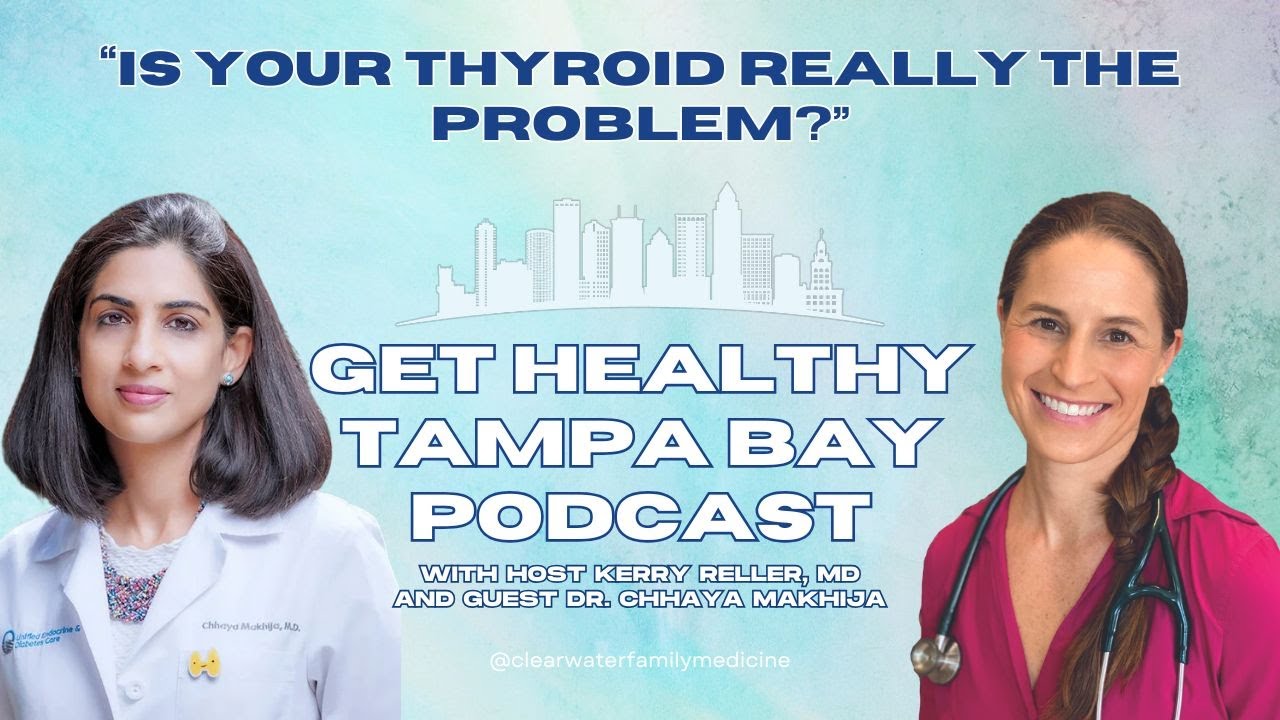
Dr. Chhaya Makhija on Thyroid Health, Hashimoto's and Common Hormone Myths
Feeling tired, gaining weight or noticing a lump in your neck can make anyone wonder, "Is it my thyroid?" In this episode of the Get Healthy Tampa Bay Podcast, Dr. Kerry Reller talks with Dr. Chhaya Makhija, a triple board-certified endocrinologist and lifestyle medicine physician who founded Unified Endocrine and Diabetes Care in California and hosts the Hormones and Hope podcast, about how the thyroid works, which tests matter, Hashimoto's disease and common thyroid myths.
How the Thyroid Works
The thyroid is a butterfly-shaped gland in the front of the neck with two lobes connected by a bridge called the isthmus. Along with insulin and cortisol, thyroid hormone is essential for life. About 80% of what the thyroid makes is T4 (thyroxine), with the rest being T3. T4 circulates in the blood, and each cell converts it to active T3 as needed, like an engine adjusting its speed. The thyroid needs iodine and small amounts of selenium to make hormone. Thyroid hormone affects metabolism, but it is only one of many factors that control energy and weight.
Why People Get Their Thyroid Checked
Common reasons include fatigue, weight gain, sleep problems, palpitations, irregular periods or trouble conceiving, a lump in the neck, a thyroid nodule found on an imaging test or elevated thyroid antibodies. Dr. Makhija notes that perimenopause can also cause shifts in thyroid levels, making it harder to know whether symptoms come from hormones, the thyroid or both.
Which Thyroid Tests Matter?
For routine screening in people without symptoms, guidelines recommend a TSH (thyroid-stimulating hormone) test. TSH is a signal from the pituitary gland, not the thyroid hormone itself. If symptoms are present, free T4 and sometimes free T3 can help. TPO antibodies can be useful when there is a strong family history of autoimmune disease or signs of an underactive thyroid. Dr. Makhija warns that biotin supplements can interfere with thyroid lab results, and that reverse T3, a popular test online, rarely changes treatment. During serious illness, the body naturally slows thyroid activity to conserve energy, so testing is often best repeated after recovery.
Key Takeaways
Not all fatigue is thyroid-related: Sleep, nutrition and stress often play a bigger role.
Most neck lumps are lymph nodes: They often swell in response to infections.
Most thyroid nodules are benign: An ultrasound and proper evaluation can ease worry.
Avoid "thyroid boost" supplements: Many contain animal thyroid extracts that can cause palpitations, abnormal heart rhythms and bone loss.
You do not need to avoid broccoli: Cruciferous vegetables are a concern only with severe iodine deficiency and untreated thyroid disease.
Understanding Hashimoto's Disease
Hashimoto's thyroiditis is an autoimmune condition in which the body makes antibodies, most commonly TPO antibodies, that interfere with the thyroid. Having these antibodies does not automatically mean you have an underactive thyroid. If thyroid levels are normal, there is a small yearly risk of developing hypothyroidism, so levels should be monitored over time. Hashimoto's often runs in families with other autoimmune conditions. Women who are trying to conceive and have positive TPO antibodies may be treated at lower TSH levels than usual, especially if going through IVF, because the developing baby relies on the mother's thyroid hormone early in pregnancy. For people with borderline results and persistent symptoms after other causes are ruled out, a short, closely monitored trial of low-dose thyroid medication may be a shared decision with their physician.
Supplements and Lifestyle
Dr. Makhija sometimes recommends selenium, 200 micrograms daily for 30 to 60 days, for people with Hashimoto's, since studies show it may lower TPO antibodies. A single Brazil nut contains roughly that amount, though it varies. Iodine needs rise during pregnancy and breastfeeding, which is why prenatal vitamins include it. Lifestyle cannot replace medication for true thyroid disease, but anti-inflammatory eating, limiting ultra-processed foods, staying active and managing stress support overall health. For people with Graves' disease, an overactive thyroid condition, stress can trigger relapses, so breathwork and coping skills can be especially helpful.
Conclusion
Thyroid health is more nuanced than a single lab result or an internet search. Work with a board-certified physician who can interpret your symptoms and labs together and look for other causes too. If you live in the Tampa Bay area and have questions about fatigue, weight changes or thyroid labs, Clearwater Family Medicine and Allergy can help. Call (727) 446-1097 or visit cfma.health.
About Our Guest
Dr. Chhaya Makhija is a triple board-certified endocrinologist and lifestyle medicine physician practicing in California. She is the founder of Unified Endocrine Diabetes Care, a direct specialty care practice that blends evidence-based medicine with holistic, prevention-focused strategies. She’s also the host of the Hormones & Hope podcast and a dedicated educator and speaker.
Follow her on Instagram @chhayamakhijamd or visit unifiedendocrinecare.com to learn more.
Listen to the full episode on the Get Healthy Tampa Bay Podcast: Dr. Chhaya Makhija on Thyroid Health, Hashimoto’s, and Common Hormone Myths Explained
Listen and Learn More
Watch the full episode above or listen to the Get Healthy Tampa Bay Podcast on your favorite podcast app. To schedule a visit with Dr. Kerry Reller at Clearwater Family Medicine and Allergy in Clearwater or Palm Harbor, call (727) 446-1097.


