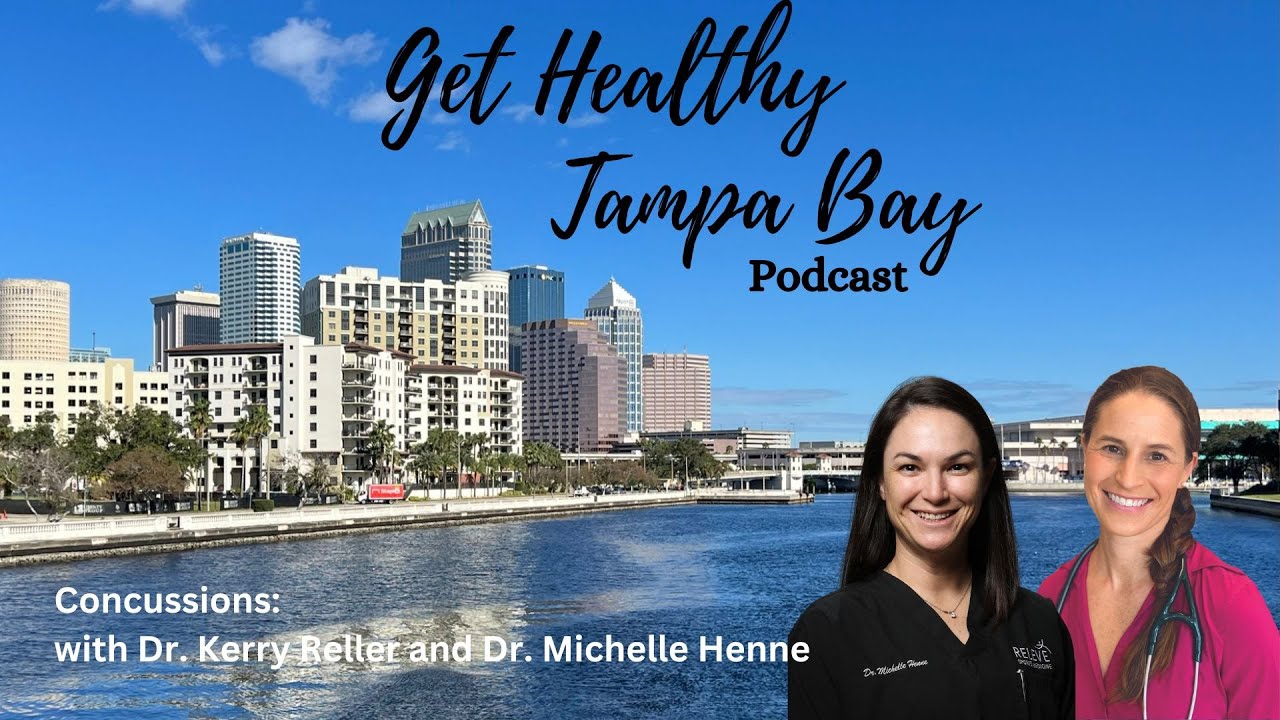
Concussions: More Than Just a Headache with Dr. Michele Henne
A concussion is more than just a headache, and knowing the signs can protect young athletes and adults alike. In this episode of the Get Healthy Tampa Bay Podcast, Dr. Kerry Reller talks with Dr. Michele Henne, a sports medicine physician who opened her practice in Winter Haven in 2017 and cares for athletes at local high schools and colleges, about how concussions happen, how they are diagnosed and how to return to school and sports safely.
What Is a Concussion?
A concussion is a mild traumatic brain injury. It changes how brain cells function for a period of time, and symptoms should gradually improve as the brain recovers. Concussions can happen from a direct hit to the head, like two soccer players colliding, or from a whiplash motion that jolts the brain, like a hard tackle.
Six Types of Symptoms
Symptoms can appear right away or show up hours later, which is why some athletes keep playing when they should not. Dr. Henne looks at six areas:
Physical: Headache, the most common symptom, and neck pain
Visual: Light sensitivity, blurred or double vision
Balance: Dizziness or unsteady walking
Cognitive: Trouble with attention, concentration and memory
Sleep: Sleeping more than usual or having insomnia
Emotional: Sadness, irritability or crying that is unusual for the person
How Concussions Are Diagnosed
On the sideline, Dr. Henne checks for symptoms in all six areas and asks simple questions like who the team is playing, the score and the result of last week's game. In the office, she combines a standard concussion assessment called the SCAT with a vision and balance screening called the VOMS, which together catch more concussions than either test alone. Baseline testing before the season, offered by many schools and colleges, makes it easier to compare results after an injury.
Go to the emergency room if someone has a worsening headache, repeated vomiting, a seizure, increasing confusion, weakness, slurred speech or trouble waking up.
Recovery and Treatment
About 85 percent of athletes recover within 8 to 10 days. Dr. Henne follows patients about every two weeks until symptoms resolve and testing returns to normal. Treatment usually starts with a short period of rest, followed by a gradual return to light activity. Depending on symptoms, recovery may also include:
Physical or vestibular therapy for neck pain, dizziness or balance problems
School accommodations, and sometimes a neuropsychologist, a 504 plan or an IEP for longer-lasting learning difficulties
Medications only for prolonged symptoms, such as acetaminophen for headaches, melatonin for sleep or low-dose amitriptyline
People with a history of migraines often have a longer recovery.
Key Takeaways
Return to learn before return to play: Students should be back to full schoolwork without symptoms before returning to sports.
Follow a step-by-step return-to-play plan: Athletes gradually progress from light exercise to sport-specific drills, then non-contact and full-contact practice. U.S. Soccer adds a three-day heading progression.
Returning too soon is risky: It can make symptoms much worse and roughly doubles the risk of other injuries, like an ACL tear that could mean nine months of recovery.
When in doubt, sit it out.
Conclusion
Concussions are common, especially in contact sports, but with the right evaluation and a careful return plan, most people make a full recovery. If you live in the Tampa Bay area and need a primary care physician for sports physicals or help after an injury, Clearwater Family Medicine and Allergy can help. Call (727) 446-1097 or visit cfma.health.
Listen to the full episode on the Get Healthy Tampa Bay Podcast: Concussions: More than just a Headache with Dr. Henne
Listen and Learn More
Watch the full episode above or listen to the Get Healthy Tampa Bay Podcast on your favorite podcast app. To schedule a visit with Dr. Kerry Reller at Clearwater Family Medicine and Allergy in Clearwater or Palm Harbor, call (727) 446-1097.


