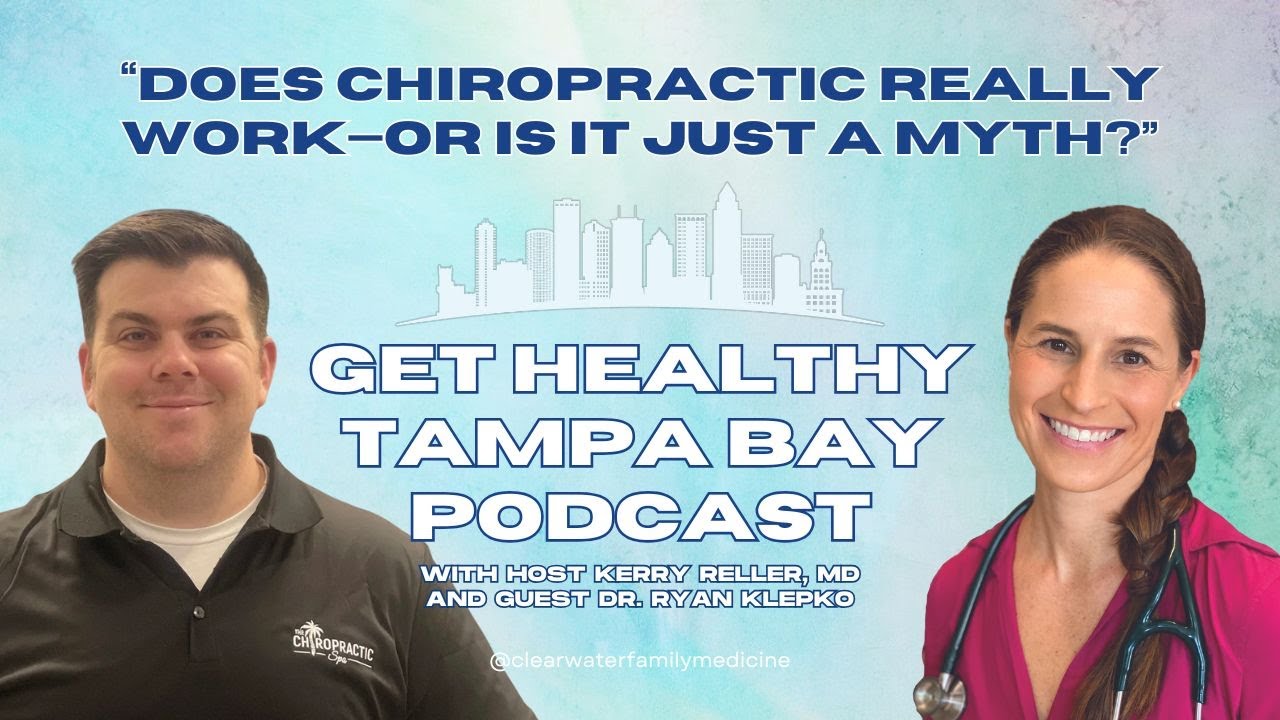
Chiropractic Myths, Headaches and Performance with Dr. Ryan Klepko
Chiropractic care means different things to different people, from injury recovery to peak athletic performance. In this episode of the Get Healthy Tampa Bay Podcast, Dr. Kerry Reller talks with Dr. Ryan Klepko, a chiropractic physician and competitive powerlifter who co-owns The Chiropractic Spa in Dunedin, about how chiropractic works, how it can help with headaches and performance, and which myths he hears most.
How Dr. Klepko Defines Chiropractic Care
Dr. Klepko got into chiropractic after a high school soccer injury left him unable to stand up straight. After a week on muscle relaxers that made schoolwork difficult, his mom took him to a chiropractor, and he was back playing within two visits. Today he focuses on orthopedic conditions, muscle recovery and sports performance, while his wife, Dr. Robyn Klepko, focuses on pediatrics, pregnancy and functional medicine. He describes himself as somewhere between chiropractors who believe adjustments cure everything and those who rely only on what science has proven. His goal is to restore function, reduce inflammation and ease the everyday aches and pains of life.
Chiropractic and Osteopathic Manipulation
Chiropractic and osteopathic medicine share similar roots. Osteopathic physicians (DOs) moved toward traditional medical training, while chiropractic stayed focused on hands-on adjustments. There are more than 130 chiropractic techniques, from the familiar "pop" of diversified adjustments to gentle instrument-based methods like the Activator, which Dr. Klepko has used on patients from infants to a 94-year-old.
It Is All About the Nervous System
Dr. Klepko calls chiropractors "the electricians of the body." He explains that an adjustment does not usually move bones in a way you would see on an X-ray. Instead, it works through the nervous system. Movement signals travel faster than pain signals, so an adjustment can dampen pain, much like rubbing a scraped knee, giving the body a chance to heal and restore normal function.
Key Takeaways
Watch for reduced function: Feeling stiff, restricted or "off" can be a sign that your body needs attention, even without obvious pain.
Athletes often use it for maintenance: Many endurance athletes and lifters schedule adjustments before competitions to help them perform at their best.
Headaches have many causes: Dehydration, skipped meals, food sensitivities, tense muscles, jaw problems and old injuries can all play a role.
Jaw and TMJ care can help: Releasing tight jaw muscles and adjusting the jaw may ease some headaches.
Chiropractors and medical doctors can work together: Good care often involves teamwork with orthopedists, physical therapists and primary care physicians.
Movement is medicine: Staying active, rather than resting too long, helps people recover faster.
Headaches, Migraines and TMJ
Dr. Klepko starts by looking for the cause of a headache. He always asks how much water a patient has had and when they last ate. For tension headaches, neck adjustments and soft tissue work can help muscles relax. For jaw-related headaches, he works on the muscles around the jaw and may refer patients to a massage therapist who specializes in facial and TMJ work. He personally gets migraines and finds that ginger and an adjustment help him most. He is quick to refer patients to other providers when they are not improving.
Busting the Stroke Myth
The myth that bothers Dr. Klepko most is that chiropractic commonly causes strokes. He notes that serious complications from neck adjustments are rare, and he performs safety screening tests on every patient's neck, no matter where their pain is. As with any procedure, there is some risk, so tell your provider about any history of blood vessel problems, and seek emergency care for sudden severe neck pain, vision changes, weakness, numbness or trouble speaking.
Engagement Helps Recovery
Before chiropractic school, Dr. Klepko managed a therapy clinic in a retirement community. He noticed that residents who stayed active and socially engaged always recovered faster from setbacks. One very active resident recovered from a fall far faster than anyone he had seen. Dr. Reller adds that social connection and staying active are also linked to longevity and lower dementia risk.
Conclusion
Whether your goal is recovering from an injury, easing headaches or performing your best, staying active and working with a team of providers can make a big difference. As Dr. Klepko says, movement is medicine: when you move, you feel better, function better and perform better. If you live in the Tampa Bay area and want help with headaches, back pain or staying active, Clearwater Family Medicine and Allergy can help. Call (727) 446-1097 or visit cfma.health.
Listen to the full episode on the Get Healthy Tampa Bay Podcast: Chiropractic Myths, Headaches & Performance with Dr. Ryan Klepko
Listen and Learn More
Watch the full episode above or listen to the Get Healthy Tampa Bay Podcast on your favorite podcast app. To schedule a visit with Dr. Kerry Reller at Clearwater Family Medicine and Allergy in Clearwater or Palm Harbor, call (727) 446-1097.


