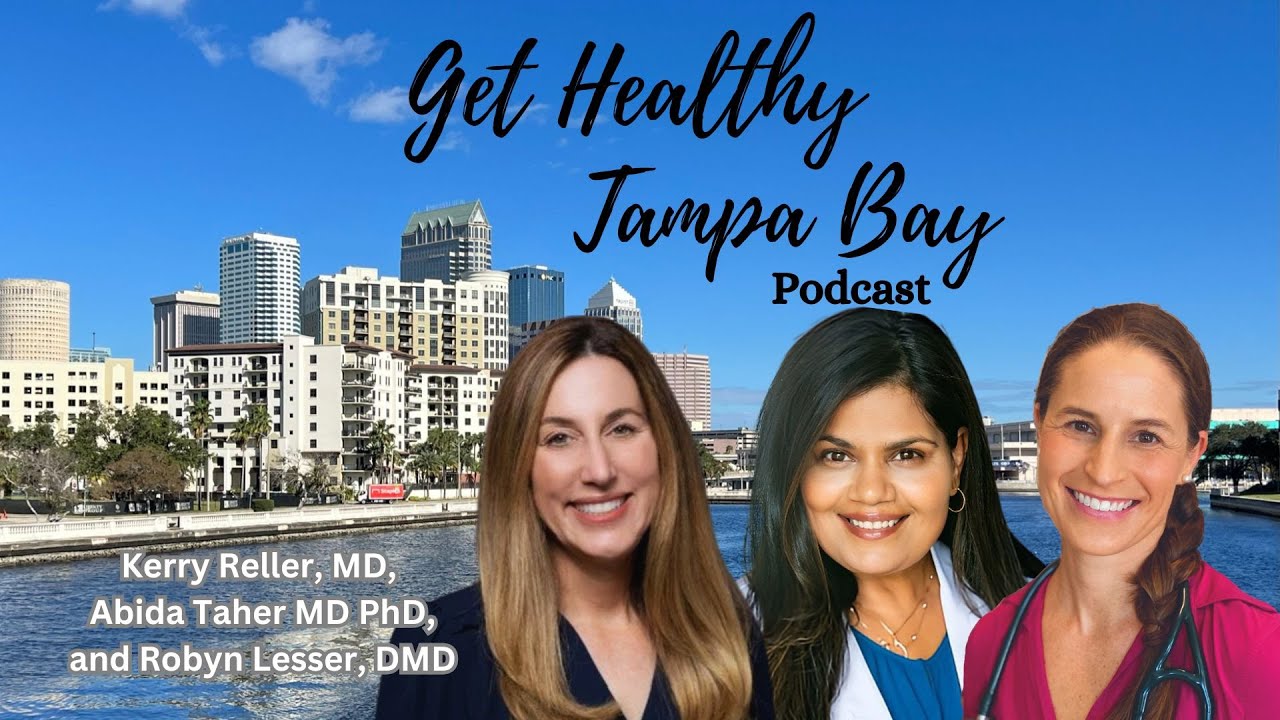
Cancer Care Beyond Treatment with Dr. Abida Taher and Dr. Robin Lesser
Cancer treatment does not stop when you leave the infusion chair. Side effects like dry mouth, mouth sores and sensitive teeth follow patients home, and they can make it hard to eat, drink and even talk. In this episode of the Get Healthy Tampa Bay Podcast, Dr. Kerry Reller talks with Dr. Abida Taher, an oncologic radiologist and founder of the Tampa Bay startup UnCancer, and Dr. Robin Lesser, a pediatric dentist with more than 20 years in practice, about supporting patients through treatment and survivorship.
Why They Started UnCancer
Dr. Taher spends her days reading scans for cancer patients, and her husband is an oncologist. They noticed that while patients get excellent care in the clinic, the support often disappears once they go home, especially outside of large cancer centers. During the pandemic, Dr. Taher began writing practical blog posts on topics like what to pack for chemotherapy, how to set up your home after surgery and what to ask your oncologist. She later created printable "Stress Less" checklists for patients and caregivers. Dr. Lesser, whose daughter started kindergarten with Dr. Taher's, had been putting together oral care packages for friends and family going through treatment. The two teamed up.
Why Oral Health Matters During Cancer Treatment
No matter the type of cancer, many treatments affect the mouth, including chemotherapy, head and neck radiation, immunotherapy and other newer drugs. Common problems include:
Dry mouth
Tooth sensitivity
Mouth sores (mucositis)
Tooth decay, which can follow all of the above
These side effects affect nutrition, hydration and comfort. In some cases, they can even lead to delays in treatment. Yet going to the dentist is often the last thing on a patient's mind.
Key Takeaways
See the dentist before treatment when possible: Ask your oncology team about the best timing for fillings, extractions or other dental work before chemotherapy or radiation starts.
Coordinate your care: The two doctors have worked with dental and oncology nursing groups on a standardized form that helps dentists and oncologists share information like blood work results and timing.
Try a salt and baking soda rinse: A simple homemade rinse is a long-recommended way to keep the mouth clean and comfortable during treatment. Ask your care team how often to use it.
Stimulate saliva: Sugar-free, xylitol-based candies or lozenges can help with dry mouth. Sour flavors can help get saliva flowing before meals, which may make food easier to taste and swallow. Sugar alcohols can upset the stomach in large amounts, and xylitol is toxic to dogs, so keep it away from pets.
Be gentle on sore mouths: Dr. Lesser says some patients find fluoride toothpaste irritating during treatment. Mild toothpastes made with nano-hydroxyapatite, a mineral that makes up most of tooth enamel, are one alternative. Products for sensitive teeth may also help.
Living with Cancer as a Chronic Condition
More than 18 million Americans are living after a cancer diagnosis, and improved treatments mean many people live for decades. Some side effects resolve after treatment, but others can linger or return. The founders compare their vision to the welcome kit many women receive when they are pregnant: a starter kit with information and practical supplies for every new cancer patient.
What Is Next
UnCancer is developing a soft clothing line with discreet zippers so nurses can access a chemotherapy port without the patient needing to undress, gentle head coverings for a sensitive scalp and a seatbelt pad to protect a port. The team is also researching products for peripheral neuropathy, radiation skin irritation and hair regrowth.
Conclusion
Cancer patients deserve practical support at home, not just in the clinic. Plan ahead for oral health, ask your care team about side effects before they start and keep simple tools on hand to stay comfortable. If you live in the Tampa Bay area and need a primary care physician to help coordinate care during and after cancer treatment, Clearwater Family Medicine and Allergy can help. Call (727) 446-1097 or visit cfma.health.
About Our Guests
Dr. Abida Taher is an oncoradiologist and founder of UnCancer, specializing in cancer imaging and patient advocacy. She launched UnCancer to provide practical resources and retail solutions for cancer patients beyond medical treatment.
Dr. Robin Lesser is a pediatric dentist with over 23 years of experience. She co-founded UnCancer to address oral health challenges in cancer patients and improve collaboration between oncologists and dentists.
Listen now on the Get Healthy Tampa Bay Podcast and discover how UnCancer is redefining cancer care!
Connect with Dr. Abida Taher & Dr. Robyn Lesser
Listen to the full episode on the Get Healthy Tampa Bay Podcast: Cancer Care Beyond Treatment with Dr. Abida Taher & Dr. Robyn Lesser
Listen and Learn More
Watch the full episode above or listen to the Get Healthy Tampa Bay Podcast on your favorite podcast app. To schedule a visit with Dr. Kerry Reller at Clearwater Family Medicine and Allergy in Clearwater or Palm Harbor, call (727) 446-1097.


