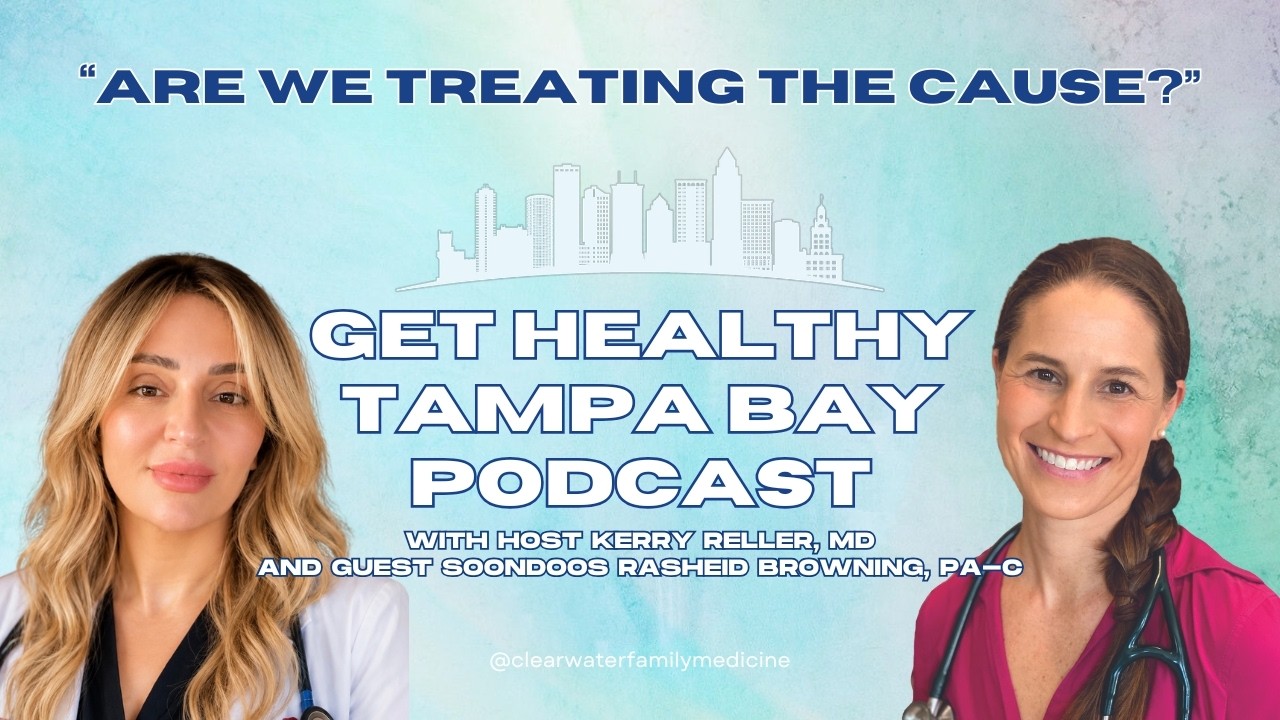
Beyond the Symptom: Collaborative Care with Soondoos Rasheid Browning, PA-C
An itch, a rash or a boil can be more than skin deep. In this episode of the Get Healthy Tampa Bay Podcast, Dr. Kerry Reller welcomes one of CFMA's own, physician assistant Soondoos Rasheid Browning, PA-C, to share what she learned at a collaborative care summit on how different specialties can work together, and why the best care treats the cause, not just the symptom.
From the Military to Medicine
Soondoos took a nontraditional path into medicine. She served in the military as a military police officer, then worked in law enforcement for the City of Tampa before starting PA school at the University of Tampa. Pharmacology became one of her favorite subjects, which is part of why she sought out extra training after graduating. Dr. Reller, who also came to medicine after another career, says that kind of real-world experience brings a lot to patient care.
The Skin Is a Window to the Body
The summit focused on how dermatology overlaps with other specialties. Skin findings often point to something happening inside the body. Dark, velvety patches on the neck (acanthosis nigricans) can be a sign of insulin resistance or diabetes. Acne and excess hair growth can point to hormonal conditions. Rashes can be linked to inflammatory bowel disease. Treating only what shows on the surface can miss the real problem.
Key Takeaways
Ask why, not just what to give: Itch can come from allergies and histamine, inflammation in the skin, medications, whole-body disease or nerve problems. Finding the cause matters as much as calming the itch.
Chronic itch is disabling: It can wreck sleep and quality of life. Dr. Reller often controls the itch first with antihistamines, then brings patients back within weeks to dig deeper.
Look at the whole medication list: Drug-related itch and rashes do not always come from new medications. Some, such as ACE inhibitors, beta blockers and anticonvulsants, can cause reactions even after long-term use.
Use strong topical steroids sparingly: Long-term use of potent steroid creams thins the skin, which is especially risky for older adults whose skin already tears and bruises easily.
Education makes treatment work: Patients are more likely to stick with a treatment when they know what to expect, including side effects.
Collaboration helps patients: Calling a specialist colleague for advice can keep care close to home and avoid unnecessary referrals.
A Real Example: Itch After Shingles
Soondoos shared the case of an older patient with years of itching after shingles. She had been using clobetasol, a very strong steroid cream, on thin, fragile skin that had developed open sores. Soondoos switched her to a gentler steroid around the wounds and thick barrier emollients on open areas, and the skin healed. For the itch, which likely came from nerve damage, they chose topical capsaicin. Soondoos explained up front that it would sting and burn at first, but that over time it calms the nerves that send itch signals. Because the patient knew what to expect, she was ready to stick with it instead of giving up after the first few days.
Boils, HS and the Role of Inflammation
Painful, draining boils in the armpits or groin may be hidradenitis suppurativa (HS), a chronic inflammatory skin condition. Treatment often moves in steps from topical antibiotics to oral antibiotics, then to biologic medications, and sometimes surgery. Dr. Reller has noticed that several CFMA patients with HS improved after starting GLP-1 medications. The summit also discussed GLP-1s beyond weight loss, since excess fat tissue drives inflammation linked to HS, polycystic ovary syndrome (now sometimes called PMOS) and harder-to-treat asthma.
Conclusion
The big lesson from Part 1: stop and ask whether you are treating the symptom or what is causing it. Good care connects the dots across specialties and takes the time to explain the plan. In Part 2, Soondoos and Dr. Reller tackle MCAS, hypermobility and symptoms that do not fit neatly into one diagnosis.
Clearwater Family Medicine and Allergy has cared for allergy, asthma and immunology patients in the Tampa Bay area since 1979, when Dr. Reller's father, allergist and immunologist Dr. J. Wayne Phillips, founded the practice.
About Our Guest
Soondoos Rasheid Browning, PA-C, is a board-certified Physician Assistant at Clearwater Family Medicine & Allergy. A graduate of the University of Tampa Physician Assistant Program and a proud veteran, she brings experience in emergency medicine, women’s health, and primary care.
Soondoos is passionate about preventive care, chronic disease management, and helping patients feel heard and empowered in their healthcare. She is known for her warm, approachable personality and her commitment to providing thoughtful, patient-centered care.
Connect with Soondoos Rasheid Browning, PA-C
Listen to the full episode on the Get Healthy Tampa Bay Podcast: Beyond the Symptom: Collaborative Care with Soondoos Rasheid Browning, PA-C
Listen and Learn More
Watch the full episode above or listen to the Get Healthy Tampa Bay Podcast on your favorite podcast app. To schedule a visit with Dr. Kerry Reller at Clearwater Family Medicine and Allergy in Clearwater or Palm Harbor, call (727) 446-1097.


