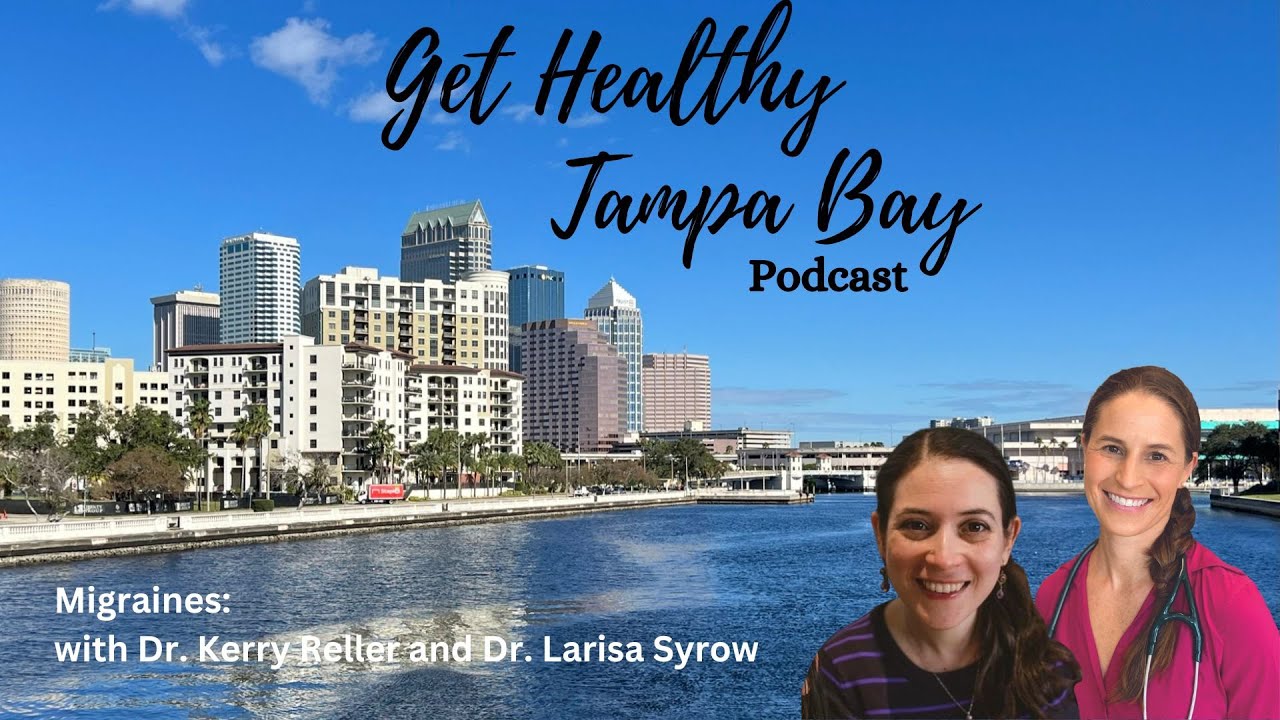
All About Migraines with Dr. Larisa Syrow
Migraines are much more than a bad headache, and there are more ways to treat them than ever. In this episode of the Get Healthy Tampa Bay Podcast, Dr. Kerry Reller, who has migraines herself, talks with Dr. Larisa Syrow, a neurologist certified in headache medicine, about what makes migraines different, common triggers and the full range of treatment options.
What Is a Migraine?
Migraines usually cause severe, throbbing or pounding head pain along with sensitivity to light, sound or smells, nausea or vomiting. Some people also have an aura, such as vision changes, numbness or trouble speaking, and some have migraine symptoms without pain at all. Tension-type headaches, by contrast, feel more like pressure and usually let you keep going with your day, while a migraine often forces you to lie down. Many headache specialists see the two as ends of the same spectrum.
Common Triggers
Stress
Hormone changes: Around periods, puberty, pregnancy, perimenopause and menopause. Some birth control pills improve migraines and others make them worse.
Poor sleep and dehydration
Foods and drinks: Preservatives like MSG and nitrates in processed meats, artificial sweeteners, sodas, energy drinks and alcohol, especially red wine for some people
Weather changes, bright lights and strong smells
Too much caffeine: Daily caffeine can lead to withdrawal headaches the next day.
Migraines often run in families, even when relatives call theirs "sinus" or "stress" headaches.
Prevention Starts with Lifestyle
Drink plenty of water
Eat regular, nutritious meals with fewer processed foods and additives
Protect your sleep
Manage stress with yoga, tai chi, meditation apps or counseling
Keep a headache diary to spot your triggers
Supplements Dr. Syrow often suggests include riboflavin (vitamin B2) 400 mg, magnesium 400 mg and CoQ10 200 mg daily, taken consistently for a couple of months. Talk to your doctor before starting supplements. An over-the-counter nerve stimulation device called Cefaly can be used to prevent and treat migraines.
Rescue and Preventive Medications
Migraine treatment falls into two groups:
Rescue (acute) treatment: Taken when a migraine starts. Options include over-the-counter NSAIDs like naproxen, combination products like Excedrin, prescription triptans such as sumatriptan or rizatriptan and newer medications like ubrogepant (Ubrelvy), rimegepant (Nurtec), lasmiditan (Reyvow) and dihydroergotamine nasal spray (Trudhesa).
Preventive treatment: Taken every day to reduce how often migraines happen. Options include amitriptyline, nortriptyline, topiramate, propranolol and venlafaxine, newer CGRP-targeting medications such as Aimovig, Ajovy, Emgality, Nurtec and Qulipta and in-office Botox injections or nerve blocks.
Preventive treatment is worth considering if you need rescue medication more than about twice a week, or if rescue medications cause side effects or stop working.
Key Takeaways
Watch for rebound headaches: Using pain relievers on 10 or more days a month can cause medication overuse headaches.
Do not give up: If the first few treatments do not work, there are many more options, and a headache specialist can help find the right combination.
Know your stroke risk: Migraine with aura slightly raises stroke risk, especially with smoking, estrogen-containing birth control, age over 35 or other risk factors. Talk with your doctor about the safest birth control options for you.
Severe or prolonged migraines: Sometimes need steroids, anti-nausea medicines or emergency care.
Conclusion
Migraines can be invisible to others but life-altering for the person living with them. With the right mix of lifestyle changes and modern treatments, most people can get much better control. If you live in the Tampa Bay area and want help with headaches or migraines, Clearwater Family Medicine and Allergy can help. Call (727) 446-1097 or visit cfma.health.
Connect with Dr. Larisa Syrow
Listen to the full episode on the Get Healthy Tampa Bay Podcast: What makes a Migraine different? with Dr. Larisa Syrow
Listen and Learn More
Watch the full episode above or listen to the Get Healthy Tampa Bay Podcast on your favorite podcast app. To schedule a visit with Dr. Kerry Reller at Clearwater Family Medicine and Allergy in Clearwater or Palm Harbor, call (727) 446-1097.


