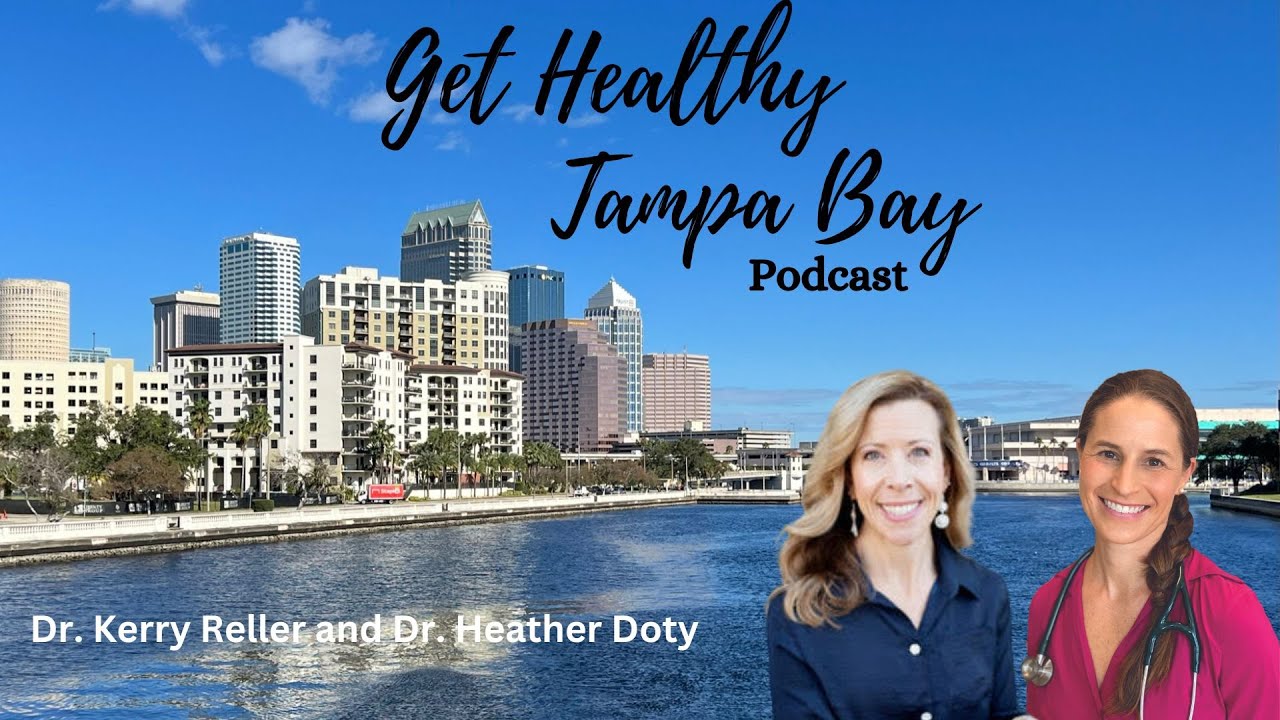
All About Intermittent Fasting with Dr. Heather Doty
Intermittent fasting is everywhere on social media, but what does it actually do, and is it right for you? In this episode of the Get Healthy Tampa Bay Podcast, Dr. Kerry Reller talks with Dr. Heather Doty, an osteopathic family physician with about 20 years of experience who runs a direct primary care practice, about the different types of fasting, the science behind them and how to get started safely.
Intermittent Fasting vs. Time-Restricted Eating
Intermittent fasting: Longer fasts done periodically, such as 24 to 36 hours. Popular versions include alternate-day fasting, where you eat about 500 calories or less every other day, and the 5:2 plan, with two non-consecutive low-calorie days a week.
Time-restricted eating: Eating all of your food within a set window each day. A common starting point is eating within 8 hours and fasting for 16, with only water, black coffee or plain tea during the fast.
Dr. Doty prefers time-restricted eating because it is practical for most people. Even keeping your eating within 12 hours is an improvement over the all-day snacking many of us do. Before electricity and constant snacks, people naturally ate an evening meal, went to bed at dark and fasted overnight.
What Happens in Your Body
When you are not eating, your body taps into stored energy. Insulin falls, the liver releases stored sugar and, with a long enough fast, the body burns more fat and makes ketones, which the brain can use for fuel. Fasting also triggers autophagy, a natural process in which cells break down and recycle damaged parts. Researchers are studying whether this may help with healthy aging and cancer prevention, though most of that evidence so far comes from lab and animal studies.
Possible Benefits
Better blood sugar and insulin sensitivity: Some physicians use supervised fasting to help people with type 2 diabetes reduce or stop medications.
Weight management: Time-restricted eating can help people eat less overall.
Better sleep and mental clarity: Not eating late at night can improve sleep.
Hormone balance: Dr. Doty has seen some women with PCOS benefit, though it is not a cure.
What the Research Says About Weight Loss
A 2022 study in the New England Journal of Medicine compared calorie restriction with and without time-restricted eating. Both groups lost weight over a year, about 8 kilograms with time-restricted eating versus about 6 kilograms without, but the difference was not statistically significant. The takeaway: what and how much you eat still matters. Fasting works best paired with healthy whole foods and resistance training to protect muscle.
Who Should Be Careful
Talk with your doctor before trying fasting if you:
Have diabetes, especially if you take insulin or medications that can cause low blood sugar
Are pregnant or breastfeeding
Are an older adult or have chronic health conditions
Have a history of an eating disorder
Fasting is not recommended for children and teens.
Key Takeaways
Start with healthy eating: Fasting is harder when your diet is full of processed foods.
Begin gradually: Try a 12-hour overnight fast before moving to 14 or 16 hours.
Drink plenty of water.
Listen to your body: Skip fasting during times of high stress or illness. It should feel like kindness to your body, not punishment.
It is one tool, not the only one: Sleep, exercise and stress management all matter.
Conclusion
Time-restricted eating is free, flexible and can support metabolic health for many adults when it is done thoughtfully. If you want help deciding whether fasting fits your health goals, Dr. Reller offers medical weight management at Clearwater Family Medicine and Allergy in Clearwater and Palm Harbor. Call (727) 446-1097 or visit cfma.health.
Dr. Heather Doty is board certified by the American Osteopathic Board of Family Physicians. Throughout her career, she has used her medical degree in many unique and fulfilling ways! Her areas of expertise include general family medicine, urgent care, medical practice management, and academic medicine. Lately, she has a growing interest in lifestyle medicine - equipping the body to do what it was designed to do, by focusing on nutrition, exercise, spiritual health and mindset.
Connect with Dr. Heather Doty
Facebook Page: Crossroads Health & Wellness, PLLC
https://www.facebook.com/profile.php?id=100087294654956
Email: [email protected]
Please let us know if you have any further questions!
Please make an appointment today 727-446-1097.
Listen to the full episode on the Get Healthy Tampa Bay Podcast: All about Intermittent fasting with Dr. Heather Doty
Listen and Learn More
Watch the full episode above or listen to the Get Healthy Tampa Bay Podcast on your favorite podcast app. To schedule a visit with Dr. Kerry Reller at Clearwater Family Medicine and Allergy in Clearwater or Palm Harbor, call (727) 446-1097.
Medical weight management at CFMA: Dr. Kerry Reller, board certified in obesity medicine, leads a physician-guided program with coaching, labs and medication when appropriate, in Clearwater and Palm Harbor. Learn about our Weight Management Membership.


