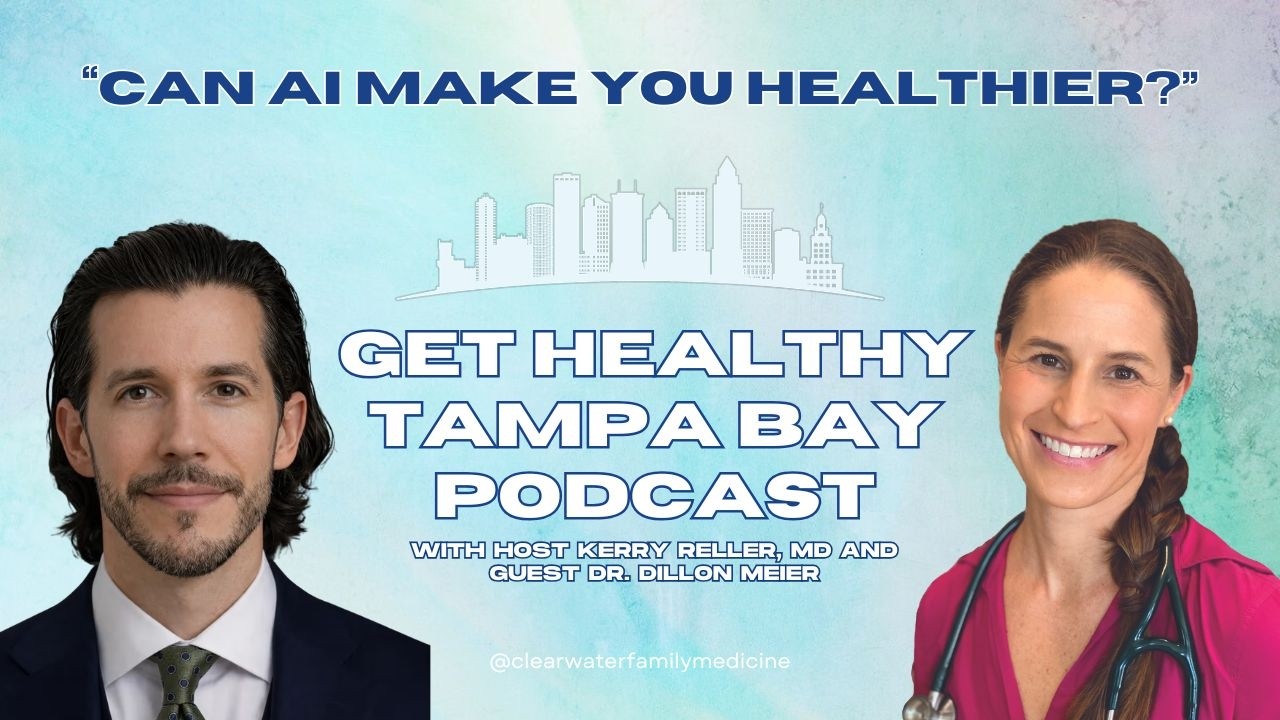
AI, Longevity & Healthspan Intel with Dr. Dillon Meier (Part 2!)
Between three-hour podcasts, flashy social media reels and a steady stream of new research, health information can feel impossible to keep up with, and a lot of it is really marketing. In Part 2 of his conversation with Dr. Kerry Reller on the Get Healthy Tampa Bay Podcast, Dr. Dillon Meier, a cardiothoracic anesthesiologist in Clearwater and founder of 7 Longevity, shares how he built an AI-powered tool to cut through the noise, plus simple, practical ways to test what works for your own body.
The Problem: Too Much Information, Too Many Sales Pitches
Dr. Meier found he could not keep up with popular health podcasts from voices like Andrew Huberman, Peter Attia and Rhonda Patrick, let alone the medical journals, while running a practice and working full time. He also wanted to help his parents, who are not in medicine, separate fact from hype. On Instagram and TikTok, the loudest voice often wins, and there is frequently a $70-a-month supplement being sold in the background.
The Solution: Healthspan Intel
Using Claude, an AI tool, Dr. Meier built a system that searches PubMed every day for new research on health span, longevity, supplements, exercise and sleep, and pulls in content from top health podcasts. A team of AI "agents" then debates, fact-checks and edits the information, with Dr. Meier overseeing the final product. The result is Healthspan Intel, a newsletter and website built around the idea of "data over gurus." Key features include:
Everything is fact-checked and sourced from published research.
Conflicts of interest are front and center. If a podcast guest promotes a supplement, the site notes whether that person also owns the company selling it.
Evidence is graded. Pages on more than 50 popular longevity compounds, such as NAD+, rapamycin, magnesium and vitamin D, explain whether the evidence comes from strong human studies or mostly from mice.
Influencer supplement protocols are reviewed against the research that supports or questions them.
No ads and no products for sale, so there is no financial incentive behind the recommendations.
Key Takeaways
Follow the data, not the guru: Ask who is sharing the information, what evidence supports it and whether they profit from it.
Start with the basics: Sleep, move, eat your vegetables and stay hydrated. These still offer the biggest return.
Keep supplements simple: Dr. Meier's personal daily basics are vitamin D with K2, omega-3s, magnesium, NAC and a probiotic, and he periodically "resets" his stack. Talk with your own doctor about what makes sense for you.
Do not let data run your life: Over-optimizing can lead to stress or even an unhealthy obsession with health. If a low sleep score convinces you your day is ruined, the tracker is doing more harm than good.
Run Your Own Small Experiments
Instead of trying everything at once, Dr. Meier suggests testing one change at a time and noticing how you feel:
Sleep experiment: Stop eating three hours before bed for a week. Rate your sleep from 0 to 10 each morning in a notebook, even without a wearable.
Blood sugar experiment: Wear an over-the-counter continuous glucose monitor (CGM) for about a month. Spend two weeks eating normally, then cut out the foods that spike you most. Try a bowl of rice on its own, then with olive oil, with vegetables, with protein, or followed by a walk, and compare your curves.
Be aware of alerts: Dr. Reller notes that prescription CGMs may wake you at night with low-glucose alarms. If you do not have diabetes and are using one for curiosity, keep the app or phone out of the bedroom.
When Your Wearable Is the Problem
Dr. Meier once wore a Whoop, an Apple Watch and an Oura Ring at the same time for nearly a year. When he kept waking up at night, he set up a night-vision camera and analyzed the footage. He discovered that the green sensor lights from two of the devices were reflecting off his wrist into his eyes and waking him up. He now wears only an Oura Ring and sleeps better.
Conclusion
You do not need to listen to every podcast or try every supplement to live a longer, healthier life. Focus on the basics, be skeptical of anyone selling a miracle, look for transparent, evidence-based sources and run small experiments to learn what works for your body.
About Our Guest
Dr. Dillon Meier is a cardiothoracic anesthesiologist and founder of Seven Longevity. He combines medicine, functional health, and artificial intelligence to help individuals better understand the latest research in longevity, healthspan, nutrition, supplements, and preventive health strategies.
Listen to the full episode on the Get Healthy Tampa Bay Podcast: AI, Longevity & Healthspan Intel with Dr. Dillon Meier (Part 2!)
Listen and Learn More
Watch the full episode above or listen to the Get Healthy Tampa Bay Podcast on your favorite podcast app. To schedule a visit with Dr. Kerry Reller at Clearwater Family Medicine and Allergy in Clearwater or Palm Harbor, call (727) 446-1097.


