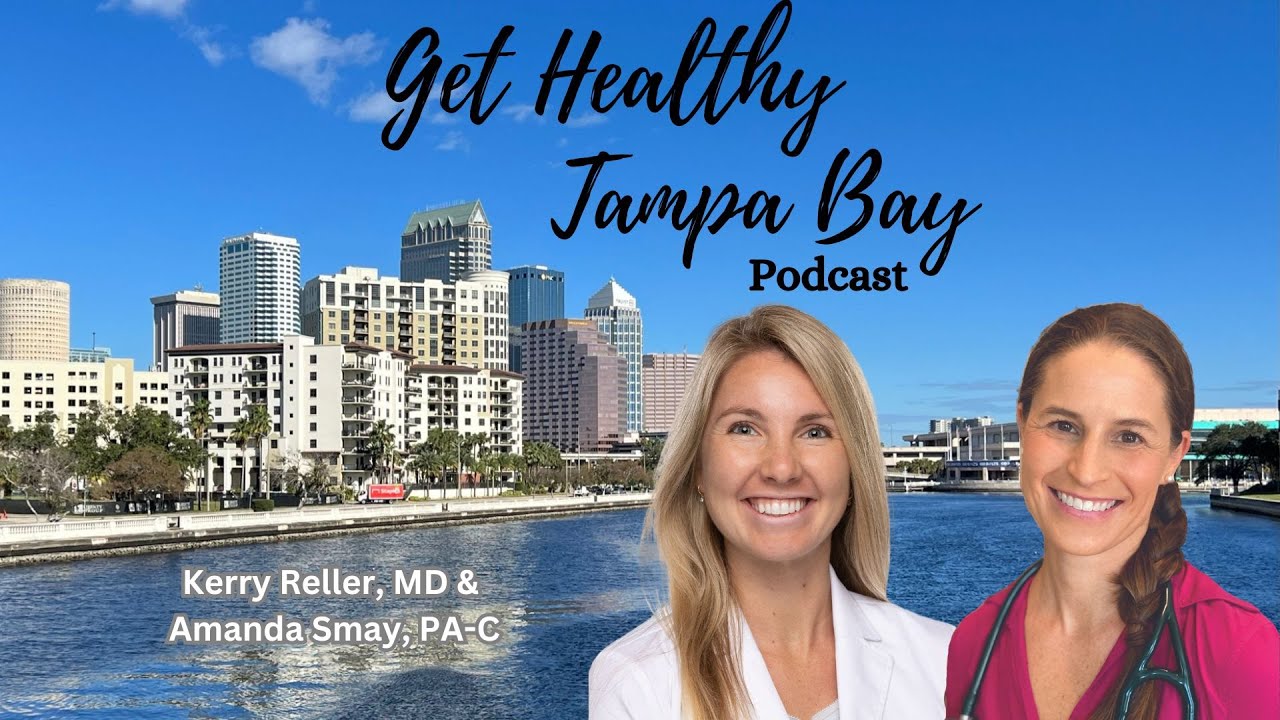
Acne Facts & Myths with Amanda Smay, PA-C and Dr. Reller
Acne is the most common skin condition in the United States, affecting most teens and many adults. In this episode of the Get Healthy Tampa Bay Podcast, Dr. Kerry Reller talks with Amanda Smay, PA-C, a dermatology physician assistant at Palm Harbor Dermatology in Clearwater, about what causes acne, common myths and the treatments that actually work.
What Causes Acne?
Each hair follicle has a gland that makes sebum, a natural oil that keeps skin soft and protected. When the gland makes too much oil, and dead skin cells and bacteria build up, pores become clogged. An open clogged pore oxidizes and becomes a blackhead, while a closed one becomes a whitehead. Cystic acne is a deeper, larger form that often has a hormonal component and is more likely to scar.
Who Gets Acne?
Genetics: If one or both parents had acne, your risk is higher.
Hormones: Puberty, PCOS and shifts in androgens like testosterone can increase oil production.
Stress: Cortisol can make acne worse, and acne itself can cause stress.
Myths and Facts
Scrubbing harder does not help: Harsh exfoliants, loofahs and cleansing brushes can irritate skin and harbor bacteria. Exfoliate about once a week.
Not washing enough can hurt: Wash twice a day with a gentle cleanser and your fingertips, and wash again after sweating.
Chocolate is not a proven cause: But high-sugar foods, cow's milk and whey protein have been linked to worse acne in some people.
Tanning beds are not a treatment: UV exposure raises skin cancer risk. Red and blue light therapy are safer options.
Skip the toothpaste: Use proven acne treatments instead.
Treatments That Work
Gentle cleansers: Simple products like CeraVe or Cetaphil, chosen for oily or dry skin.
Benzoyl peroxide: A tried-and-true antiseptic. It is often paired with topical clindamycin to prevent antibiotic resistance.
Retinoids: Adapalene (Differin), now available over the counter, and prescription tretinoin speed up skin cell turnover. They help with blackheads, dark marks, scarring and even fine lines.
Oral antibiotics: Low-dose doxycycline is used for its anti-inflammatory effect for a few months.
Spironolactone: Helpful for adult women with hormonal acne.
Isotretinoin (Accutane): For severe acne that does not respond to other treatments. It requires monthly pregnancy tests and regular blood work because it can cause birth defects and other side effects.
When to See a Dermatology Provider
Make an appointment if over-the-counter products are not working, if you have painful cystic acne that could scar, if acne runs strongly in your family or if you have a hormonal condition like PCOS. Lasers, microneedling and chemical peels can help with acne scars, though they are often not covered by insurance.
Key Takeaways
Wear sunscreen daily: Many acne treatments make skin more sensitive to the sun. Look for non-comedogenic products that will not clog pores.
Choose whole foods: Limiting sugary drinks and processed foods may help.
You are not alone: Acne is very common and very treatable.
Conclusion
With a gentle routine and the right treatment, most acne can be controlled and scarring prevented. If you need a primary care physician in the Tampa Bay area, Clearwater Family Medicine and Allergy can help with skin concerns and refer you to a dermatology provider when needed. Call (727) 446-1097 or visit cfma.health.
About Our Guest:
Amanda Smay is a highly knowledgeable dermatology physician assistant based in Clearwater, Florida. Working at Palm Harbor Dermatology, Amanda specializes in both medical and surgical dermatology, with a keen interest in cosmetic procedures as well. Her approach is deeply informed by her initial experiences in dermatology as a medical assistant, which sparked her passion for helping patients achieve healthy, beautiful skin through comprehensive and compassionate care.
Listen to the full episode on the Get Healthy Tampa Bay Podcast: Acne Facts & Myths with Amanda Smay, PA-C and Dr. Reller
Listen and Learn More
Watch the full episode above or listen to the Get Healthy Tampa Bay Podcast on your favorite podcast app. To schedule a visit with Dr. Kerry Reller at Clearwater Family Medicine and Allergy in Clearwater or Palm Harbor, call (727) 446-1097.


